4-Fluorobenzylamine → HCID 178522995, compound
Reaction equation

CO[C:3](=[O:21])[C:4]1[C:9]([OH:10])=[C:8]([O:11][CH2:12][C:13]2[CH:18]=[CH:17][CH:16]=[CH:15][CH:14]=2)[C:7]([CH2:19][OH:20])=[N:6][CH:5]=1.[F:22][C:23]1[CH:30]=[CH:29][C:26]([CH2:27][NH2:28])=[CH:25][CH:24]=1>CN(C)C=O>[CH2:12]([O:11][C:8]1[C:7]([CH2:19][OH:20])=[N:6][CH:5]=[C:4]([C:9]=1[OH:10])[C:3]([NH:28][CH2:27][C:26]1[CH:29]=[CH:30][C:23]([F:22])=[CH:24][CH:25]=1)=[O:21])[C:13]1[CH:14]=[CH:15][CH:16]=[CH:17][CH:18]=1Participants
4
Reactant 2
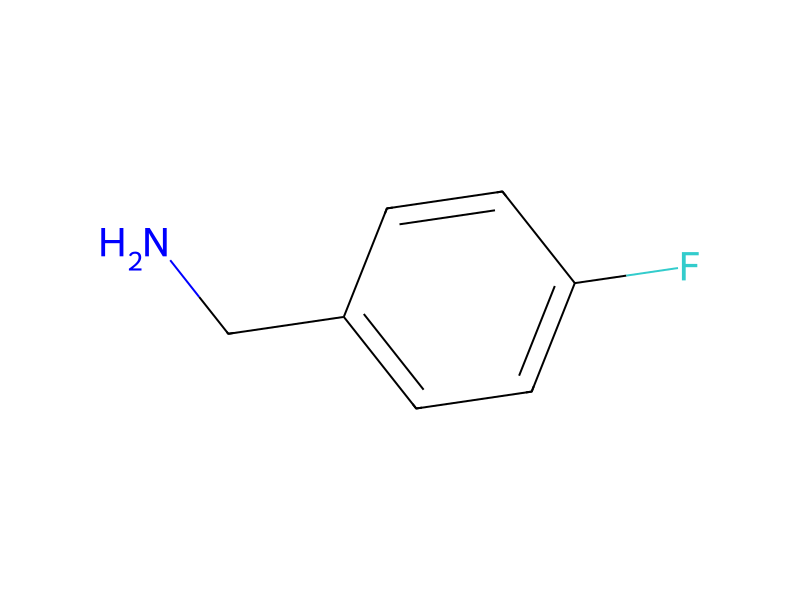

Product 1

Reagents, catalysts & solvents 1

Conditions
- Temperature
- 120 °C
Procedure
The compound 18 (3.76 g, 13.0 mmol) was dissolved in dimethylformamide (38 ml), and 4-fluorobenzylamine (2.44 ml, 21.3 mmol) was added, followed by stirring at 120° C. for 2 hours. The reaction solution was cooled to room temperature, and the solvent was distilled off under reduced pressure, followed by dilution with ethyl acetate. Thereafter, this was washed with 2N hydrochloric acid and water, and dried with anhydrous sodium sulfate. The solvent was distilled off under reduced pressure, and the residue was washed with diethyl ether to obtain 5-benzyloxy-N-(4-fluoro-benzyl)-4-hydroxy-6-hydroxymethyl-nicotinic acid amide 10 (3.59 g, 72%) as a beige crystal.