HomeMCPWorkbenchSkills
HomeWorkbenchNotificationsMe
llms.txt · MCP GuidePrivacy Policy · Terms of Service · Supportv1.8.3
  1. Home
  2. /Reaction

Dichloromethane → Tert-butyl 4-((6-bromo-2-methylpyridin-3-yl)methyl)piperazine-1-carboxylate

HRID 2278252
Print

Reaction equation

HRID 2278252 reaction equation
[Br:1][C:2]1[N:7]=[C:6]([CH3:8])[C:5]([CH:9]=O)=[CH:4][CH:3]=1.[N:11]1([C:17]([O:19][C:20]([CH3:23])([CH3:22])[CH3:21])=[O:18])[CH2:16][CH2:15][NH:14][CH2:13][CH2:12]1.ClCCl.C(O[BH-](OC(=O)C)OC(=O)C)(=O)C.[Na+]>O>[Br:1][C:2]1[N:7]=[C:6]([CH3:8])[C:5]([CH2:9][N:14]2[CH2:13][CH2:12][N:11]([C:17]([O:19][C:20]([CH3:23])([CH3:22])[CH3:21])=[O:18])[CH2:16][CH2:15]2)=[CH:4][CH:3]=1
ParticipantsProcedureWorkupSources & evidenceReaction notes

Participants

6

Reactant 4

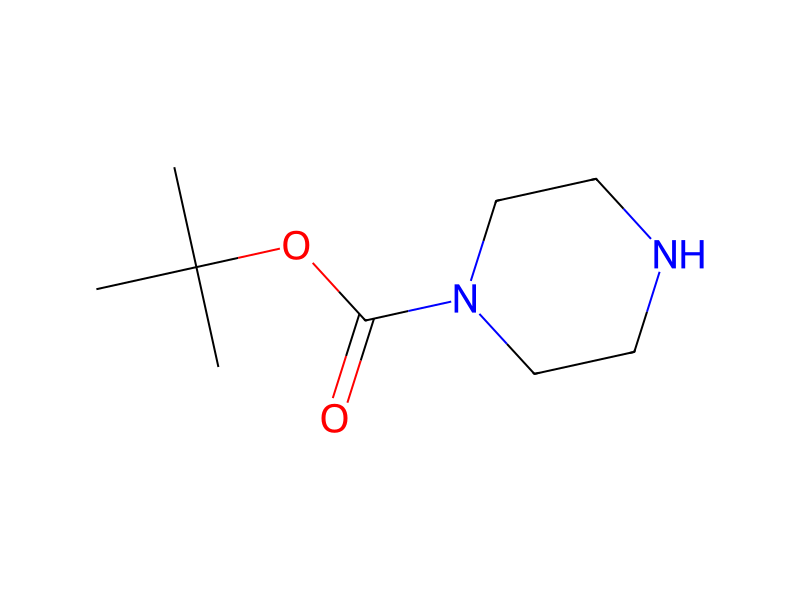
HCID 6344DichloromethaneHCID 143452tert-Butyl piperazine-1-carboxylateHCID 5049666Sodium triacetoxyborohydrideHCID 595962316-Bromo-2-methylpyridine-3-carbaldehyde

Product 1

HCID 89677012Tert-butyl 4-((6-bromo-2-methylpyridin-3-yl)methyl)piperazine-1-carboxylateYield 82%

Reagents, catalysts & solvents

1
HCID 962WaterSolvent

Procedure

A 100 mL round-bottom flask was charged with 6-bromo-2-methylpyridine-3-carbaldehyde (2.50 g, 12.6 mmol, 1.00 equiv), tert-butyl piperazine-1-carboxylate (2.34 g, 12.6 mmol, 1.00 equiv), and dichloromethane (50 mL). The resulting solution was stirred for 30 min at room temperature. Sodium triacetoxyborohydride (8.00 g, 37.8 mmol, 3.00 equiv) was added. The resulting solution was stirred overnight at room temperature and then diluted with water (30 mL). The resulting mixture was extracted with dichloromethane (3×20 mL) and the organic layers were combined, dried over anhydrous sodium sulfate, filtered and concentrated under reduced pressure. The residue was chromatographed on a silica gel column with ethyl acetate/petroleum ether (22/78) to provide 3.80 g (82% yield) of tert-butyl 4-[(6-bromo-2-methylpyridin-3-yl)methyl]piperazine-1-carboxylate as a white solid. LCMS (ESI, m/z): 370 [M+H]+.

Workup

  1. stirringThe resulting solution was stirred overnight at room temperature
  2. extractionThe resulting mixture was extracted with dichloromethane (3×20 mL)
  3. dry with materialdried over anhydrous sodium sulfate
  4. filtrationfiltered
  5. concentrationconcentrated under reduced pressure
  6. customThe residue was chromatographed on a silica gel column with ethyl acetate/petroleum ether (22/78)

Sources & evidence

ORD record
ord-7e2bdaed54024356a273c0dbcbcadef0
Source dataset
uspto-grants-2015_09
DOI
10.6084/m9.figshare.5104873.v1
Patent number
US09133148B2

Reaction notes

On this pageParticipantsProcedureWorkupSources & evidenceReaction notes