HomeMCPWorkbenchSkills
HomeWorkbenchNotificationsMe
llms.txt · MCP GuidePrivacy Policy · Terms of Service · Supportv1.8.3
  1. Home
  2. /Reaction

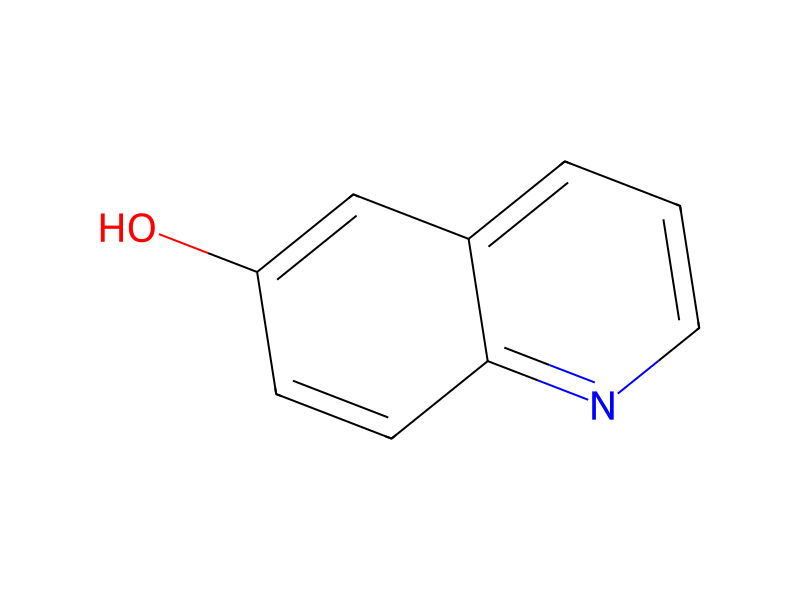
Phenol → 6-Hydroxyquinoline

HRID 228502
Print

Reaction equation

HRID 228502 reaction equation
C([O:8][C:9]1[CH:10]=[C:11]2[C:16](=[CH:17][CH:18]=1)[N:15]=[CH:14][CH:13]=[C:12]2Cl)C1C=CC=CC=1.N1C2C(=CC=CC=2)C=NC1=O.C1(O)C=CC=CC=1.NC1C=CC=CC=1>ClC1C=CC=CC=1Cl>[OH:8][C:9]1[CH:10]=[C:11]2[C:16](=[CH:17][CH:18]=1)[N:15]=[CH:14][CH:13]=[CH:12]2
ParticipantsProcedureWorkupSources & evidenceReaction notes

Participants

6

Reactant 4

HCID 996PhenolHCID 6115AnilineHCID 3443811,2-Dihydroquinazolin-2-oneHCID 230784316-(Benzyloxy)-4-chloroquinoline

Product 1

HCID 113746-Hydroxyquinoline

Reagents, catalysts & solvents 1

HCID 72391,2-DichlorobenzeneSolvent

Procedure

A 6-benzyloxy-4-chloroquinoline derivative or a corresponding quinazolone derivative is reacted with a phenol derivative or a corresponding aniline derivative in a suitable solvent, for example, o-dichlorobenzene, or in the absence of a solvent, for example, at 120 to 180° C. (step (i) above). Next, a 6-hydroxyquinoline derivative may be produced by reacting the resultant compound with a suitable acid, for example, methanesulfonic acid/trifluoroacetic acid (step (ii) above). The contemplated compound may be produced by reacting the 6-hydroxyquinoline derivative with an alkylating agent, for example, 1-bromo-2-chloroethane (step (iii) above).

Workup

  1. customat 120 to 180° C.

Sources & evidence

ORD record
ord-3615413c83c24974ad40d55b6c6e41b8
Source dataset
uspto-grants-2009_07
DOI
10.6084/m9.figshare.5104873.v1
Patent number
US07560558B2

Reaction notes

On this pageParticipantsProcedureWorkupSources & evidenceReaction notes