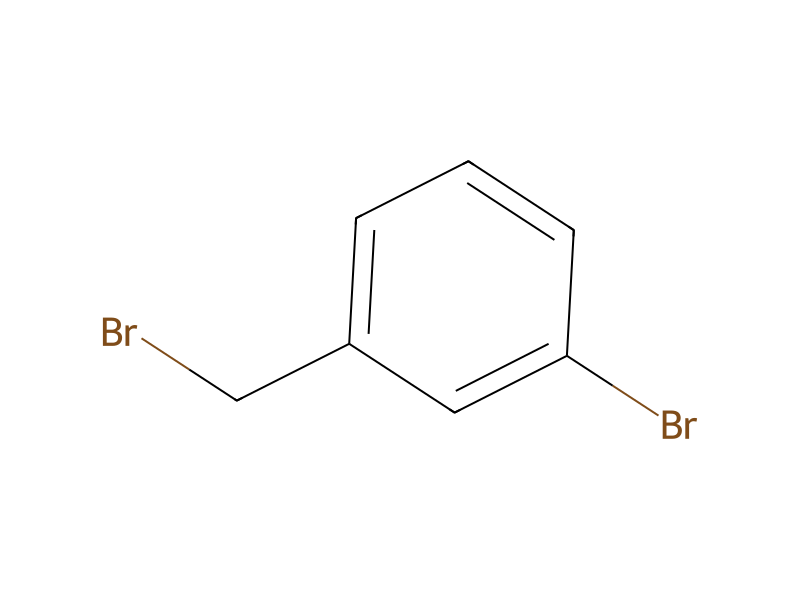
To a solution of 2.30 g (20 mmol) of 5-methoxy-2,4-dihydro-3H-1,2,4-triazol-3-one in 20 ml acetonitrile was added 2.90 g (21 mmol) of potassium carbonate. A solution of 5.00 g (20 mmol) of 3-bromobenzylbromide in 20 ml of dry acetonitrile was added dropwise thereto at 55° C. After the mixture was stirred at the same temperature for additional 6 hours, water was added to the reaction mixture and the mixture was extracted with ethyl acetate. The organic layer was washed with water, dried and concentrated. To the resultant solid residue (5.2 g) was added a mixture of equal amounts of tert-butyl methyl ether and n-hexane and the solid was washed, ice-cooled, collected by filtration and concentrated. Further, to the resultant solid residue was added tert-butyl methyl ether and the solid was washed, cooled, collected by filtration and dried to obtain 1.70 g (5.98 mmol) of 4-(3-bromobenzyl)-5-methoxy-2,4-dihydro-3H-1,2,4-triazol-3-one as white powder.