Reaction equation

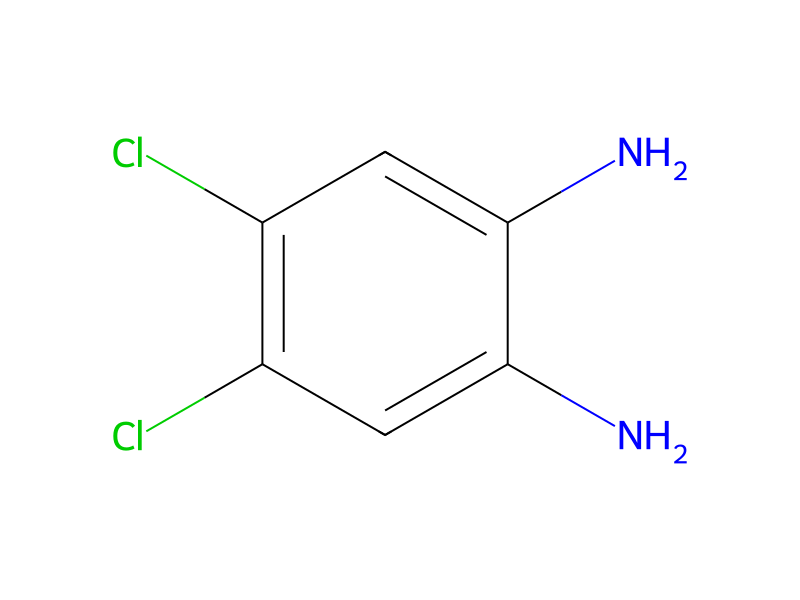
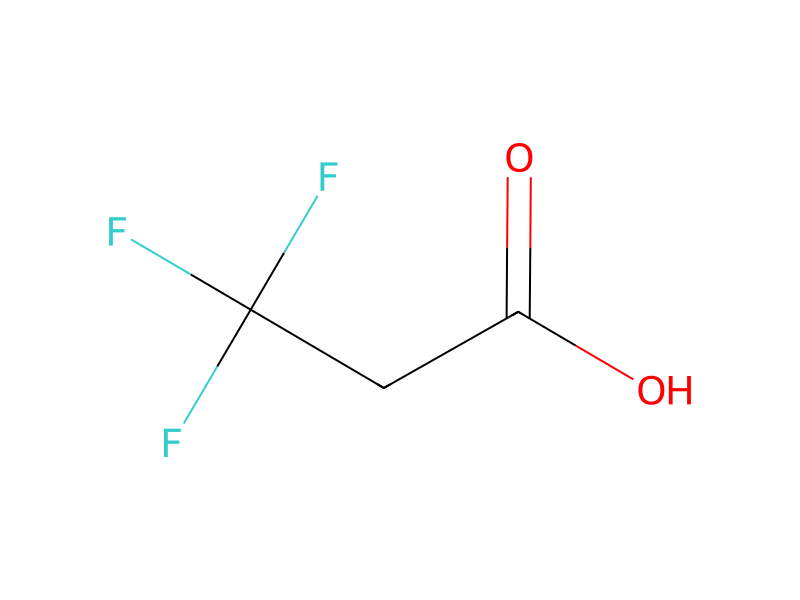
[Cl:1][C:2]1[C:7]([Cl:8])=[CH:6][C:5]([NH2:9])=[C:4]([NH2:10])[CH:3]=1.[F:11][C:12]([F:18])([F:17])[CH2:13][C:14](O)=O>Cl>[Cl:1][C:2]1[C:7]([Cl:8])=[CH:6][C:5]2[NH:9][C:14]([CH2:13][C:12]([F:18])([F:17])[F:11])=[N:10][C:4]=2[CH:3]=1Participants
4
Reactant 2
Product 1

Reagents, catalysts & solvents 1

Conditions
- Temperature
- 100 °C
Procedure
To 4,5-dichloro-1,2-phenylenediamine (25 g) was added 3,3,3-trifluoropropionic acid (25 mls) and 4N HCl (90 mL). The resulting mixture was heated to 100° C. overnight. The reaction mixture was quenched with water, basicified with concentrated NH4OH, extracted with EtOAc, and dried over Na2SO4. The crude product was filtered through a plug of silica gel, eluting with 30% EtOAc/hexanes, and collecting the red band. The fractions were concentrated to yield a mixture of the desired title compound and 4,5-dichloro-1,2-phenylenediamine. The crude material was dissolved in small amount of CH2Cl2 and triturated with hexanes to yield the title compound as a tan solid.
Workup
- customThe reaction mixture was quenched with water
- extractionextracted with EtOAc
- dry with materialdried over Na2SO4
- filtrationThe crude product was filtered through a plug of silica gel
- washeluting with 30% EtOAc/hexanes
- customcollecting the red band
- concentrationThe fractions were concentrated
- customto yield
Sources & evidence
- ORD record
- ord-23129c6ce93049ef924f893f54ad0ff8
- Source dataset
- uspto-grants-2009_07
- Patent number
- US07566733B2
Linked notes
Loading…