HomeMCPSkillsWorkbenchOpenChem
HomeWorkbenchNotificationsMe
llms.txt · skill.md · MCP GuidePrivacy Policy · Terms of Service · Supportv1.8.5
  1. Home
  2. /Reaction

Sodium Chloride → (4-Chloro-3,5-dimethylpyridin-2-YL)methanol

HRID 2304817
Print

Reaction equation

[C:1]([C:4]1[C:9]([CH3:10])=[C:8]([Cl:11])[C:7]([CH3:12])=[CH:6][N:5]=1)(O)=[O:2].B.C1COCC1.C1COCC1.O.[Cl-].[Na+]>CN(C)C=O>[Cl:11][C:8]1[C:7]([CH3:12])=[CH:6][N:5]=[C:4]([CH2:1][OH:2])[C:9]=1[CH3:10]
ParticipantsProcedureWorkupSources & evidenceReaction notes

Participants

6

Reactant 4

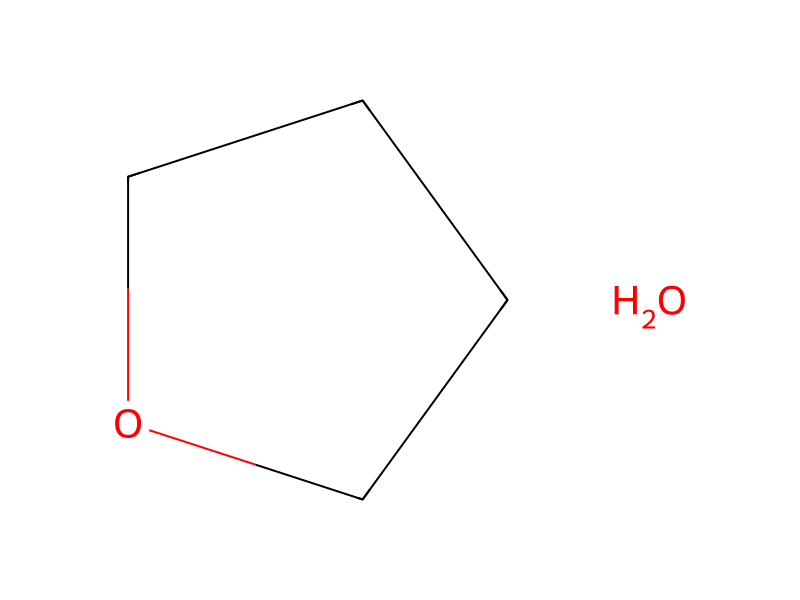
HCID 5234Sodium ChlorideHCID 2723981Borane;tetrahydrofuranHCID 103134284-Chloro-3,5-dimethylpicolinic AcidHCID 21881883Oxolane--water (1/1)

Product 1

HCID 9795246(4-Chloro-3,5-dimethylpyridin-2-YL)methanolYield 51%

Reagents, catalysts & solvents 1

HCID 6228
Dimethylformamide
Solvent

Procedure

2-carboxy-4-chloro-3,5-lutidine (1 eq.) was suspended in dry dimethylformamide and BH3.THF solution (1M in tetrahydrofuran, 3.5 eq.) was added. The mixture was heated to 60ℑ C. and stirred under a nitrogen atmosphere until completion (1.5 hours). The mixture was cooled in an ice bath and THF/H2O (1:1) mixture (10 volumes) was added slowly. The aqueous layer was saturated with sodium chloride and the tetrahydrofuran layer was separated. The aqueous layer was extracted with ether. The combined organic extracts were dried over sodium sulfate, filtered and the solvent was evaporated under vacuum. The 4-Chloro-2-hydroxymethyl-3,5-Lutidine product was obtained in 51% yield.

Workup

  1. temperatureThe mixture was heated to 60ℑ C
  2. temperatureThe mixture was cooled in an ice bath
  3. customthe tetrahydrofuran layer was separated
  4. extractionThe aqueous layer was extracted with ether
  5. dry with materialThe combined organic extracts were dried over sodium sulfate
  6. filtrationfiltered
  7. customthe solvent was evaporated under vacuum

Sources & evidence

ORD record
ord-5ec3fd42430845259426df2da796e224
Source dataset
uspto-grants-2002_08
DOI
10.6084/m9.figshare.5104873.v1
Patent number
US06437139B1

Reaction notes

On this pageParticipantsProcedureWorkupSources & evidenceReaction notes