HomeMCPSkillsWorkbenchOpenChem
HomeWorkbenchNotificationsMe
llms.txt · skill.md · MCP GuidePrivacy Policy · Terms of Service · Supportv1.8.4
  1. Home
  2. /Reaction

Sodium Carbonate → 2,3,4,6-Tetra-O-benzoyl-1-O-carboxymethyl-mannopyranose

HRID 2307735
Print

Reaction equation

[C:1]([O:9][C@H:10]1[C@@H:16]([O:17][C:18](=[O:25])[C:19]2[CH:24]=[CH:23][CH:22]=[CH:21][CH:20]=2)[C@H:15]([O:26][C:27](=[O:34])[C:28]2[CH:33]=[CH:32][CH:31]=[CH:30][CH:29]=2)[C@@H:14]([CH2:35][O:36][C:37](=[O:44])[C:38]2[CH:43]=[CH:42][CH:41]=[CH:40][CH:39]=2)[O:13][CH:11]1[OH:12])(=[O:8])[C:2]1[CH:7]=[CH:6][CH:5]=[CH:4][CH:3]=1.C(=O)([O-])[O-].[Na+].[Na+].C([O:58][C:59](=[O:62])[CH2:60]Br)C1C=CC=CC=1.COC(C)(C)C>S([O-])(O)(=O)=O.C([N+](CCCC)(CCCC)CCCC)CCC.COCCOC>[C:1]([O:9][C@H:10]1[C@@H:16]([O:17][C:18](=[O:25])[C:19]2[CH:24]=[CH:23][CH:22]=[CH:21][CH:20]=2)[C@H:15]([O:26][C:27](=[O:34])[C:28]2[CH:29]=[CH:30][CH:31]=[CH:32][CH:33]=2)[C@@H:14]([CH2:35][O:36][C:37](=[O:44])[C:38]2[CH:39]=[CH:40][CH:41]=[CH:42][CH:43]=2)[O:13][CH:11]1[O:12][CH2:60][C:59]([OH:62])=[O:58])(=[O:8])[C:2]1[CH:7]=[CH:6][CH:5]=[CH:4][CH:3]=1
ParticipantsConditionsProcedureWorkupSources & evidenceReaction notes

Participants

7

Reactant 4

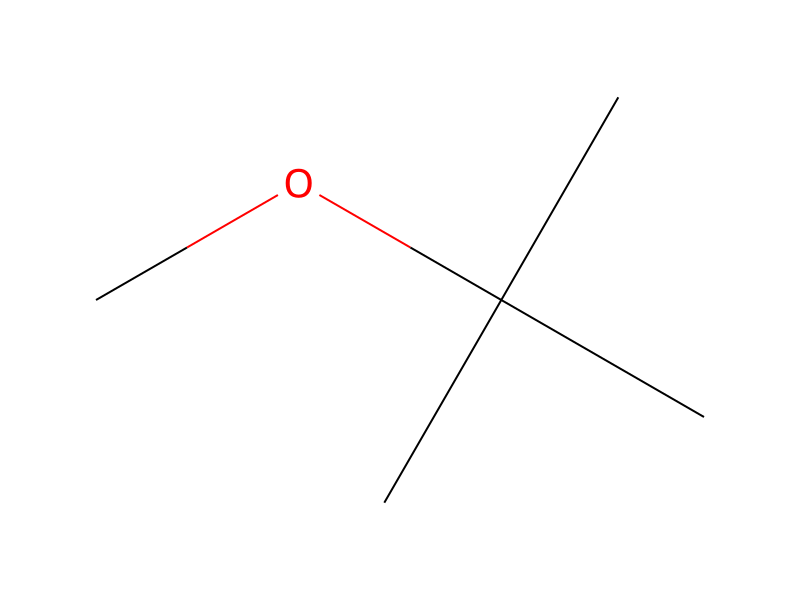
HCID 10340Sodium CarbonateHCID 15413tert-Butyl methyl etherHCID 62576Benzyl bromoacetateHCID 111463962,3,4,6-Tetra-O-benzoylhexopyranose

Product 1

HCID 102831152,3,4,6-Tetra-O-benzoyl-1-O-carboxymethyl-mannopyranose

Reagents, catalysts & solvents 2

HCID 94433
Tetrabutylammonium hydrogen sulfate
Catalyst
HCID 80711,2-DimethoxyethaneSolvent

Conditions

Temperature
0 °C

Procedure

A mixture that consists of 59.66 g (100 mmol) of 2,3,4,6-tetra-O-benzoyl-mannopyranose, 1.7 g (5 mmol) of tetrabutylammonium hydrogen sulfate and 63.59 g (600 mmol) of fine-powder sodium carbonate in 350 ml of 1,2-dimethoxyethane is cooled to 0° C. At 0° C., 34.36 g (150 mmol) of bromoacetic acid benzyl ester is added in drops over 10 minutes while being stirred vigorously. It is stirred for one hour at 0° C. 250 ml of MTB (methyl-tert-butyl ether) is added, solid is filtered out, and the filtrate is evaporated to the dry state in a vacuum. The residue is dissolved in 500 ml of ethanol. 5 g of palladium (10%) on activated carbon is added thereto and hydrogenated until hydrogen absorption is completed. Then, catalyst is filtered out, rewashed with ethanol, and the combined solutions are evaporated to the dry state in a vacuum. The residue is chromatographed on silica gel (mobile solvent: dichloromethane/n=hexane/ethanol/acetic acid=20:5:3:0.5). The product-containing fractions are concentrated by evaporation, dissolved in 400 ml of ethyl acetate and shaken out three times with 200 ml of water. Then, the organic phase is separated and evaporated to the dry state in a vacuum.

Workup

  1. stirringIt is stirred for one hour at 0° C
  2. filtrationsolid is filtered out
  3. customthe filtrate is evaporated to the dry state in a vacuum
  4. dissolutionThe residue is dissolved in 500 ml of ethanol
  5. addition5 g of palladium (10%) on activated carbon is added
  6. customhydrogenated until hydrogen absorption
  7. filtrationThen, catalyst is filtered out
  8. customthe combined solutions are evaporated to the dry state in a vacuum
  9. customThe residue is chromatographed on silica gel (mobile solvent: dichloromethane/n=hexane/ethanol/acetic acid=20:5:3:0.5)
  10. concentrationThe product-containing fractions are concentrated by evaporation
  11. dissolutiondissolved in 400 ml of ethyl acetate
  12. stirringshaken out three times with 200 ml of water
  13. customThen, the organic phase is separated
  14. customevaporated to the dry state in a vacuum

Sources & evidence

ORD record
ord-233f1a48a0284eb7bf02e7aa52d27ad1
Source dataset
uspto-grants-2004_12
DOI
10.6084/m9.figshare.5104873.v1
Patent number
US06831164B2

Reaction notes

On this pageParticipantsConditionsProcedureWorkupSources & evidenceReaction notes