Reaction equation

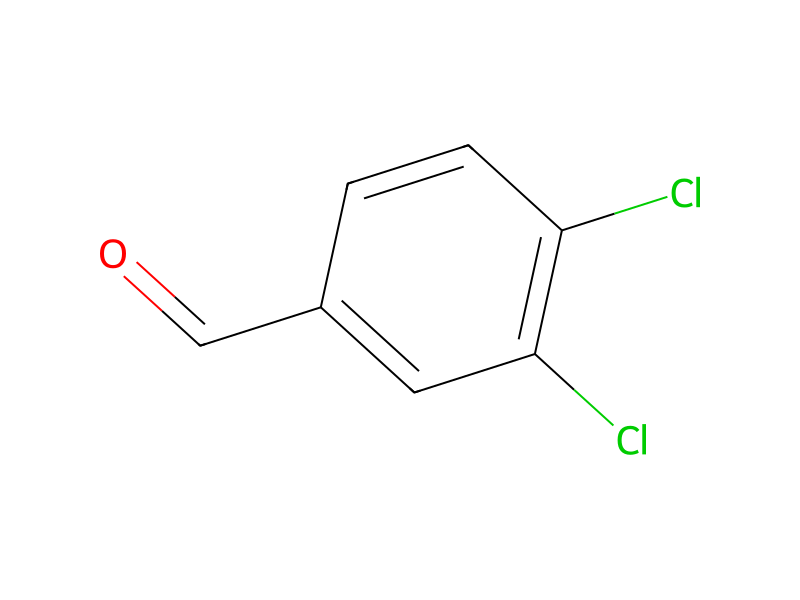
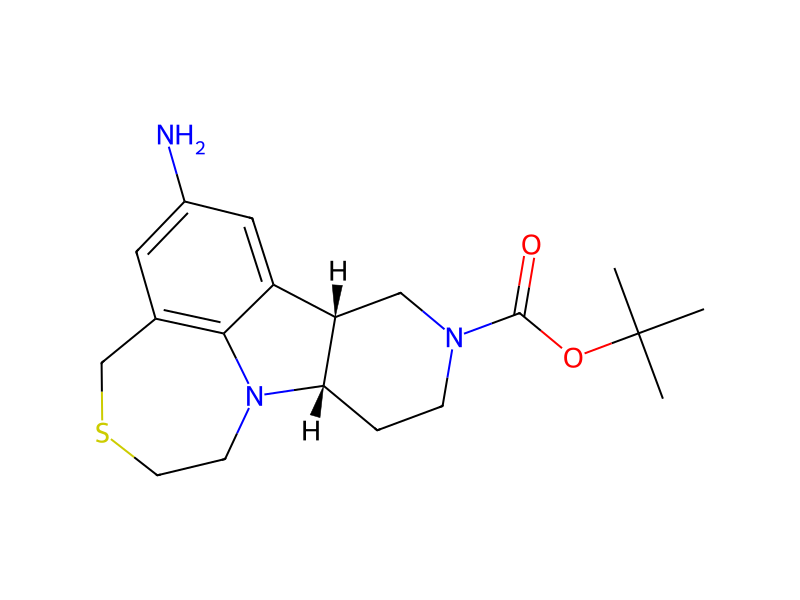
[Cl:1][C:2]1[CH:3]=[C:4]([CH:7]=[CH:8][C:9]=1[Cl:10])[CH:5]=O.[NH2:11][C:12]1[CH:13]=[C:14]2[C:18]3=[C:19]([CH2:21][S:22][CH2:23][CH2:24][N:17]3[C@H:16]3[CH2:25][CH2:26][N:27](C(OC(C)(C)C)=O)[CH2:28][C@@H:15]23)[CH:20]=1>>[Cl:1][C:2]1[CH:3]=[C:4]([CH:7]=[CH:8][C:9]=1[Cl:10])[CH2:5][NH:11][C:12]1[CH:13]=[C:14]2[C:18]3=[C:19]([CH2:21][S:22][CH2:23][CH2:24][N:17]3[C@H:16]3[CH2:25][CH2:26][NH:27][CH2:28][C@@H:15]23)[CH:20]=1Participants
3
Reactant 2
Product 1

Procedure
Using 3,4-dichlorobenzaldehyde and following the procedures described in EXAMPLE 126, tert-butyl (7bR,11aS)-6-amino-1,2,7b,10,11,11a-hexahydro-4H-pyrido[4,3-b][1,4]thiazepino[6,5,4-hi]indole-9(8H)-carboxylate from EXAMPLE 33, Part B was converted into the title compound of EXAMPLE 158. LRMS (ES)+: 420.4 (M+H)+.
Sources & evidence
- ORD record
- ord-edf3685051e245feb87d41c22f43555a
- Source dataset
- uspto-grants-2005_02
- Patent number
- US06849619B2
Linked notes
Loading…