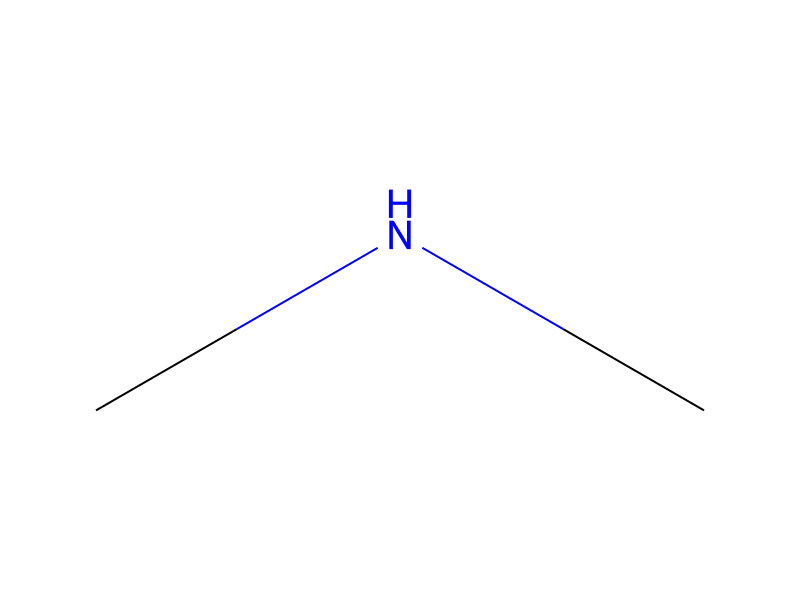
Dimethylamine → HCID 20756758, compound
Reaction equation

Cl.[NH:2]1[CH2:6][CH2:5][N:4]=[C:3]1[CH2:7][N:8]1[C:16]2[C:11](=[CH:12][CH:13]=[CH:14][CH:15]=2)[C:10]([S:17](Cl)(=[O:19])=[O:18])=[CH:9]1.[CH3:21][NH:22][CH3:23]>C(=O)(O)[O-].[Na+]>[CH3:21][N:22]([CH3:23])[S:17]([C:10]1[C:11]2[C:16](=[CH:15][CH:14]=[CH:13][CH:12]=2)[N:8]([CH2:7][C:3]2[NH:2][CH2:6][CH2:5][N:4]=2)[CH:9]=1)(=[O:19])=[O:18]Participants
4
Reactant 2

Product 1

Reagents, catalysts & solvents 1

Procedure
1-(4,5-Dihydro-1H-imidazol-2-ylmethyl)-1H-indole-3-sulfonyl chloride hydrochloride (0.297 g, 1 mmol) was dissolved in 1-methylpyrrlolidinone (14 mL) and stirred. Excess dimethylamine in 1-methylpyrrlolidinone was added to the stirring solution, after which the mixture was allowed to stand at room temperature for 15 minutes. Saturated aqueous sodium bicarbonate (30 mL) was then added, and the mixture was evaporated to dryness. The residue was purified by preparative HPLC to provide 1-(4,5-dihydro-1H-imidazol-2-ylmethyl)-1H-indole-3-sulfonic acid dimethylamide as a crystalline solid.