HomeMCPWorkbenchSkills
HomeWorkbenchNotificationsMe
llms.txt · MCP GuidePrivacy Policy · Terms of Service · Supportv1.8.3
  1. Home
  2. /Reaction

Isatoic Anhydride → 4-(2-Methyl-3-(4-oxoquinazolin-3(4H)-yl)phenyl)-7-morpholino-9H-pyrido[3,4-b]indole-1-carboxamide

HRID 2361297
Print

Reaction equation

HRID 2361297 reaction equation
[NH2:1][C:2]1[C:3]([CH3:30])=[C:4]([C:8]2[C:20]3[C:19]4[C:14](=[CH:15][C:16]([N:21]5[CH2:26][CH2:25][O:24][CH2:23][CH2:22]5)=[CH:17][CH:18]=4)[NH:13][C:12]=3[C:11]([C:27]([NH2:29])=[O:28])=[N:10][CH:9]=2)[CH:5]=[CH:6][CH:7]=1.[NH:31]1[C:36]2[CH:37]=[CH:38][CH:39]=[CH:40][C:35]=2[C:34](=O)[O:33][C:32]1=O.COC(OC)OC.O.O.O.O.O.O.[N+]([O-])([O-])=O.[La+3].[N+]([O-])([O-])=O.[N+]([O-])([O-])=O>C1COCC1>[CH3:30][C:3]1[C:2]([N:1]2[C:34](=[O:33])[C:35]3[C:36](=[CH:37][CH:38]=[CH:39][CH:40]=3)[N:31]=[CH:32]2)=[CH:7][CH:6]=[CH:5][C:4]=1[C:8]1[C:20]2[C:19]3[C:14](=[CH:15][C:16]([N:21]4[CH2:22][CH2:23][O:24][CH2:25][CH2:26]4)=[CH:17][CH:18]=3)[NH:13][C:12]=2[C:11]([C:27]([NH2:29])=[O:28])=[N:10][CH:9]=1
ParticipantsProcedureWorkupSources & evidenceReaction notes

Participants

6

Reactant 4

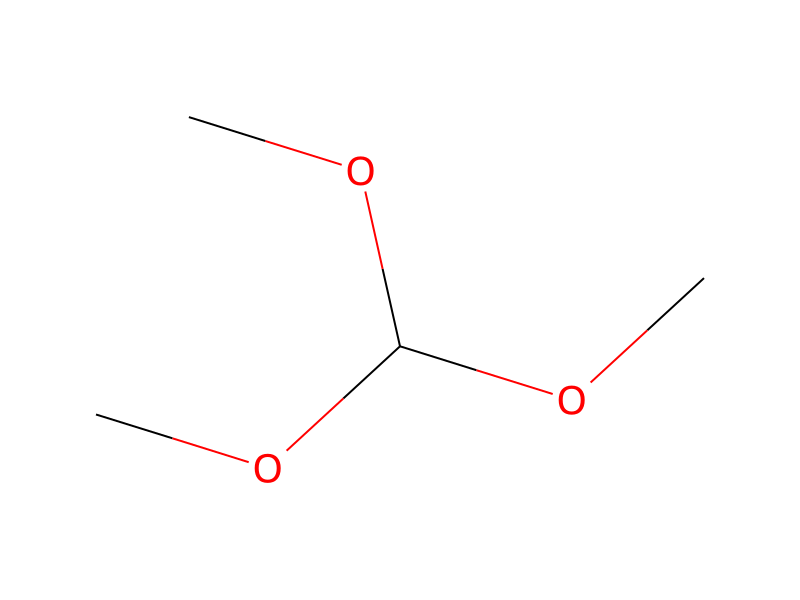
HCID 8359Isatoic AnhydrideHCID 9005Trimethyl orthoformateHCID 16211478Lanthanum nitrate hexahydrateHCID 679949134-(3-Amino-2-methylphenyl)-7-morpholino-9H-pyrido[3,4-b]indole-1-carboxamide

Product 1

HCID 679951304-(2-Methyl-3-(4-oxoquinazolin-3(4H)-yl)phenyl)-7-morpholino-9H-pyrido[3,4-b]indole-1-carboxamide
Yield 17.1%

Reagents, catalysts & solvents 1

HCID 8028TetrahydrofuranSolvent

Procedure

A burgundy solution of 4-(3-amino-2-methylphenyl)-7-morpholino-9H-pyrido[3,4-b]indole-1-carboxamide (0.0612 g, 0.140 mmol), 1H-benzo[d][1,3]oxazine-2,4-dione (0.057 g, 0.351 mmol), trimethoxymethane (0.154 ml, 1.402 mmol) and lanthanum nitrate hexahydrate (0.018 g, 0.042 mmol) in THF (0.334 mL) in a sealed vial was stirred overnight at 95° C. The reaction was cooled to room temperature and concentrated in vacuo. The residue was dissolved in DMSO (0.2 mL) and MeOH (1.6 mL), and subjected to autoprep reverse phase HPLC. The appropriate fractions were collected, basified with NaHCO3 (solid), and concentrated in vacuo. The residue was extracted with CH2Cl2 (3×). The combine extract was dried over Na2SO4 and concentrated in vacuo to give the desired product (0.0135 g, 0.024 mmol, 17.1% yield) as a tan solid. LC/MS (M+H)=531.29; 1H NMR (500 MHz, DMSO-d6) (recognizable peaks for major atropoisomer) δ ppm 11.48 (1 H, s), 8.42 (1 H, s), 8.21-8.28 (2 H, m), 8.15 (1 H, s), 7.88-7.94 (1 H, m), 7.76-7.81 (1 H, m), 7.69-7.74 (1 H, m), 7.53-7.69 (4 H, m), 7.27 (1 H, d, J=2.22 Hz), 6.79-6.86 (1 H, m), 3.74-3.81 (4 H, m), 3.16-3.23 (4 H, m), 1.81 (3 H, s).

Workup

  1. concentrationconcentrated in vacuo
  2. dissolutionThe residue was dissolved in DMSO (0.2 mL)
  3. customThe appropriate fractions were collected
  4. concentrationconcentrated in vacuo
  5. extractionThe residue was extracted with CH2Cl2 (3×)
  6. extractionThe combine extract
  7. dry with materialwas dried over Na2SO4
  8. concentrationconcentrated in vacuo

Sources & evidence

ORD record
ord-7b5e59426e064ea3893cf449763c31cf
Source dataset
uspto-grants-2014_04
DOI
10.6084/m9.figshare.5104873.v1
Patent number
US08685969B2

Reaction notes

On this pageParticipantsProcedureWorkupSources & evidenceReaction notes