HomeMCPWorkbenchSkills
HomeWorkbenchNotificationsMe
llms.txt · MCP GuidePrivacy Policy · Terms of Service · Supportv1.8.3
  1. Home
  2. /Reaction

Cesium carbonate → US9611269, Example 40

HRID 2363352
Print

Reaction equation

HRID 2363352 reaction equation
Cl.C[Si](C)(C)CCOC[N:8]1[C:12]2=[N:13][CH:14]=[CH:15][C:16]([C:17]3[CH:18]=[N:19][N:20]([C:22]4([CH2:26][C:27]#[N:28])[CH2:25][NH:24][CH2:23]4)[CH:21]=3)=[C:11]2[CH:10]=[CH:9]1.Br[C:32]1[CH:33]=[CH:34][C:35]([C:38]([NH:40][C:41]2([C:44]([F:47])([F:46])[F:45])[CH2:43][CH2:42]2)=[O:39])=[N:36][CH:37]=1.C(=O)([O-])[O-].[Cs+].[Cs+].C1C=CC(P(C2C=CC3C(=CC=CC=3)C=2C2C3C(=CC=CC=3)C=CC=2P(C2C=CC=CC=2)C2C=CC=CC=2)C2C=CC=CC=2)=CC=1>C1(C)C=CC=CC=1.C([O-])(=O)C.[Pd+2].C([O-])(=O)C>[C:27]([CH2:26][C:22]1([N:20]2[CH:21]=[C:17]([C:16]3[CH:15]=[CH:14][N:13]=[C:12]4[NH:8][CH:9]=[CH:10][C:11]=34)[CH:18]=[N:19]2)[CH2:25][N:24]([C:32]2[CH:33]=[CH:34][C:35]([C:38]([NH:40][C:41]3([C:44]([F:47])([F:45])[F:46])[CH2:43][CH2:42]3)=[O:39])=[N:36][CH:37]=2)[CH2:23]1)#[N:28]
ParticipantsConditionsProcedureWorkupSources & evidenceReaction notes

Participants

7

Reactant 4

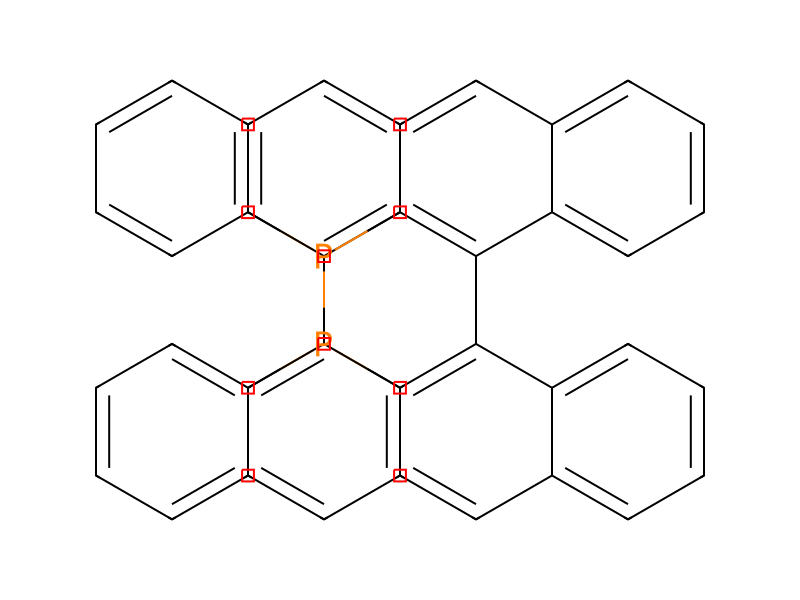
HCID 10796Cesium carbonateHCID 634876Binap, (A+-)-HCID 709352635-bromo-N-[1-(trifluoromethyl)cyclopropyl]pyridine-2-carboxamideHCID 71207967{3-[4-(1-{[2-(trimethylsilyl)ethoxy]methyl}-1H-pyrrolo[2,3-b]pyridin-4-yl)-1H-pyrazol-1-yl]azetidin-3-yl}acetonitrile hydrochloride

Product 1

HCID 71143639
US9611269, Example 40
Yield 8.4%

Reagents, catalysts & solvents 2

HCID 167845palladium(II) acetateCatalystHCID 1140TolueneSolvent

Conditions

Temperature
105 °C

Procedure

A mixture of {3-[4-(1-{[2-(trimethylsilyl)ethoxy]methyl}-1H-pyrrolo[2,3-b]pyridin-4-yl)-1H-pyrazol-1-yl]azetidin-3-yl}acetonitrile HCl salt (40 mg, 0.08 mmol), 5-bromo-N-[1-(trifluoromethyl)cyclopropyl]pyridine-2-carboxamide 26 mg, 0.083 mmol), cesium carbonate (81 mg, 0.25 mmol), (R)-(+)-2,2′-bis(diphenylphosphino)-1,1′-binaphthyl (5.2 mg, 0.0083 mmol) and palladium acetate (1.9 mg, 0.0083 mmol) in toluene (1 mL) was stirred at 105° C. overnight. After the reaction mixture was cooled to room temperature, the solid was separated, and washed with ethyl acetate twice. The combined organic solution was concentrated under reduced pressure. The residue was dissolved in a solution of trifluoroacetic acid (1 mL) in methylene chloride (1:1, 1 mL). After stirred at room temperature for 1.5 h., the mixture was concentrated under reduced pressure. The residue was dissolved in methanol (1 mL). To the solution was added ethylenediamine (0.6 mL). The mixture was stirred at room temperature for 2 h. The product was purified with RP-HPLC (pH=2) to afford the desired product (3.4 mg) as TFA salt. LCMS (M+H)+: m/z=507.2. 1H NMR (500 MHz, DMSO-d6): δ 11.98 (s, 1H), 9.04 (s, 1H), 8.89 (s, 1H), 8.39 (s, 1H), 8.26 (d, J=5.3 Hz, 1H), 7.93 (d, J=2.6 Hz, 1H), 7.88 (d, J=8.6 Hz, 1H), 7.63-7.57 (m, 1H), 7.45 (d, J=5.3 Hz, 1H), 7.09 (dd, r=8.5, 2.7 Hz, 1H), 6.99 (dd, J=3.2, 1.4 Hz, 1H), 4.68 (d, J=8.9 Hz, 2H), 4.42 (d, J=8.9 Hz, 2H), 3.75 (s, 2H), 1.32-1.23 (m, 2H), 1.22-1.12 (m, 2H).

Workup

  1. temperatureAfter the reaction mixture was cooled to room temperature
  2. customthe solid was separated
  3. washwashed with ethyl acetate twice
  4. concentrationThe combined organic solution was concentrated under reduced pressure
  5. dissolutionThe residue was dissolved in a solution of trifluoroacetic acid (1 mL) in methylene chloride (1:1, 1 mL)
  6. stirringAfter stirred at room temperature for 1.5 h.
  7. concentrationthe mixture was concentrated under reduced pressure
  8. dissolutionThe residue was dissolved in methanol (1 mL)
  9. additionTo the solution was added ethylenediamine (0.6 mL)
  10. stirringThe mixture was stirred at room temperature for 2 h
  11. customThe product was purified with RP-HPLC (pH=2)

Sources & evidence

ORD record
ord-6deb0f5a9b034fc9be452cd1b3205e2b
Source dataset
uspto-grants-2014_04
DOI
10.6084/m9.figshare.5104873.v1
Patent number
US08691807B2

Reaction notes

On this pageParticipantsConditionsProcedureWorkupSources & evidenceReaction notes