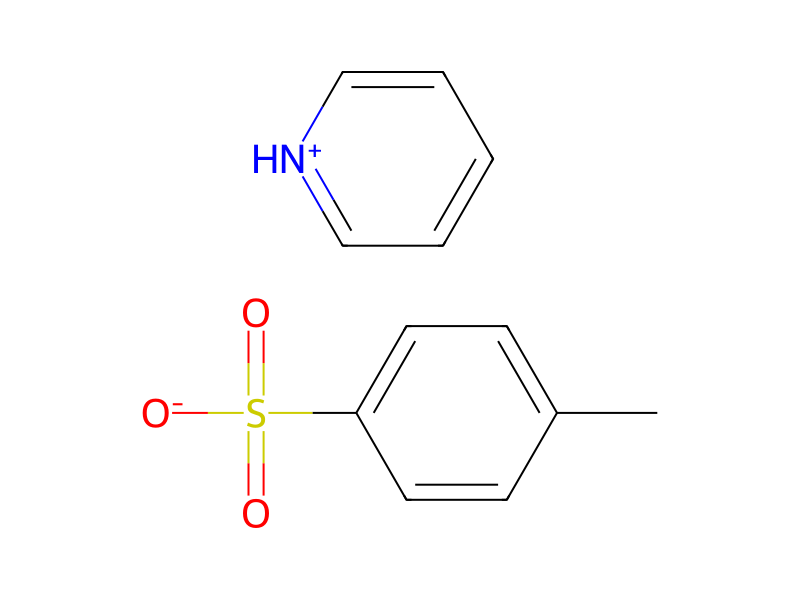
[NH2:1][C:2]1[CH:3]=[N:4][C:5]2[C:10]([C:11]=1[NH:12][CH2:13][CH2:14][CH2:15][CH2:16][CH2:17][C:18]([O:20][CH2:21][CH3:22])=[O:19])=[CH:9][CH:8]=[CH:7][CH:6]=2.[C:23](OC)(OC)(OC)[CH2:24][CH2:25][CH3:26]>C1(C)C=CC=CC=1.C1(C)C=CC(S([O-])(=O)=O)=CC=1.[NH+]1C=CC=CC=1>[CH2:24]([C:23]1[N:12]([CH2:13][CH2:14][CH2:15][CH2:16][CH2:17][C:18]([O:20][CH2:21][CH3:22])=[O:19])[C:11]2[C:10]3[CH:9]=[CH:8][CH:7]=[CH:6][C:5]=3[N:4]=[CH:3][C:2]=2[N:1]=1)[CH2:25][CH3:26]A solution of ethyl 6-[(3-aminoquinolin-4-yl)amino]hexanoate (44.0 g, 146 mmol) in toluene (500 mL) was heated at reflux under a Dean-Stark trap for 1.5 hours and then allowed to cool to ambient temperature. Trimethyl orthobutyrate (29.2 mL, 182.5 mmol) and pyridinium p-toluenesulfonate (0.300 g, 1.20 mmol) were sequentially added, and the reaction was heated at reflux for three hours, allowed to cool to ambient temperature, and concentrated under reduced pressure. The residue was dissolved in dichloromethane, and the resulting solution was washed sequentially with saturated aqueous sodium bicarbonate and brine, dried over magnesium sulfate, filtered, and concentrated under reduced pressure. The crude product was purified by column chromatography on silica gel (eluting with 97:3 dichloromethane:methanol) to provide 38 g of ethyl 6-(2-propyl-1H-imidazo[4,5-c]quinolin-1-yl)hexanoate.