Diisopropylethylamine → (r)-5-(2-Acetamido-4-methylthiazol-5-yl)-n-(2-hydroxy-1-phenylethyl)furan-2-carboxamide
HRID 2386177
Reaction equation

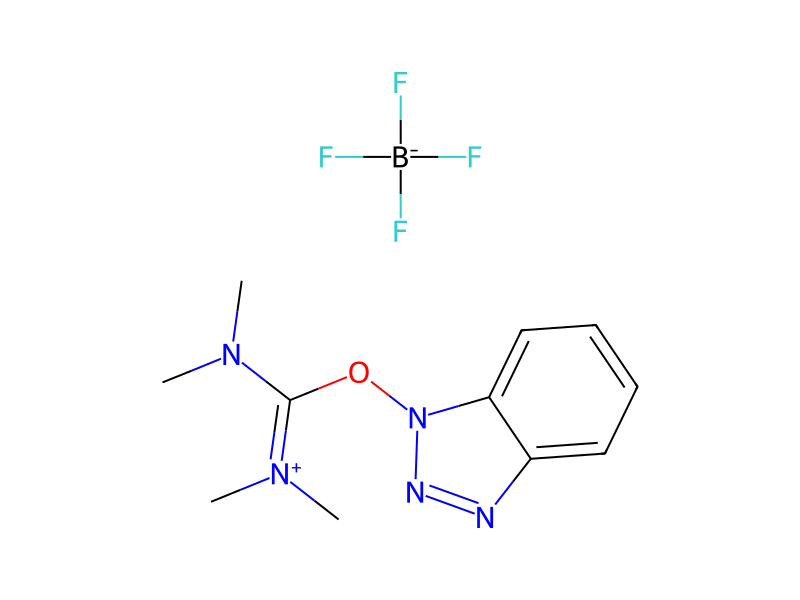
[C:1]([NH:4][C:5]1[S:6][C:7]([C:11]2[O:15][C:14]([C:16]([OH:18])=O)=[CH:13][CH:12]=2)=[C:8]([CH3:10])[N:9]=1)(=[O:3])[CH3:2].CN(C(ON1N=NC2C=CC=CC1=2)=[N+](C)C)C.[B-](F)(F)(F)F.CCN(C(C)C)C(C)C.[CH:50]1[CH:55]=[CH:54][C:53]([C@H:56]([NH2:59])[CH2:57][OH:58])=[CH:52][CH:51]=1>>[C:1]([NH:4][C:5]1[S:6][C:7]([C:11]2[O:15][C:14]([C:16]([NH:59][C@H:56]([C:53]3[CH:54]=[CH:55][CH:50]=[CH:51][CH:52]=3)[CH2:57][OH:58])=[O:18])=[CH:13][CH:12]=2)=[C:8]([CH3:10])[N:9]=1)(=[O:3])[CH3:2]Participants
5