HomeMCPWorkbenchSkills
HomeWorkbenchNotificationsMe
llms.txt · MCP GuidePrivacy Policy · Terms of Service · Supportv1.8.0
  1. Home
  2. /Reaction

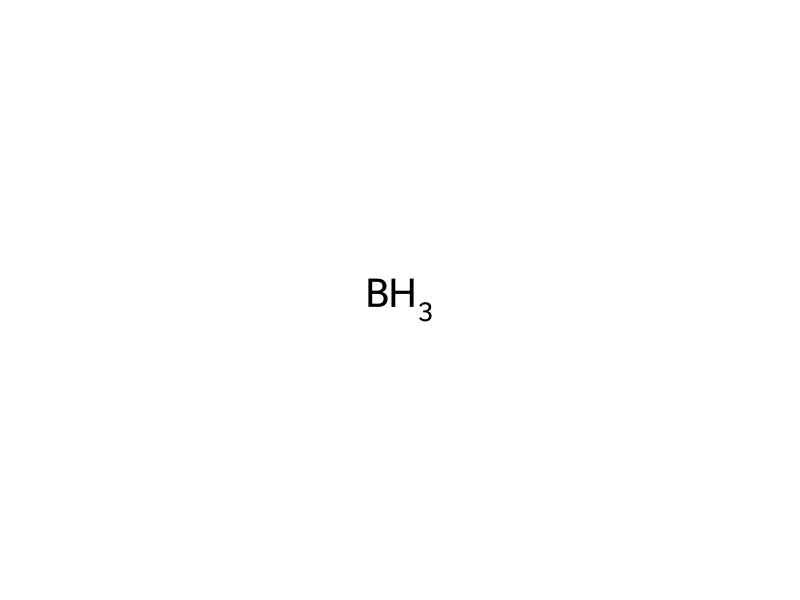
Borane → HCID 68524964, compound

HRID 2386196
Notes
Print preview

Reaction equation

HRID 2386196 reaction equation
[O:1]1[CH:5]=[CH:4][N:3]=[CH:2]1.C([Li])CCC.B.[CH3:12][O:13][C:14]1[CH:15]=[C:16]([CH2:20][CH2:21][CH2:22][CH2:23][CH2:24][CH2:25][CH:26]=[O:27])[CH:17]=[CH:18][CH:19]=1>O1CCCC1>[CH3:12][O:13][C:14]1[CH:15]=[C:16]([CH2:20][CH2:21][CH2:22][CH2:23][CH2:24][CH2:25][CH:26]([C:2]2[O:1][CH:5]=[CH:4][N:3]=2)[OH:27])[CH:17]=[CH:18][CH:19]=1
ParticipantsProcedureWorkupSources & evidenceReaction notes

Participants

6

Reactant 4

HCID 6331BoraneHCID 9255OxazoleHCID 86640154HCID 86640154, compoundHCID 178418339Butyllithium2×

Product 1

HCID 68524964HCID 68524964, compoundYield 69.4%

Reagents, catalysts & solvents 1

HCID 8028Tetrahydrofuran
Solvent

Procedure

Under an atmosphere of argon, oxazole (0.0567 g, 0.822 mmol) was taken in dry tetrahydrofuran then treated with a 1 M borane-tetrahydrofuran complex solution (0.896 mL, 0.896 mmol) and allowed to stir for 1 hour at ambient temperature. This clear solution was then cooled to −78° C. and a 2.6 M n-butyllithium solution in hexanes (0.411 mL, 1.07 mmol) was added. Upon addition of the n-butyllithium, the reaction solution changed from a clear solution to a clear yellow or dark green solution indicating lithiation of the borane-complexed oxazole. Stirring continued for 40 minutes before the addition of 7-(3-Methoxyphenyl)heptanal (0.181 g, 0.822 mmol, dissolved in 5 mL tetrahydrofuran). After 2 hours, the reaction solution was allowed to warm to ambient temperature and the reaction was quenched with a 5% solution of acetic acid in ethanol (excess) and stirred for 16 hours. The solvent was removed under reduced pressure and the residue re-dissolved in ethyl acetate. The organic phase was washed with water, saturated sodium bicarbonate, then brine and then dried over sodium sulfate. The solvent was removed under reduced pressure and flash column chromatography with silica gel (20%-50% ethyl acetate:hexanes gradient elution) gave the title compound as a light yellow oil (69%, 0.165 g): 1H NMR (600 MHz, CDCl3) δ 7.57 (s, 1H), 7.18 (t, 1H), 7.02 (s, 1H), 6.75 (d, J=7.8 Hz, 1H), 6.71 (m, 2H), 4.78 (t, 1H), 4.75 (bs, 1H), 3.78 (s, 3H), 2.57 (t, 2H), 1.89-1.91 (m, 2H), 1.57-1.62 (m, 2H), 1.42-1.45 (m, 1H), 1.30-1.40 (m, 5H); 13C NMR (150 MHz, CDCl3) δ 166.21, 159.36, 144.21, 138.49, 128.97, 126.26, 120.65, 113.98, 110.65, 67.11, 54.88, 35.77, 35.17, 31.07, 28.97, 28.94, 24.82.

Workup

  1. temperatureThis clear solution was then cooled to −78° C.
  2. stirringStirring
  3. waitAfter 2 hours
  4. temperatureto warm to ambient temperature
  5. customthe reaction was quenched with a 5% solution of acetic acid in ethanol (excess)
  6. stirringstirred for 16 hours
  7. customThe solvent was removed under reduced pressure
  8. dissolutionthe residue re-dissolved in ethyl acetate
  9. washThe organic phase was washed with water, saturated sodium bicarbonate
  10. dry with materialbrine and then dried over sodium sulfate
  11. customThe solvent was removed under reduced pressure and flash column chromatography with silica gel (20%-50% ethyl acetate:hexanes gradient elution)

Sources & evidence

ORD record
ord-74820ba572024f59ac0593c11574d155
Source dataset
uspto-grants-2012_09
DOI
10.6084/m9.figshare.5104873.v1
Patent number
US08268817B2

Reaction notes

Loading…

On this pageParticipantsProcedureWorkupSources & evidenceReaction notes

