Potassium Carbonate → tert-Butyl (2-chloro-benzoimidazol-1-yl)-acetate
Reaction equation

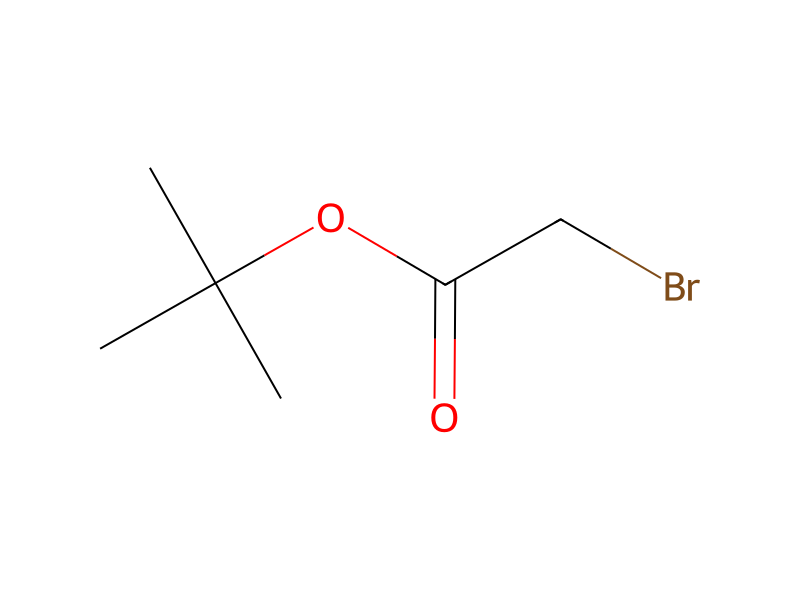
C([O-])([O-])=O.[K+].[K+].[Cl:7][C:8]1[NH:9][C:10]2[CH:16]=[CH:15][CH:14]=[CH:13][C:11]=2[N:12]=1.Br[CH2:18][C:19]([O:21][C:22]([CH3:25])([CH3:24])[CH3:23])=[O:20]>CC(C)=O>[Cl:7][C:8]1[N:12]([CH2:18][C:19]([O:21][C:22]([CH3:25])([CH3:24])[CH3:23])=[O:20])[C:11]2[CH:13]=[CH:14][CH:15]=[CH:16][C:10]=2[N:9]=1Participants
5
Reactant 3


Product 1

Reagents, catalysts & solvents 1

Procedure
In a round bottomed flask are added K2CO3 (9.34 g, 67.7 mmol), 2-chlorobenzimidazole (5.16 g, 33.8 mmol) and tert-butyl bromoacetate (6.6 g, 5 ml, 33.8 mmol) in acetone (100 ml). The resulting suspension is refluxed for 1 h. The crude mixture is filtered through a filter paper and water (100 ml) is added. The resulting aqueous phase is extracted three times with Et2O. The combined organic phases are washed with brine and dried over MgSO4. The solvent is evaporated under reduced pressure yielding the title compound (7.98 g) in 88% as a white powder: tR=2.20 min (LC-2), ESI-MS (pos.): m/z 267.2 [M+H]+; 1H-NMR (CDCl3): δ (ppm) 1.48 (s, 9H, tBu), 4.92 (s, 2H, CH2CO2), 7.24-7.40 (m, 3Harom), 7.76-7.80 (m, 1Harom). Intermediate 2-IIa and 2-IIb tert-Butyl (2-chloro-5-nitro-benzoimidazol-1-yl)-acetate and its 6-nitro regioisomer are prepared according to the same procedure (yield 93%): tR=6.68 min (LC-1), ESI-MS (pos.): m/z 312.08 [M+H]+, 310.28 [M−H]+; 1H-NMR (CDCl3): δ (ppm) 1.50 (s, 9H, tBu), 1.52 (s, 9H, tBu), 5.04 and 5.06 (s, 2H, CH2CO2), 7.38 (d, 1Harom), 7.86 (d, 1 Harom), 8.32-8.40 (m, 3Harom), 8.96 (m, 1Harom).