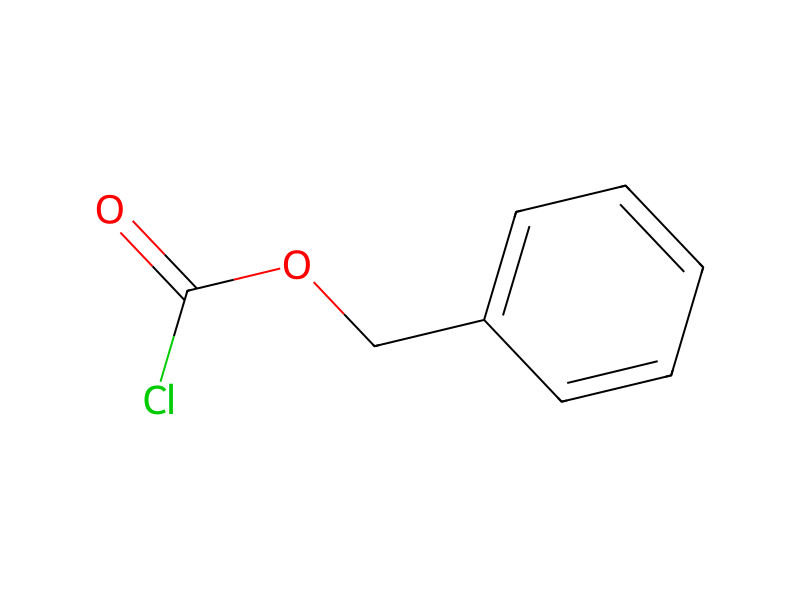
[NH2:1][C:2]1[C:3](=[O:12])[NH:4][C:5]2[C:10]([CH:11]=1)=[CH:9][CH:8]=[CH:7][CH:6]=2.[OH-].[Na+].[CH2:15]([O:22][C:23](Cl)=[O:24])[C:16]1[CH:21]=[CH:20][CH:19]=[CH:18][CH:17]=1>O1CCOCC1.O.C(Cl)Cl>[CH2:15]([O:22][C:23]([NH:1][C:2]1[C:3](=[O:12])[NH:4][C:5]2[C:10]([CH:11]=1)=[CH:9][CH:8]=[CH:7][CH:6]=2)=[O:24])[C:16]1[CH:21]=[CH:20][CH:19]=[CH:18][CH:17]=1To a solution containing 0.5 g (3.10 mmol) of 3-amino-quinolin-2-(1H)-one described by Anderson, et. al. (J. Heterocyclic Chem., 1993, 30, 1533) in 40 mL of dioxane under a nitrogen atmosphere was added 0.14 g (3.4 mmol) of sodium hydroxide in 14 mL of water. The reaction mixture was cooled to 0° C., followed by the addition of 0.50 mL (3.4 mmol) of benzylchloroformate. The pH of the reaction was maintained above 8.0 with additional 1N sodium hydroxide. The reaction was allowed to warm to room temperature and stirred for 2 hours. The reaction was diluted with methylene chloride and washed with water. The organic phase was dried over magnesium sulfate. Filtration, removal of solvent under reduced pressure and column chromatography of the residue on silica gel with 2% methanol/dichloromethane afforded 0.32 g (35%) of product as a white solid. FAB MS [M+H] m/z; Calcd: 295, Found: 295.