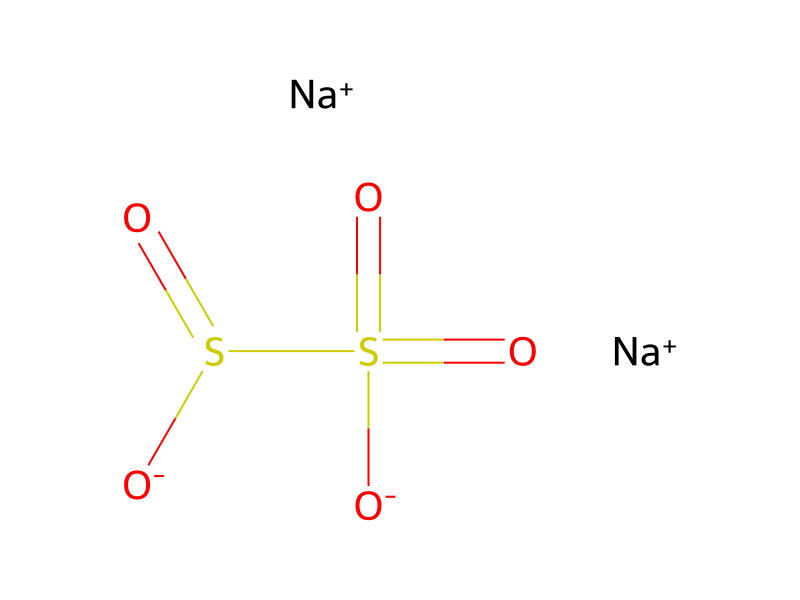
ClC1C=CC=C(C(OO)=[O:9])C=1.[Cl:12][C:13]1[CH:28]=[C:27]([S:29][CH3:30])[CH:26]=[CH:25][C:14]=1[C:15]([C:17]1[CH:18]=[N:19][O:20][C:21]=1[CH:22]1[CH2:24][CH2:23]1)=[O:16].S(S([O-])=O)([O-])(=O)=O.[Na+].[Na+]>ClCCl>[Cl:12][C:13]1[CH:28]=[C:27]([S:29]([CH3:30])=[O:9])[CH:26]=[CH:25][C:14]=1[C:15]([C:17]1[CH:18]=[N:19][O:20][C:21]=1[CH:22]1[CH2:24][CH2:23]1)=[O:16]3-Chloroperbenzoic acid (1.3 g) was added to a solution of 4-[2-chloro-4-(methylsulphenyl)benzoyl]-5-cyclopropylisoxazole (2.0 g) in dichloromethane whilst maintaining the temperature below -15° C. The mixture was stirred at -15° C. for 2 hours and allowed to warm to room temperature. The mixture was stirred for 2 hours and then recooled to -15° C. 3-Chloroperbenzoic acid (0.7 g) was added and the mixture was stirred at -15° C. for 1 hour and at room temperature for 1 hour. A solution of sodium metabisulphite was added. The organic layer was washed with water, dried (magnesium sulphate) and filtered. The filtrate was evaporated to dryness and the residue was purified by column chromatography on silica eluted with ethyl acetate and hexane (3:2) to give 4-[2-chloro-4-(methylsulphinyl)benzoyl]-5-cyclopropylisoxazole (1.3 g) as a white solid, m.p.117° C.