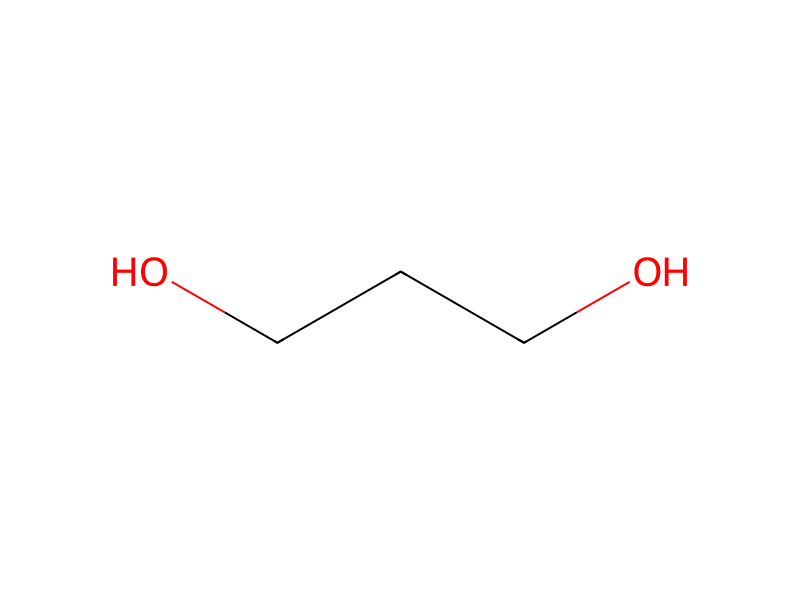
For the sake of comparison, a mixture of 0.5 mole 1,3-propanediol and 0.55 mole acrolein were reacted at 50° C in the presence of 0.3 g. p-toluenesulfonic acid. Layers did not separate until the reaction mixture was cooled to 26° C. The mixture gave 18 g. of an aqueous layer which contained about 40% diol, 21% acrolein, 10% 2-vinyl-1,3-dioxane and 25% water. The acetal layer of 49 g. contained 63% 2-vinyl-1,3-dioxane, 23% acrolein, 8% diol and 5% water, conversion to acetal was about 60% which represents only a negligible increase over equilibrium conversion.