HomeMCPSkillsWorkbenchOpenChem
HomeWorkbenchNotificationsMe
llms.txt · skill.md · MCP GuidePrivacy Policy · Terms of Service · Supportv1.8.5
  1. Home
  2. /Reaction

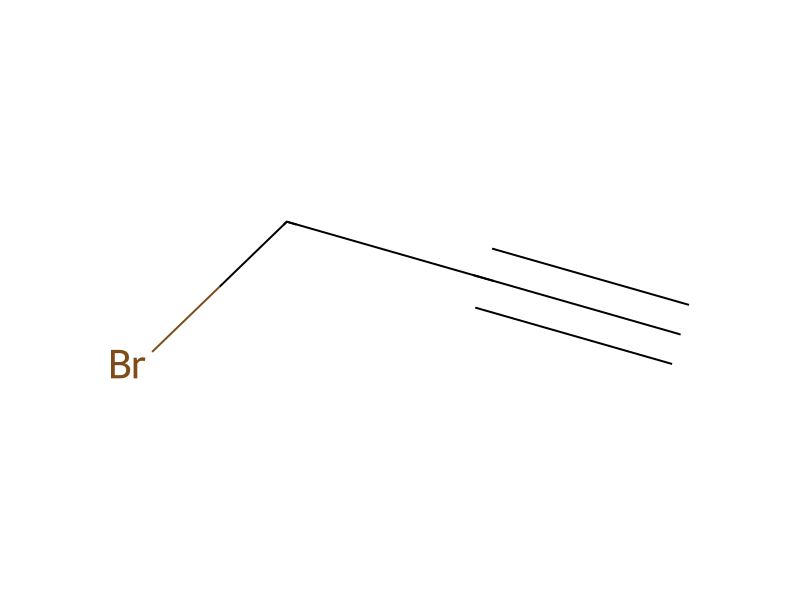
Propargyl bromide → HCID 86669374, compound

HRID 2406839
Print

Reaction equation

[OH:1][C:2]1[C:7]([CH2:8][CH2:9][CH3:10])=[CH:6][C:5]([O:11][CH3:12])=[C:4]([O:13][CH3:14])[CH:3]=1.[CH2:15](Br)[C:16]#[CH:17].C(=O)([O-])[O-].[K+].[K+]>C1(C)C=CC=CC=1.CC(C)=O>[CH2:17]([O:1][C:2]1[C:7]([CH2:8][CH2:9][CH3:10])=[CH:6][C:5]([O:11][CH3:12])=[C:4]([O:13][CH3:14])[CH:3]=1)[C:16]#[CH:15]
ParticipantsProcedureSources & evidenceReaction notes

Participants

6

Reactant 3

HCID 7842Propargyl bromideHCID 11430Potassium CarbonateHCID 53143974,5-Dimethoxy-2-propylphenol

Product 1

HCID 86669374HCID 86669374, compound

Reagents, catalysts & solvents 2

HCID 180AcetoneSolventHCID 1140TolueneSolvent

Procedure

Following the same procedure as in Example 3 b), 3.92 g (0.02 moles) of 1-hydroxy-6-propyl-3,4-dimethoxybenzene were reacted with 3.0 g (0.02 moles) of a solution of propargyl bromide in toluene (80% w/w) and 2.8 g (0.02 moles) of anhydrous potassium carbonate in 20 ml of acetone.

Sources & evidence

ORD record
ord-6a22045bd5b74ec28fbf99b4e4e13baf
Source dataset
uspto-grants-2014_08
DOI
10.6084/m9.figshare.5104873.v1
Patent number
US08809389B2

Reaction notes

On this pageParticipantsProcedureSources & evidenceReaction notes