Hydrochloric Acid → n-Butyl 2-(n-pentadecyl)indole-5-carboxylate
HRID 2412608
Reaction equation

[CH2:1]([C:16]1[NH:17][C:18]2[C:23]([CH:24]=1)=[CH:22][C:21]([C:25]([OH:27])=[O:26])=[CH:20][CH:19]=2)[CH2:2][CH2:3][CH2:4][CH2:5][CH2:6][CH2:7][CH2:8][CH2:9][CH2:10][CH2:11][CH2:12][CH2:13][CH2:14][CH3:15].Cl>C(O)CCC>[CH2:1]([C:16]1[NH:17][C:18]2[C:23]([CH:24]=1)=[CH:22][C:21]([C:25]([O:27][CH2:16][CH2:1][CH2:2][CH3:3])=[O:26])=[CH:20][CH:19]=2)[CH2:2][CH2:3][CH2:4][CH2:5][CH2:6][CH2:7][CH2:8][CH2:9][CH2:10][CH2:11][CH2:12][CH2:13][CH2:14][CH3:15]Participants
4
Reactant 2


Product 1

Reagents, catalysts & solvents 1
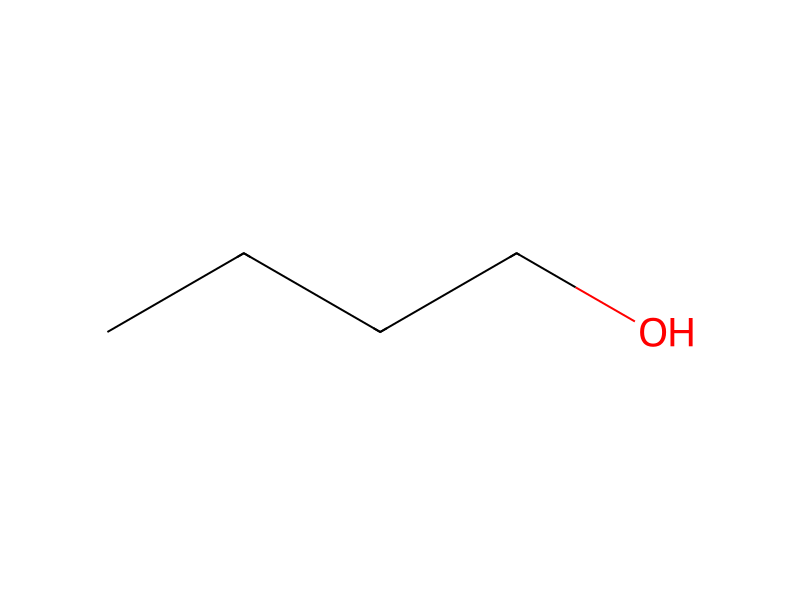
Procedure
A solution of 2-(n-pentadecyl)indole-5-carboxylic acid (17.4 g) in n-butanol (100 ml) containing aqueous hydrochloric acid (10 ml of strength 36.5% w/v) was heated in a steam bath for 18 hours. The solution was concentrated in vacuo to about one half of its volume and the residue was dissolved in diethyl ether. The ethereal solution was washed with water (2×50 ml) and was dried over magnesium sulphate. Evaporation of the solvent in vacuo gave a solid, which was recrystallised from light petroleum ether (b.p. 40°-60° C.) and then from methanol to give n-butyl 2-(n-pentadecyl)indole-5-carboxylate (12.2 g), in the form of a white powder, m.p. 79°-80° C.