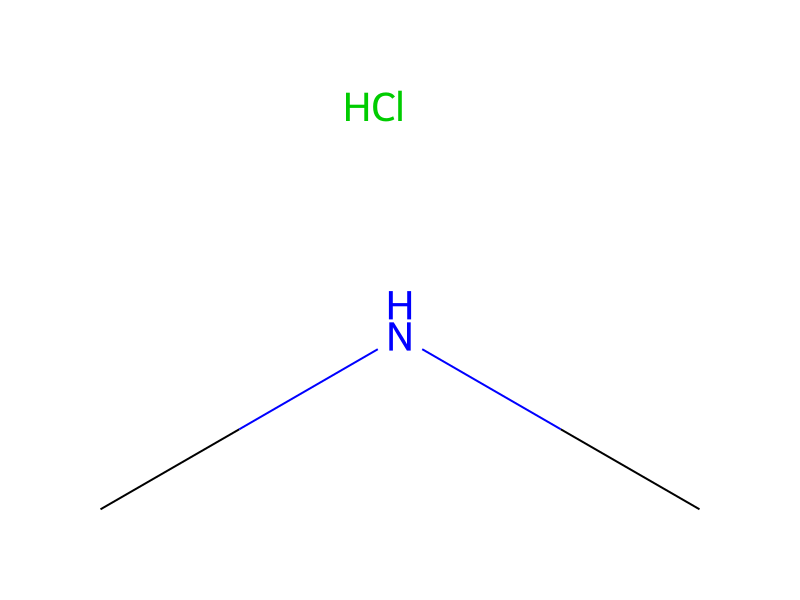
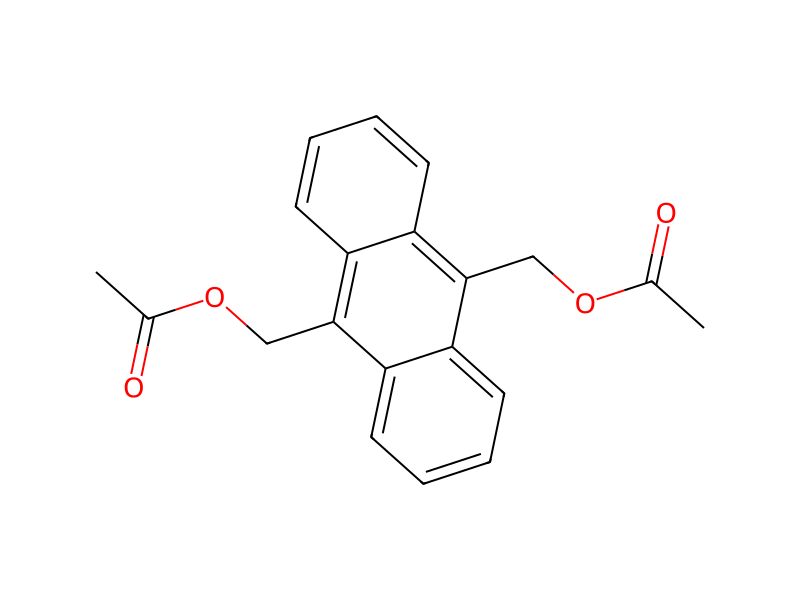
[Cl:1][C:2]1[C:12]([Cl:13])=[C:11]([C:14](=[O:16])[CH3:15])[CH:10]=[CH:9][C:3]=1[O:4][CH2:5][C:6]([OH:8])=[O:7].Cl.[CH3:18][NH:19][CH3:20].C=O.[CH3:23]C(OCC1C2C(=CC=CC=2)C(COC(C)=O)=C2C=1C=CC=C2)=O>C(O)C>[ClH:1].[Cl:1][C:2]1[C:12]([Cl:13])=[C:11]([C:14](=[O:16])[CH2:15][CH2:18][N:19]([CH3:23])[CH3:20])[CH:10]=[CH:9][C:3]=1[O:4][CH2:5][C:6]([OH:8])=[O:7](2,3-Dichloro-4-acetylphenoxy)acetic acid (U.S. Pat. No. 3,453,312) (7.89 g, 0.03 mole), dimethylamine hydrochoride (2.34 g, 0.03 mole), paraformaldehyde (1.05 g, 0.033 mol. equiv.) and glacial acetic (1 ml) were combined and heated on a steam bath for two hours. The reaction mixture was treated with hot ethanol (50 ml) and then cooled. The white solid was separated by filtration, washed with ethanol, dried and recrystallized from a mixture of ethanol and ether to give [2,3-dichloro-4-(3-dimethylaminopropionyl)phenoxy]acetic acid hydrochloride, m.p. 194°-196° C.