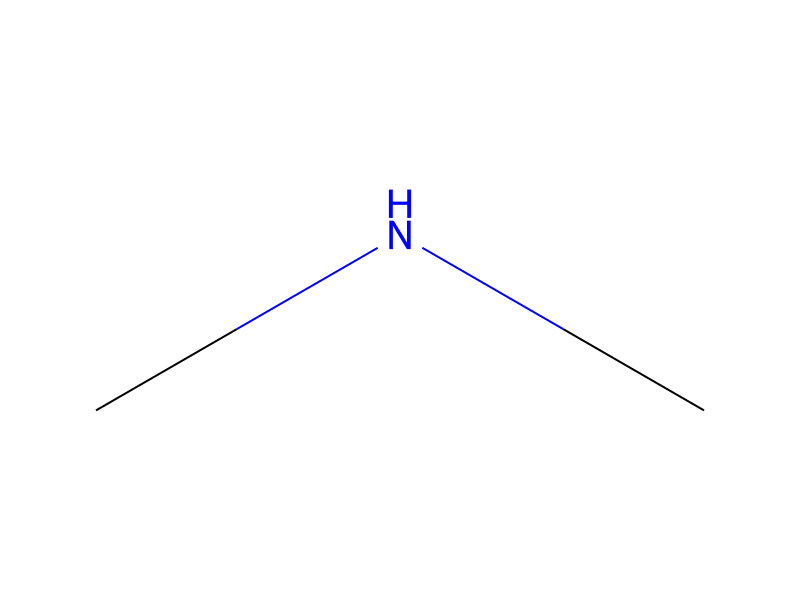
[N+:1]([C:4]1[CH:5]=[C:6]2[C:11](=[CH:12][CH:13]=1)[N:10]=[C:9]([C:14]1[CH:19]=[CH:18][CH:17]=[C:16]([F:20])[CH:15]=1)[CH:8]=[C:7]2Cl)([O-:3])=[O:2].[CH3:22][NH:23][CH3:24].O>CN1C(=O)CCC1>[N+:1]([C:4]1[CH:5]=[C:6]2[C:11](=[CH:12][CH:13]=1)[N:10]=[C:9]([C:14]1[CH:19]=[CH:18][CH:17]=[C:16]([F:20])[CH:15]=1)[CH:8]=[C:7]2[N:23]([CH3:24])[CH3:22])([O-:3])=[O:2]6-Nitro-4-chloro-2-(3-fluoro-phenyl)-quinoline, 20 g (59.4 mmoles), was placed in a 500 mL three-neck round-bottom flask equipped with magnetic stirrer, nitrogen inlet, gas outlet, condenser and heating bath. The material was dissolved in 150 mL of N-methyl pyrrolidinone, stirred and 250 mL of a 40% aq. solution of dimethylamine was added. The mixture was then warmed to 60° C. for 48 hrs. At the end of this time the reaction was cooled, poured into 3 L of water in a 4 L Erlenmeyer flask and the mixture stirred until solids formed. The solids were collected by vacuum filtration and dried in a vacuum oven. The product was recrystallised from-ethanol in a −20° C. freezer to give 19.6 g (95%) yield of the desired product.
Loading…