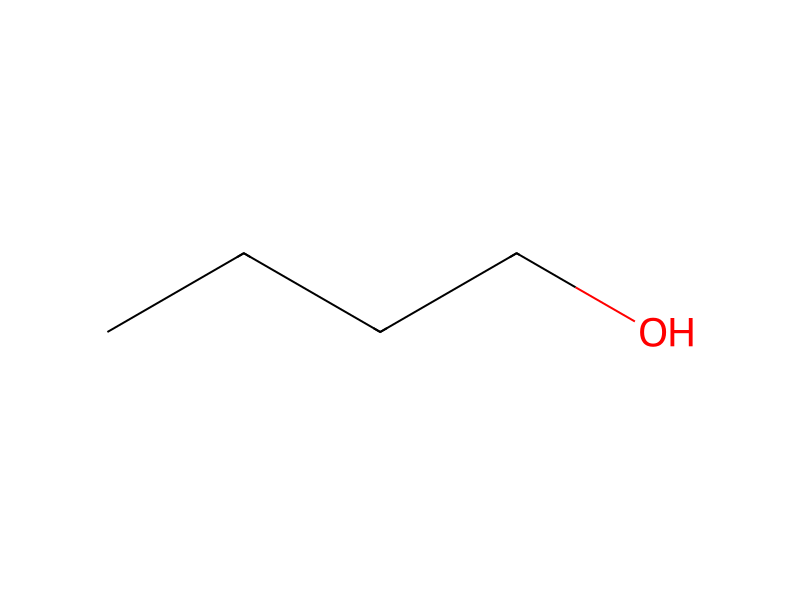
In order to carry out the process according to the invention, a solution of sodium butylate in n-butanol is first prepared in a manner which is in itself known, for example by dehydrating an aqueous solution of sodium hydroxide by means of n-butanol. The azeotropic dehydration can be so carried out that a binary mixture of n-butanol and water is taken off at the top in a first distillation column, the upper phase obtained after condensation and separation of the layers is returned to the distillation and the lower phase is freed from dissolved n-butanol by stripping in a second distillation column, and the top product from the second column is combined with the top product from the first column. Pure waste water is obtained as the sump product from the second column. The sump product from the first column is the solution of sodium butylate in n-butanol which is required for the reaction with 3,4-dichlorobut-1-ene. The reaction with 3,4-dichlorobut-1-ene is carried out in the liquid phase at temperatures of 0° to 200° C, for example 20° to 60° C, preferably in the absence of molecular oxygen. The process according to the invention can now be carried out using different variants. A common characteristic of all the variants is that the distillation of the reaction mixture obtained from the reaction of sodium butylate/n-butanol and 3,4-dichlorobut-1-ene in order to separate off the chloroprene formed is carried out in the presence of sodium chloride, which is also formed and is in a suspended form. This means that there is, in the distillation column, a suspension of sodium chloride in the reaction mixture or, respectively, in n-butanol, for example on the trays of a bubble tray column or sieve tray column which is used as the distillation unit, this suspension being below the feed point for the sodium butylate/n-butanol solution and for 3,4-dichlorobut-1-ene when the reaction is carried out in a distillation column or below the feed point for the reaction mixture if the reaction is carried out in a separate reaction vessel and the reaction mixture is transferred to a distillation column in order to separate off the chloroprene by distillation. Various embodiments of the process are described below.