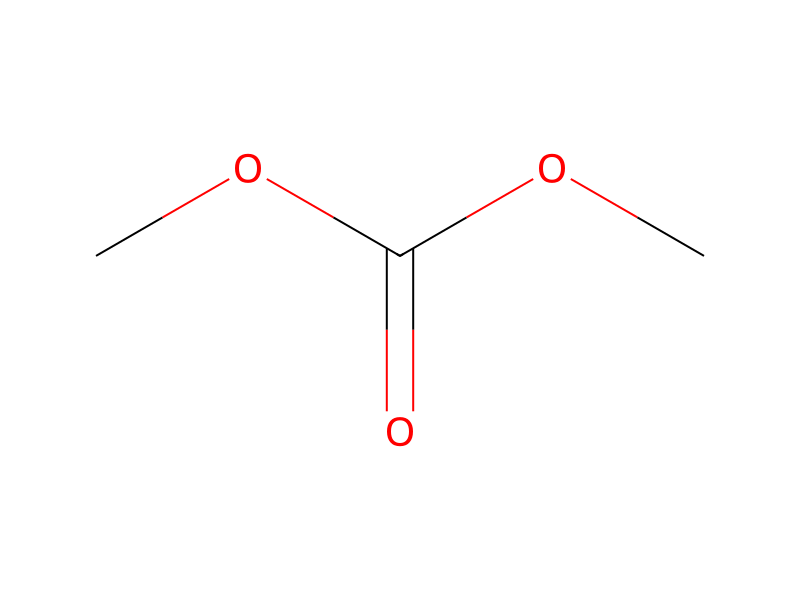
[Li+].CC([N-]C(C)C)C.[F:9][C:10]1[CH:15]=[CH:14][C:13]([C:16]2[CH:21]=[C:20]([CH3:22])[CH:19]=[C:18]([C:23]3[CH:28]=[CH:27][C:26]([C:29]([F:32])([F:31])[F:30])=[CH:25][CH:24]=3)[N:17]=2)=[CH:12][CH:11]=1.[C:33](=O)([O:36]C)[O:34][CH3:35]>>[CH3:35][O:34][C:33](=[O:36])[CH2:22][C:20]1[CH:19]=[C:18]([C:23]2[CH:28]=[CH:27][C:26]([C:29]([F:32])([F:30])[F:31])=[CH:25][CH:24]=2)[N:17]=[C:16]([C:13]2[CH:12]=[CH:11][C:10]([F:9])=[CH:15][CH:14]=2)[CH:21]=1A solution of LDA (1.8 M in THF/heptane/ethyl benzene, 1.1 mL, 2.0 mmol) was added slowly to a stirred solution of 2-(4-fluoro-phenyl)-4-methyl-6-(4-trifluoromethyl-phenyl)-pyridine (260 g, 0.8 mmol) under N2 at −78° C. After 30 minutes dimethyl carbonate (200 μL, 2.0 mmol) was added. After stirring at −78° C. for an additional 30 minutes, the solution was allowed to warm slowly and stirred at 0° C. for 30 minutes. The reaction was quenched with saturated aqueous NH4Cl (2 mL). The mixture was partitioned between CH2Cl2 and H2O. The aqueous layer was extracted with CH2Cl2 (2×). The combined extracts were washed with brine, then dried (Na2SO4), filtered and evaporated. The residue was purified by column chromatography on silica gel (40-80% CH2Cl2 in heptane) to give the product as a white solid (130 mg, 42%). 1H NMR (300 MHz, CDCl3) δ 8.23 (d, J=7.91 Hz, 2H), 8.13 (dd, J=5.46, 8.85 Hz, 2H), 7.75 (d, J=8.29 Hz, 2H), 7.64 (d, J=2.64 Hz, 2H), 7.19 (t, J=8.67 Hz, 2H), 3.78 (s, 2H), 3.76 (s, 3H). MS m/e 390.2 (M+H).
Loading…