HomeMCPWorkbenchSkills
HomeWorkbenchNotificationsMe
llms.txt · MCP GuidePrivacy Policy · Terms of Service · Supportv1.8.3
  1. Home
  2. /Reaction

Ethylenediamine → 2-(6-chloro-1-methylindazol-3-yl)-N-[(2R)-1-(3-cyanoazetidin-1-yl)-1-oxopropan-2-yl]-5H-pyrrolo[2,3-b]pyrazine-7-carboxamide

HRID 245797
Print

Reaction equation

HRID 245797 reaction equation
[C:1]([CH:3]1[CH2:6][N:5]([C:7](=[O:41])[C@H:8]([NH:10][C:11]([C:13]2[C:21]3[C:16](=[N:17][CH:18]=[C:19]([C:22]4[C:30]5[C:25](=[CH:26][C:27]([Cl:31])=[CH:28][CH:29]=5)[N:24]([CH3:32])[N:23]=4)[N:20]=3)[N:15](COCC[Si](C)(C)C)[CH:14]=2)=[O:12])[CH3:9])[CH2:4]1)#[N:2].FC(F)(F)C(O)=O.C(N)CN>ClCCl>[C:1]([CH:3]1[CH2:4][N:5]([C:7](=[O:41])[C@H:8]([NH:10][C:11]([C:13]2[C:21]3[C:16](=[N:17][CH:18]=[C:19]([C:22]4[C:30]5[C:25](=[CH:26][C:27]([Cl:31])=[CH:28][CH:29]=5)[N:24]([CH3:32])[N:23]=4)[N:20]=3)[NH:15][CH:14]=2)=[O:12])[CH3:9])[CH2:6]1)#[N:2]
ParticipantsProcedureWorkupSources & evidenceReaction notes

Participants

5

Reactant 3

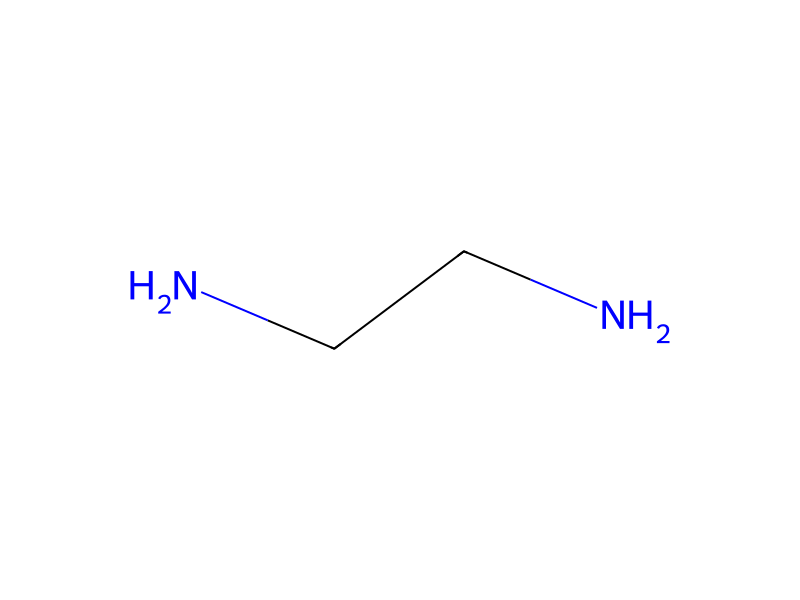
HCID 3301EthylenediamineHCID 6422Trifluoroacetic acidHCID 712861952-(6-chloro-1-methyl-1H-indazol-3-yl)-5-(2-trimethylsilanylethoxymethyl)-5H-pyrrolo[2,3-b]pyrazine-7-carboxylic acid [(R)-2-(3-cyano-azetidin-1-yl)-1-methyl-2-oxo-ethyl]-amide

Product 1

HCID 712886022-(6-chloro-1-methylindazol-3-yl)-N-[(2R)-1-(3-cyanoazetidin-1-yl)-1-oxopropan-2-yl]-5H-pyrrolo[2,3-b]pyrazine-7-carboxamideYield 34.8%

Reagents, catalysts & solvents 1

HCID 6344DichloromethaneSolvent

Procedure

In a round-bottomed flask, 2-(6-chloro-1-methyl-1H-indazol-3-yl)-5-(2-trimethylsilanylethoxymethyl)-5H-pyrrolo[2,3-b]pyrazine-7-carboxylic acid [(R)-2-(3-cyano-azetidin-1-yl)-1-methyl-2-oxo-ethyl]-amide (154 mg, 0.23 mmol) was dissolved in dichloromethane (1.2 ml) and trifluoroacetic acid (0.72 ml, 9.35 mmol) was added. The orange reaction mixture was stirred at room temperature for 2 h then concentrated. The residue was redissolved in dichloromethane (1.2 ml) and ethylenediamine (1.0 ml, 14.8 mmol) was added. The solution was stirred at room temperature for 1.5 h then quenched with water and diluted with ethyl acetate. The resultant suspension was filtered, washing with water (hot), ethyl acetate and dichloromethane then dried under high vacuum to afford 37 mg (33%) of 2-(6-chloro-1-methyl-1H-indazol-3-yl)-5H-pyrrolo[2,3-b]pyrazine-7-carboxylic acid [(R)-2-(3-cyano-azetidin-1-yl)-1-methyl-2-oxo-ethyl]-amide as a white powder. MS: (M+H)+=463; 1H NMR (DMSO-d6, 300 MHz): δ (ppm) 12.70 (br. s., 1H), 9.15 (s, 1H), 8.73 (d, J=8.7 Hz, 1H), 8.47 (t, J=7.4 Hz, 2H), 7.98 (s, 1H), 7.27 (d, J=8.7 Hz, 1H), 4.47-4.84 (m, 3H), 4.18 (s, 3H), 4.02-4.32 (m, 2H), 3.86 (br. s., 1H), 1.42 (d, J=4.5 Hz, 3H).

Workup

  1. concentrationthen concentrated
  2. dissolutionThe residue was redissolved in dichloromethane (1.2 ml)
  3. stirringThe solution was stirred at room temperature for 1.5 h
  4. customthen quenched with water
  5. additiondiluted with ethyl acetate
  6. filtrationThe resultant suspension was filtered
  7. washwashing with water (hot), ethyl acetate and dichloromethane
  8. customthen dried under high vacuum

Sources & evidence

ORD record
ord-ac05026954c74c6d812efa0d4496cf4e
Source dataset
uspto-grants-2014_02
DOI
10.6084/m9.figshare.5104873.v1
Patent number
US08658646B2

Reaction notes

On this pageParticipantsProcedureWorkupSources & evidenceReaction notes