1,2,4-Trichlorobenzene → 2,5-Dichlorobenzenethiol
HRID 248585
Reaction equation

[Cl:1][C:2]1[CH:7]=[CH:6][C:5]([Cl:8])=[CH:4][C:3]=1Cl.[SH-:10].[Na+]>C([O-])(=O)C.[Cu+2].C([O-])(=O)C.N>[Cl:1][C:2]1[CH:7]=[CH:6][C:5]([Cl:8])=[CH:4][C:3]=1[SH:10]Participants
5
Reactant 2
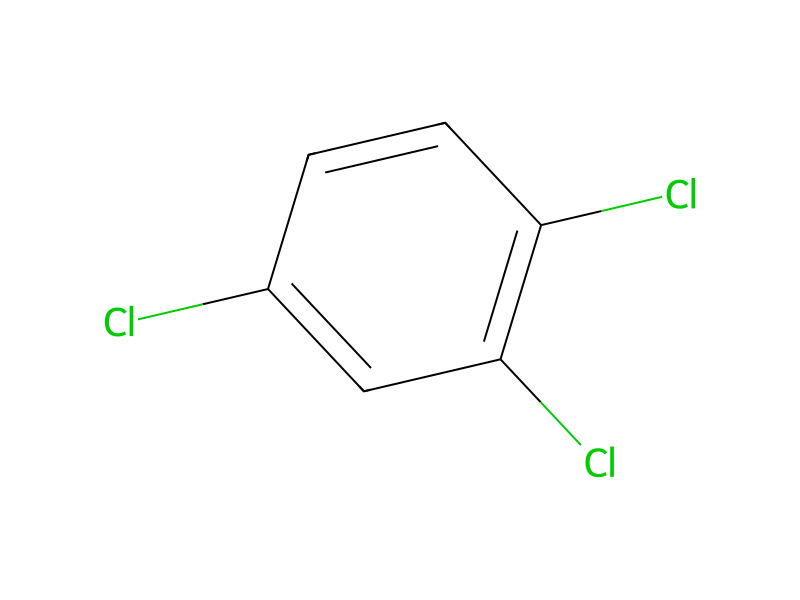

Product 1

Reagents, catalysts & solvents 2


Procedure
the method in which 1,2,4-trichlorobenzene and sodium hydrosulfide are reacted in the presence of copper acetate catalyst in liquid ammonia solvent under increased pressure to yield 2,5-dichlorothiophenol, followed by reaction with monochloroacetic acid to yield 2,5-dichlorophenylthioglycolic acid [Kogyo Kagaku, 70, 1384 (1967)].
Workup
- temperatureunder increased pressure
Sources & evidence
- ORD record
- ord-5f609b4e76bc4b5bad749a0f11953275
- Source dataset
- uspto-grants-1993_05
- Patent number
- US05210287