Reaction equation

[C:1]([O:6][CH2:7][CH2:8][CH2:9]C)(=[O:5])[CH:2]([CH3:4])[OH:3].[C:11](O)(=O)C(C)O.C(O)CCC>Cl.O.C(O)CCC>[C:1]([O:6][CH2:7][CH:8]([CH3:9])[CH3:11])(=[O:5])[CH:2]([CH3:4])[OH:3]Participants
Reactant 3

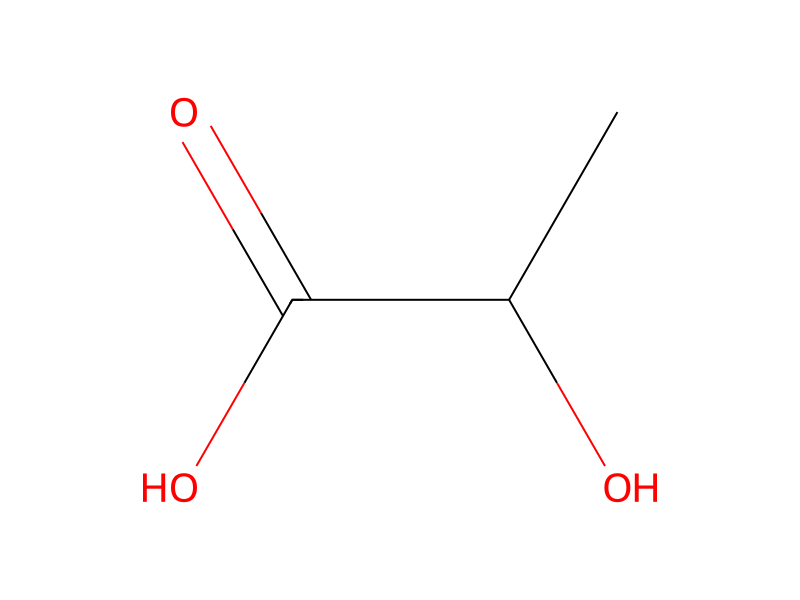

Product 1

Reagents, catalysts & solvents 2


Procedure
The composition of matter of 1-butyl lactate is and its preparation are disclosed in Gabriel et al. U.S. Pat. No. 1,668,806 (1928). They prepared 1-butyl lactate by dehydrating 70% lactic acid with excess 1-butanol at 117° C., followed by addition of HCl catalyst, followed by refluxing and esterification with addition excess 1-butanol and drawing a 1-butanol water azeotrope overhead. Nakanishi and Tsuda (Japanese Patent JP 46/30176 [71/30176]) consider production of 1-butyl lactate by extraction of an acidified crude fermentation broth with 1-butanol, followed by esterification of the extract phase. BASF (EP 159-285) considers production of isobutyl lactate by extraction of an acidified crude fermentation broth with isobutanol, followed by esterification of the extract phase, which was then distilled in vacuum 80° C./25 mbar to give a purified isobutyl lactate.
Workup
- customits preparation
- customat 117° C.
- temperatureby refluxing
- extractionby extraction of
- extractionby extraction of
- distillationwas then distilled in vacuum 80° C./25 mbar
Sources & evidence
- ORD record
- ord-5a37d7d15a7943c58ecb95b9ab25a852
- Source dataset
- uspto-grants-1993_05
- Patent number
- US05210296
Linked notes
Loading…