Reaction equation

[P:1]([Cl:4])(Cl)[Cl:2].P.[CH2:6]([OH:14])[CH2:7][CH2:8][CH2:9][CH2:10][CH2:11][CH2:12][CH3:13]>>[CH2:6]([O:14][P:1]([Cl:4])[Cl:2])[CH2:7][CH2:8][CH2:9][CH2:10][CH2:11][CH2:12][CH3:13]Participants

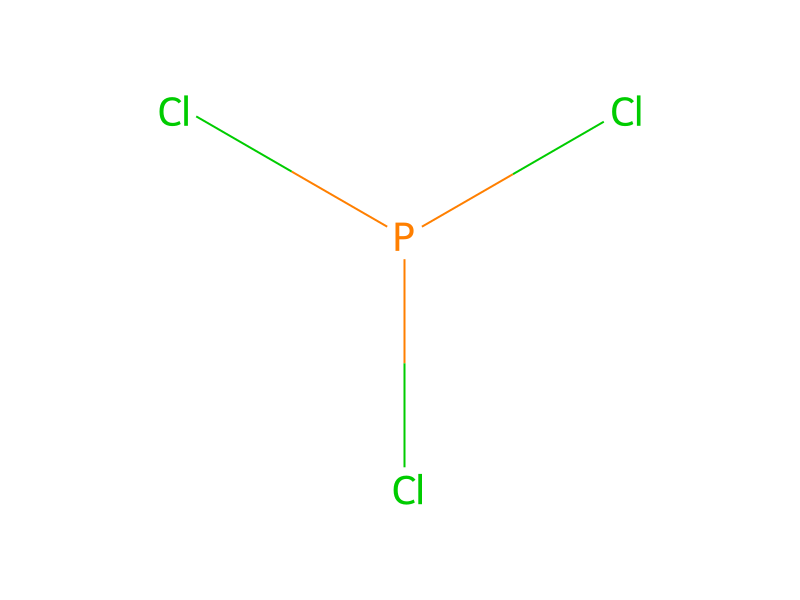


Conditions
- Temperature
- 0 °C
Procedure
Freshly distilled phosphorus trichloride (45.6 g, 0.338 mole) was charged into a four-necked round bottom flask equipped with a mechanical stirrer, an addition funnel, a thermometer, and a reflux condenser itself topped with a discharge tube. The discharge tube led to an aqueous sodium hydroxide trap for absorption of hydrogen chloride that evolves from the reaction. After cooling the reaction vessel to 0° C. with continual purging of dry nitrogen, anhydrous octanol (22 g, 0.168 mole) was added dropwise to the reaction mixture. When the addition of the octanol was complete, the reaction mixture was allowed to warm gradually up to room temperature and was then poured into a dry distillation flask. The material was distilled with a bath temperature of 80-85° C. and using a water pump vacuum to remove residual hydrogen chloride and excess phosphorus trichloride. The residue was then fractionated at 8 mm Hg to yield the product at 113-130° C. in 69% conversion. The phosphorus-31 NMR showed a peak at 176 ppm. The refractive index at 21.5° C. was 1.4682.
Workup
- customequipped with a mechanical stirrer, an addition funnel
- customa thermometer, and a reflux condenser itself topped with a discharge tube
- customThe discharge tube led to an aqueous sodium hydroxide trap for absorption of hydrogen chloride that
- customevolves from the reaction
- additionwas added dropwise to the reaction mixture
- temperatureto warm gradually up to room temperature
- additionwas then poured into a dry distillation flask
- distillationThe material was distilled with a bath temperature of 80-85° C.
- customto remove residual hydrogen chloride and excess phosphorus trichloride
- customto yield the product at 113-130° C. in 69% conversion
- customat 21.5° C.
Sources & evidence
- ORD record
- ord-7a5ebf9d526542f3bc04efb3aba5827b
- Source dataset
- uspto-grants-2005_02
- Patent number
- US06858662B2
Linked notes
Loading…