HomeMCPWorkbenchSkills
HomeWorkbenchNotificationsMe
llms.txt · MCP GuidePrivacy Policy · Terms of Service · Supportv1.8.3
  1. Home
  2. /Reaction

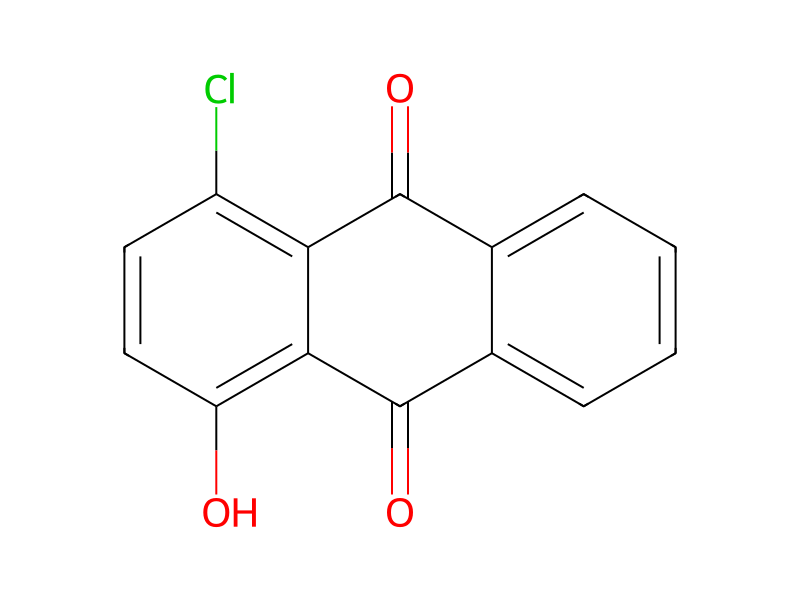
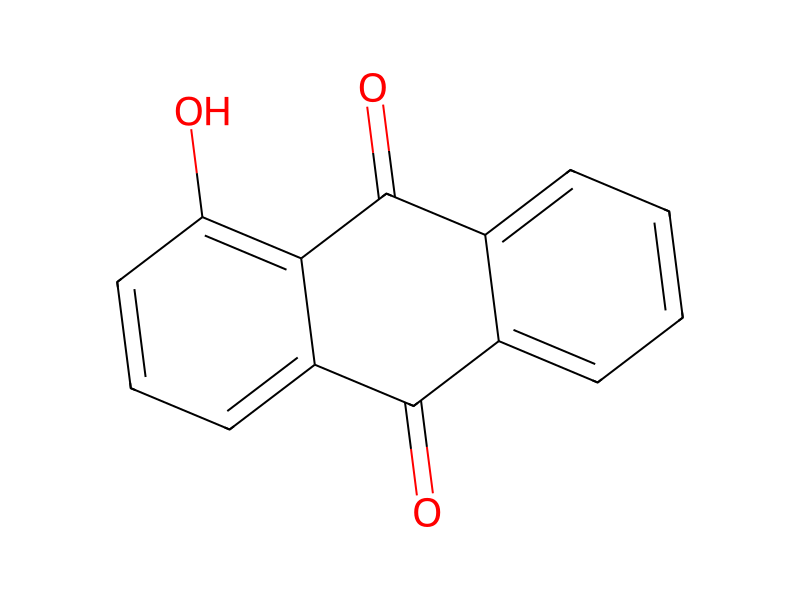
1-Chloro-4-hydroxyanthraquinone → 1-Hydroxyanthraquinone

HRID 256277
Print

Reaction equation

HRID 256277 reaction equation
Cl[C:2]1[C:15]2[C:14](=[O:16])[C:13]3[C:8](=[CH:9][CH:10]=[CH:11][CH:12]=3)[C:7](=[O:17])[C:6]=2[C:5]([OH:18])=[CH:4][CH:3]=1.C1(C2C=CC(N)=CC=2)CCCCC1.C([O-])(=O)C.[Na+]>[N+](C1C=CC=CC=1)([O-])=O.C([O-])(=O)C.[Cu+2].C([O-])(=O)C>[OH:18][C:5]1[C:6]2[C:7](=[O:17])[C:8]3[C:13](=[CH:12][CH:11]=[CH:10][CH:9]=3)[C:14](=[O:16])[C:15]=2[CH:2]=[CH:3][CH:4]=1
ParticipantsProcedureWorkupSources & evidenceReaction notes

Participants

6

Reactant 3

HCID 665101-Chloro-4-hydroxyanthraquinoneHCID 807644-CyclohexylbenzenamineHCID 517045Sodium Acetate

Product 1

HCID 85121-Hydroxyanthraquinone

Reagents, catalysts & solvents 2

HCID 8895Cupric acetateCatalystHCID 7416
Nitrobenzene
Solvent

Procedure

The pleochroic dye 1-cyclohexylphenylamino, 4-hydroxyanthraquinone was prepared by combining equimolar quantities of 1-chloro-4-hydroxy anthraquinone and 4-cyclohexylaniline and heating in the presence of a catalytic amount of copper acetate (0.1 g/0.1 mole) and sodium acetate (10 g/0.1 mole) in nitrobenzene. The reaction was run and the dye separated and tested as in Example 70. The dye had an absorption maxima at 594 nm and an optical order parameter of 0.75.

Workup

  1. customthe dye separated

Sources & evidence

ORD record
ord-4036e1c133394fe891b76e93ce871235
Source dataset
uspto-grants-1987_10
DOI
10.6084/m9.figshare.5104873.v1
Patent number
US04702561

Reaction notes

On this pageParticipantsProcedureWorkupSources & evidenceReaction notes