Reaction equation

ClC1C=CC(CSCC2[C:18]3[C:13](=[CH:14][CH:15]=[C:16](C4C=CC=CC=4OC)[CH:17]=3)[NH:12]C(C)(C)C=2)=CC=1.Br[CH2:32][C:33]1[C:42]2[C:37](=[CH:38][CH:39]=[C:40]([C:43]3[CH:48]=[CH:47][CH:46]=[CH:45][C:44]=3[O:49][CH3:50])[CH:41]=2)[NH:36][C:35]([CH3:52])([CH3:51])[CH:34]=1.C(=O)([O-])[O-].[K+].[K+].ClC1C=CC(CS)=CC=1>>[CH3:50][O:49][C:44]1[CH:45]=[CH:46][CH:47]=[CH:48][C:43]=1[C:40]1[CH:41]=[C:42]2[C:37](=[CH:38][CH:39]=1)[NH:36][C:35]([CH3:52])([CH3:51])[CH:34]=[C:33]2[CH2:32][NH:12][C:13]1[CH:18]=[CH:17][CH:16]=[CH:15][CH:14]=1Participants
5
Reactant 4



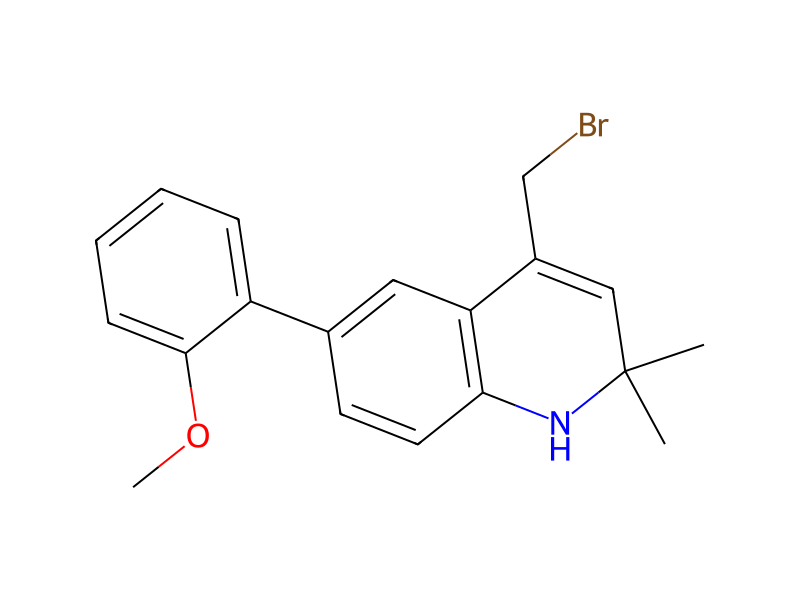
Product 1

Procedure
4-(4-Chlorobenzylsulfanylmethyl)-6-(2-methoxyphenyl)-2,2-dimethyl-1,2-dihydroquinoline 100 mg of 4-bromomethyl-6-(2-methoxyphenyl)-2,2-dimethyl-1,2-dihydroquinoline, 80 mg of potassium carbonate, and 76 μL of 4-chloro-α-toluenethiol reacted to give 8 mg of the title compound as an oil.
Sources & evidence
- ORD record
- ord-b0fd00cb6004482db56bfb46f3511ac5
- Source dataset
- uspto-grants-2005_02
- Patent number
- US06858627B2
Linked notes
Loading…