Reaction equation

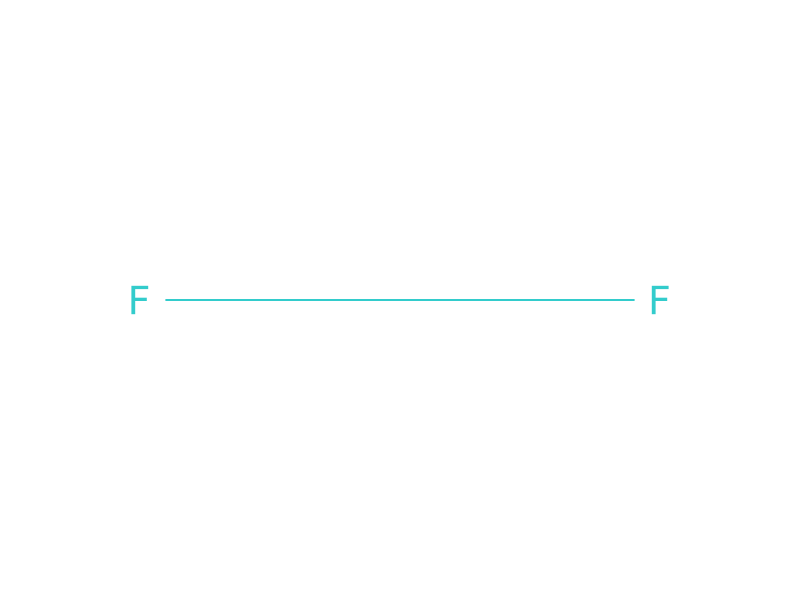
[F:1][CH:2]([C:7]([O:9][CH3:10])=[O:8])[C:3]([O:5][CH3:6])=[O:4].C=O.FF.C1N2CN3CN(C2)CN1C3.[O:25]1COCO[CH2:26]1.C(=O)(O)[O-].[K+].C(=O)(O)[O-].[Na+]>>[OH:25][CH2:26][C:2]([F:1])([C:7]([O:9][CH3:10])=[O:8])[C:3]([O:5][CH3:6])=[O:4]Participants






Procedure
In the first process stage, dimethyl α-fluoromalonate is subjected to hydroxymethylation with formaldehyde. (Dimethyl α-fluoromalonate is a known compound; see Journal of Fluorine Chemistry 25 (1984), 203-212.) The formaldehyde is preferably employed in the form of an aqueous solution having a formaldehyde content of 30 to 40% by weight. The formaldehyde is employed in an amount of 1 to 10 mot, preferably 1.1 to 3 mot (relative to 1 mol of dimethyl α-fluoromalonate). It is also possible to use paraformaldehyde, hexamethylenetetramine or 1,3,5-trioxane instead of formaldehyde. It is advantagous to carry out the reaction in the presence of a basic catalyst, which is then used in an amount of 2 to 50, preferably 5 to 15, mol % (relative to the dimethyl α-fluoromalonate). The catalyst used is, in particular, an alkali metal bicarbonate, for example potassium bicarbonate and sodium bicarbonate. The reaction is carried out at a temperature of 5° to 40° C., preferably 15° to 30° C. The dimethyl α -hydroxymethyl-α-fluoromalonate formed is then isolated from the reaction mixture, preferably by salting out or extraction by means of a water-immiscible organic solvent. A suitable solvent is, above all, an aliphatic chlorinated hydrocarbon having 1 to 4 carbon atoms, for example methylene dichloride, chloroform, carbon tetrachloride, 1,1-dichloroethane or 1,2-dichloroethane. A combination of salting out and extraction is particularly advantageous; a saturated salt solution (ammonium sulfate or sodium chloride) is then first added to the reaction mixture, and this mixture is then extracted. Dimethyl α-hydroxymethyl-α-fluoromalonate is obtained in the form of a colorless solid by evaporating the solvent.
Workup
- customthe reaction in the presence of a basic catalyst, which
- customis carried out at a temperature of 5° to 40° C., preferably 15° to 30° C
Sources & evidence
- ORD record
- ord-e03ec01ad0024d79b6d83fa4b37a8639
- Source dataset
- uspto-grants-1993_11
- Patent number
- US05266668
Linked notes
Loading…