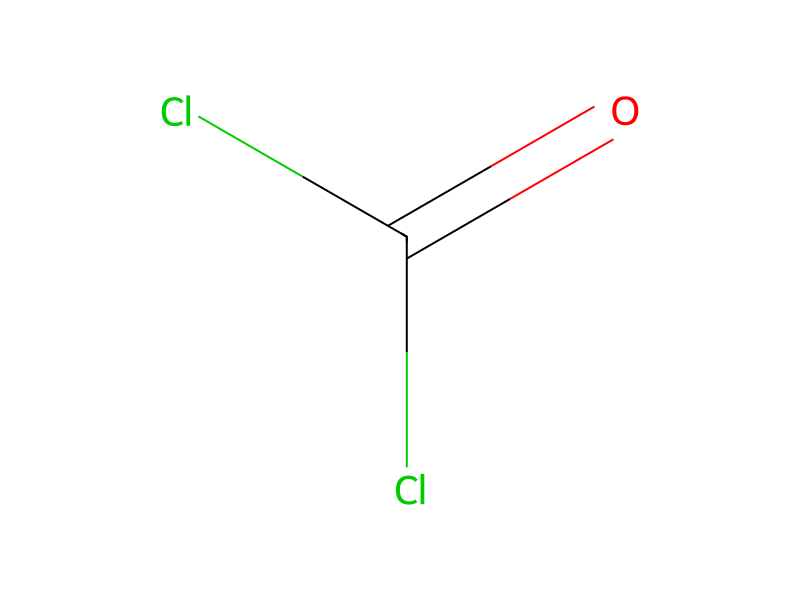
Phosgene → HCID 21421902, compound
HRID 259478
Reaction equation

[CH:1]1([N:7]=[C:8]([CH3:10])[CH3:9])[CH2:6][CH2:5][CH2:4][CH2:3][CH2:2]1.C(N(CC)CC)C.[C:18](Cl)([Cl:20])=[O:19]>C(Cl)(Cl)(Cl)Cl>[C:8]([N:7]([CH:1]1[CH2:6][CH2:5][CH2:4][CH2:3][CH2:2]1)[C:18]([Cl:20])=[O:19])([CH3:10])=[CH2:9]Participants
5
Reactant 3


Product 1

Reagents, catalysts & solvents 1

Procedure
139 parts of acetone cyclohexylimine and 111 parts of triethylamine are dissolved in 500 parts of carbon tetrachloride, and the whole reacted with 110 parts of phosgene as described in Example 1. 123 parts (61% of the theory) of N-isopropenyl-N-cyclohexylcarbamyl chloride is obtained having a boiling point of 85° C. at 0.01 mm.
Sources & evidence
- ORD record
- ord-8bf2c38194504ca5b24e8494e9436d4b
- Source dataset
- uspto-grants-1977_07
- Patent number
- US04038311