Reaction equation
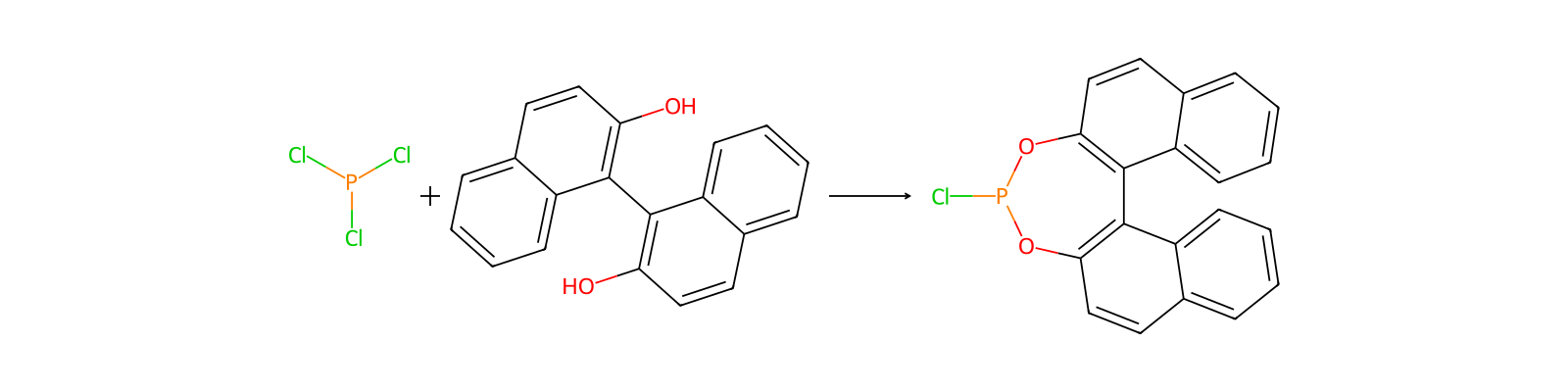
[P:1]([Cl:4])(Cl)Cl.[CH:5]1[CH:10]=[C:9]2[CH:11]=[CH:12][C:13]([OH:26])=[C:14]([C:15]3[C:24]4[C:19](=[CH:20][CH:21]=[CH:22][CH:23]=4)[CH:18]=[CH:17][C:16]=3[OH:25])[C:8]2=[CH:7][CH:6]=1>>[P:1]1([Cl:4])[O:26][C:13]2[CH:12]=[CH:11][C:9]3[C:8]([C:14]=2[C:15]2[C:24]4[C:19]([CH:18]=[CH:17][C:16]=2[O:25]1)=[CH:20][CH:21]=[CH:22][CH:23]=4)=[CH:7][CH:6]=[CH:5][CH:10]=3Participants
3


Procedure
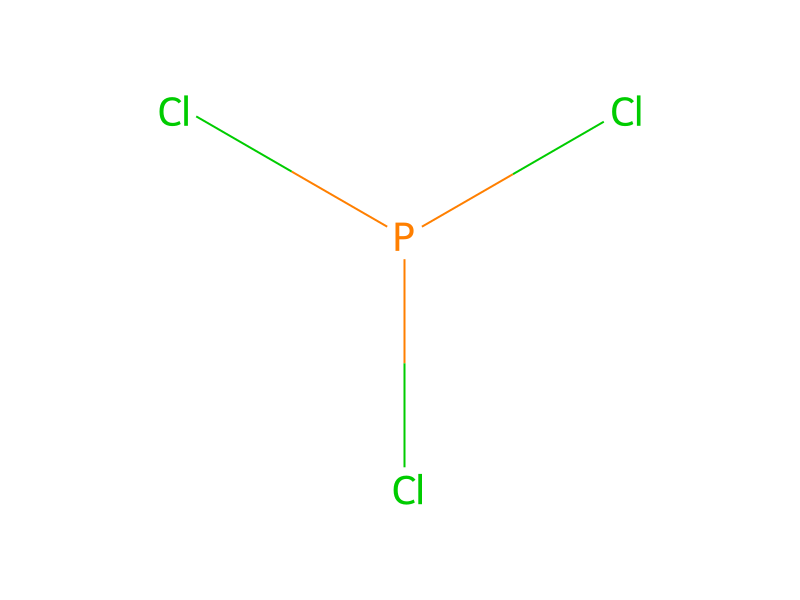
The phosphinite-phosphites are synthesized as follows. Phosphorus trichloride is reacted with 1,1'-bi-2-naphthol to give the 1,1'-binaphthyl-2,2'-diyl phosphorochloridite. The chloridite is then reacted with either 1,1'-bi-2-naphthol or 2,2'-biphenol, followed by diphenylchlorophosphine. These reactions are all conducted stepwise in toluene with excess triethylamine present. The product is isolated by filtering off the triethylamine hydrochloride, then removing the solvent under reduced pressure.
Sources & evidence
- ORD record
- ord-45379f88daaf49e981146093f941ee62
- Source dataset
- uspto-grants-1996_06
- Patent number
- US05523453
Linked notes
Loading…