HomeMCPSkillsWorkbenchOpenChem
HomeWorkbenchNotificationsMe
llms.txt · skill.md · MCP GuidePrivacy Policy · Terms of Service · Supportv1.8.5
  1. Home
  2. /Reaction

Potassium Persulfate → Diethyl 2-oxoazetidine-4,4-dicarboxylate

HRID 260500
Print

Reaction equation

COC1C=C(OC)C=CC=1C[N:6]1[C:9]([C:15]([O:17][CH2:18][CH3:19])=[O:16])([C:10]([O:12][CH2:13][CH3:14])=[O:11])[CH2:8][C:7]1=[O:20].S(OOS([O-])(=O)=O)([O-])(=O)=O.[K+].[K+].P([O-])([O-])([O-])=O.[K+].[K+].[K+]>C(#N)C.O>[O:20]=[C:7]1[CH2:8][C:9]([C:15]([O:17][CH2:18][CH3:19])=[O:16])([C:10]([O:12][CH2:13][CH3:14])=[O:11])[NH:6]1
ParticipantsConditionsProcedureWorkupSources & evidenceReaction notes

Participants

6

Reactant 3

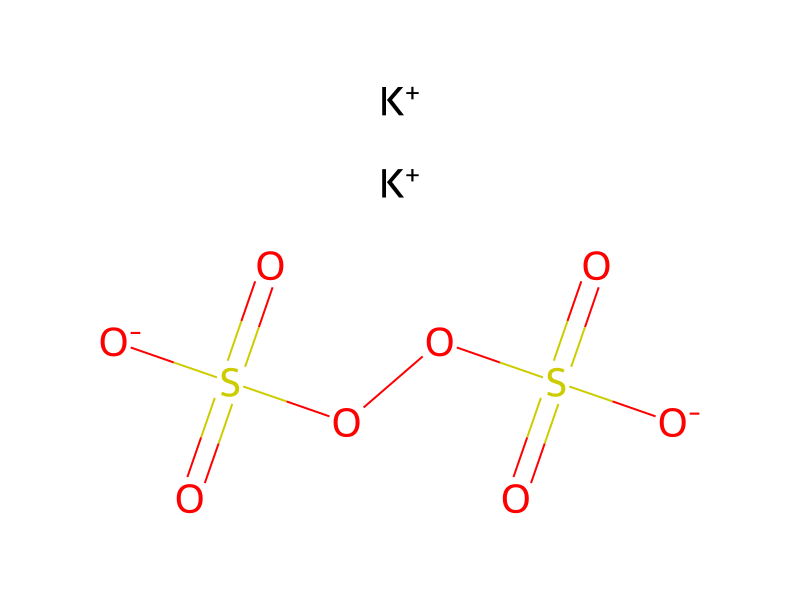
HCID 24412Potassium PersulfateHCID 62657Potassium Phosphate, TribasicHCID 13505928Diethyl 1-(2,4-dimethoxybenzyl)-2-oxoazetidine-4,4-dicarboxylate

Product 1

HCID 19045180Diethyl 2-oxoazetidine-4,4-dicarboxylate

Reagents, catalysts & solvents 2

HCID 962WaterSolvent
HCID 6342
Acetonitrile
Solvent

Conditions

Temperature
65 °C

Procedure

1(b) 17.4 g of diethyl 1-(2,4-dimethoxybenzyl)-2-oxoazetidine-4,4-dicarboxylate (prepared as described above) were dissolved in a mixture of 350 ml of acetonitrile and 350 ml of water. 11.2 g of potassium persulfate and 37.4 g of dibasic potassium phosphate were then added to the resulting solution, and the mixture was stirred at 65° C. for 1 hour. At the end of this time, insoluble materials were filtered off and the filtrate was freed from the solvent by evaporation under reduced pressure. The residue was extracted with ethyl acetate. The extract was washed with a saturated aqueous solution of sodium chloride, with an aqueous solution of sodium bicarbonate and with a saturated aqueous solution of sodium chloride, in that order. The solvent was then removed by distillation under reduced pressure, and the residue was purified by column chromatography through silica gel, eluted with a 1: 2 by volume mixture of ethyl acetate and benzene, to give 5.72 g of diethyl 2-oxoazetidine-4,4-dicarboxylate.

Workup

  1. filtrationAt the end of this time, insoluble materials were filtered off
  2. customthe filtrate was freed from the solvent by evaporation under reduced pressure
  3. extractionThe residue was extracted with ethyl acetate
  4. washThe extract was washed with a saturated aqueous solution of sodium chloride, with an aqueous solution of sodium bicarbonate and with a saturated aqueous solution of sodium chloride, in that order
  5. customThe solvent was then removed by distillation under reduced pressure
  6. customthe residue was purified by column chromatography through silica gel
  7. washeluted with a 1: 2 by volume mixture of ethyl acetate and benzene

Sources & evidence

ORD record
ord-661a89ab354a45a9a87c03b734830578
Source dataset
uspto-grants-1996_06
DOI
10.6084/m9.figshare.5104873.v1
Patent number
US05527905

Reaction notes

On this pageParticipantsConditionsProcedureWorkupSources & evidenceReaction notes


