HomeMCPWorkbenchSkills
HomeWorkbenchNotificationsMe
llms.txt · MCP GuidePrivacy Policy · Terms of Service · Supportv1.8.3
  1. Home
  2. /Reaction

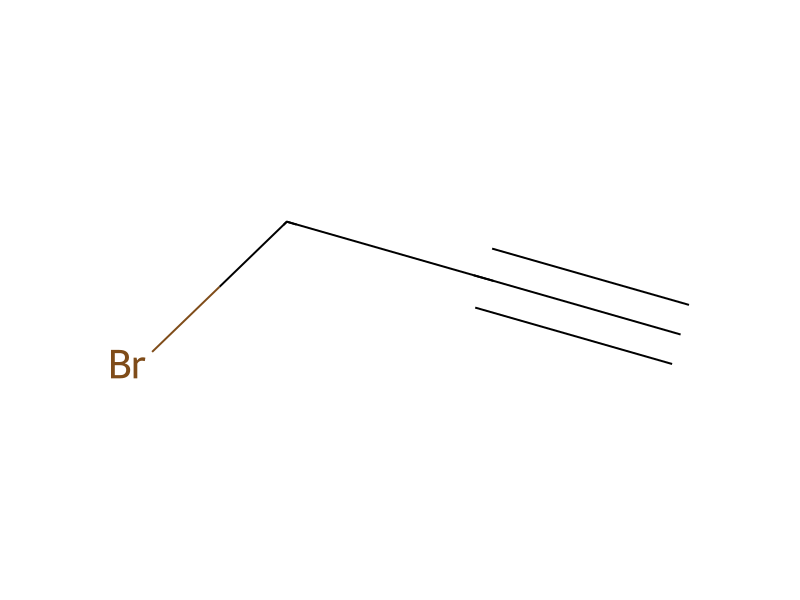
Propargyl bromide → N-(4-Chlorobenzyl)-N-methyl-2-propinylamine

HRID 263049
Print

Reaction equation

HRID 263049 reaction equation
[Cl:1][C:2]1[CH:10]=[CH:9][C:5]([CH2:6][NH:7][CH3:8])=[CH:4][CH:3]=1.C(N(CC)CC)C.[CH2:18](Br)[C:19]#[CH:20]>C1C=CC=CC=1>[Cl:1][C:2]1[CH:10]=[CH:9][C:5]([CH2:6][N:7]([CH2:20][C:19]#[CH:18])[CH3:8])=[CH:4][CH:3]=1
ParticipantsProcedureWorkupSources & evidenceReaction notes

Participants

5

Reactant 3

HCID 7842Propargyl bromideHCID 8471TriethylamineHCID 66905Benzenemethanamine, 4-chloro-N-methyl-

Product 1

HCID 60670247N-(4-Chlorobenzyl)-N-methyl-2-propinylamine

Reagents, catalysts & solvents 1

HCID 241BenzeneSolvent

Procedure

To a solution of 31.1 g (0.2 mole) N-(4-chlorobenzyl)-methylamine and 30.3 g (0.3 mole) triethylamine in 150 ml dry benzene are added in portions at room temperature while stirring 23.8 g (0.2 mole) propargyl bromide. The solution is heated for 17 hours with reflux. After filtering off the solid phase, the the solvent is distilled under vacuum and the remaining residue fractionally distilled under reduced pressure. One thus obtains 30.9 g N-(4-chlorobenzyl)-N-methyl-2-propinylamine (79% of the theory as colorless liquid of the boiling point 86°-106° C./2 Torr.

Workup

  1. temperatureThe solution is heated for 17 hours
  2. temperaturewith reflux
  3. filtrationAfter filtering off the solid phase
  4. distillationthe the solvent is distilled under vacuum
  5. distillationthe remaining residue fractionally distilled under reduced pressure

Sources & evidence

ORD record
ord-93afa677ad014a24897f6c7cb1ad684e
Source dataset
uspto-grants-1979_05
DOI
10.6084/m9.figshare.5104873.v1
Patent number
US04156017

Reaction notes

On this pageParticipantsProcedureWorkupSources & evidenceReaction notes