HomeMCPWorkbenchSkills
HomeWorkbenchNotificationsMe
llms.txt · MCP GuidePrivacy Policy · Terms of Service · Supportv1.8.3
  1. Home
  2. /Reaction

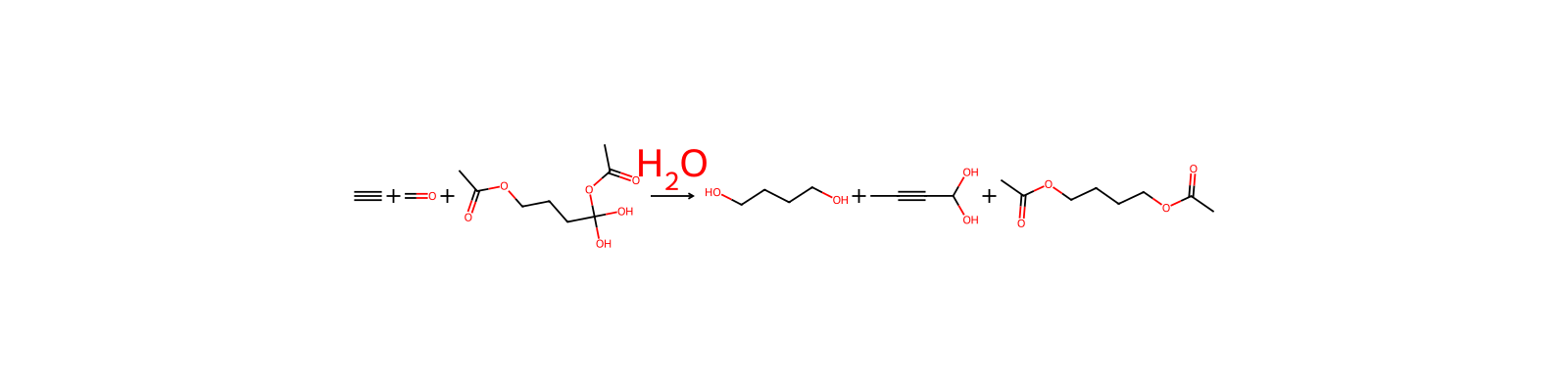
Formaldehyde → 1,4-Butanediol

HRID 263159
Print

Reaction equation

HRID 263159 reaction equation
C#C.C=O.[C:5]([O:8][C:9](O)([OH:17])[CH2:10][CH2:11][CH2:12][O:13][C:14](=[O:16])[CH3:15])(=[O:7])[CH3:6]>O>[CH2:12]([OH:13])[CH2:11][CH2:10][CH2:9][OH:8].[CH:9]([OH:17])([OH:8])[C:10]#[C:11][CH3:12].[C:5]([O:8][CH2:9][CH2:10][CH2:11][CH2:12][O:13][C:14](=[O:16])[CH3:15])(=[O:7])[CH3:6]
ParticipantsProcedureSources & evidenceReaction notes

Participants

7

Reactant 3

HCID 712FormaldehydeHCID 6326AcetyleneHCID 213163441,4-Diacetoxybutanediol

Product 3

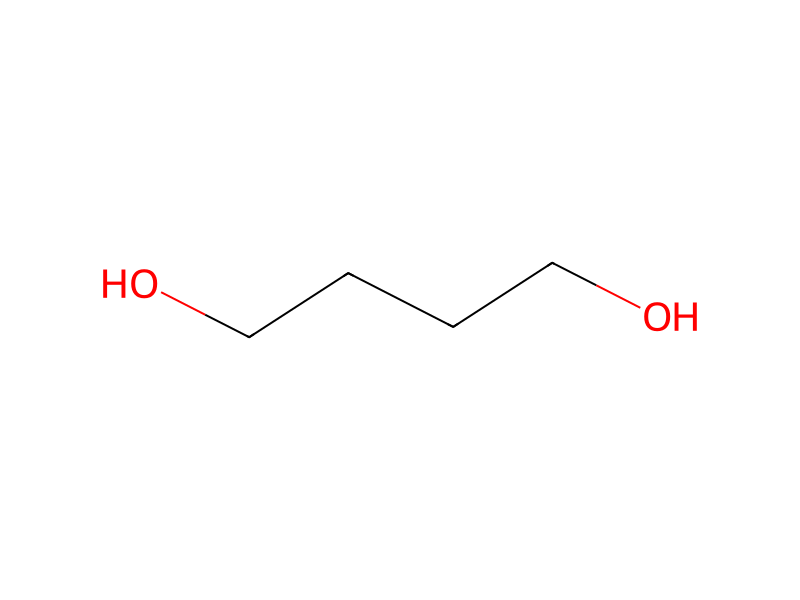
HCID 80641,4-ButanediolHCID 69410Butylene glycol diacetateHCID 18778928But-2-yne-1,1-diol

Reagents, catalysts & solvents 1

HCID 962
Water
Solvent

Procedure

Both 1,4-butanediol and tetrahydrofuran are useful as a solvent and raw materials for organic synthesis such as polymeric material. They have been produced through various ways. For example, tetrahydrofuran is produced by (a) catalytic hydrogenation of furan which has been obtained by elimination of carbonyl group from furfural, (b) dehydration cyclization of butanediol obtained by hydrogenation of butynediol which is a reaction product of acetylene and formaldehyde and (c) reaction of 1,4-diacetoxybutanediol and water in the presence of an acid catalyst; and 1,4-butanediol is produced by (d) hydrogenation of butynediol and (e) hydrolysis of 1,4-diacetoxybutane.

Sources & evidence

ORD record
ord-5b993f18dfc04a3e9b5718ab675e7c3c
Source dataset
uspto-grants-1979_05
DOI
10.6084/m9.figshare.5104873.v1
Patent number
US04156685

Reaction notes

On this pageParticipantsProcedureSources & evidenceReaction notes