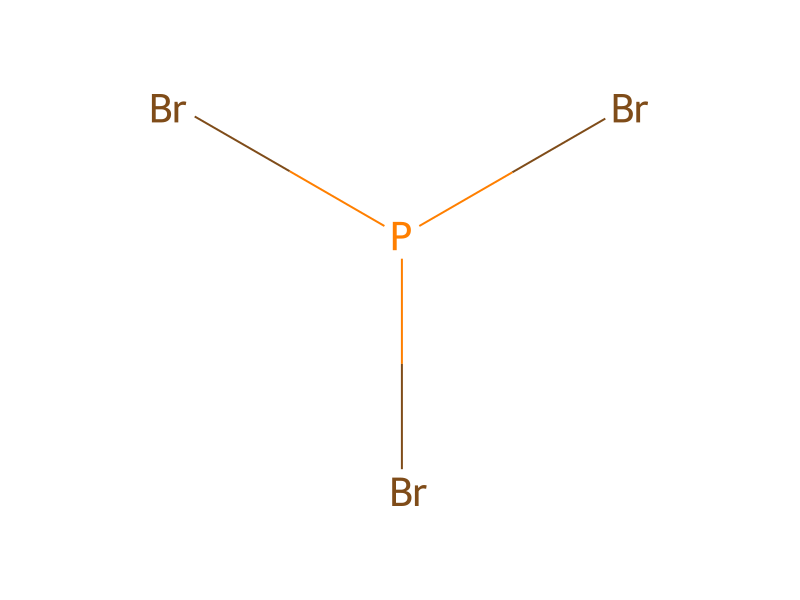
P(Br)(Br)[Br:2].[CH3:5][O:6][C:7]1[CH:8]=[C:9]([C:15]2[C:24]3[C:19](=[CH:20][C:21]([O:27][CH3:28])=[C:22]([O:25][CH3:26])[CH:23]=3)[N:18]=[C:17]([CH2:29][CH2:30]O)[N:16]=2)[CH:10]=[CH:11][C:12]=1[O:13][CH3:14].C(=O)(O)[O-].[Na+]>C1C=CC=CC=1>[Br:2][CH2:30][CH2:29][C:17]1[N:16]=[C:15]([C:9]2[CH:10]=[CH:11][C:12]([O:13][CH3:14])=[C:7]([O:6][CH3:5])[CH:8]=2)[C:24]2[C:19](=[CH:20][C:21]([O:27][CH3:28])=[C:22]([O:25][CH3:26])[CH:23]=2)[N:18]=1Phosphorus tribromide (PBr3)(0.95 g) was added dropwise to a solution of 4-(3,4-dimethoxyphenyl)-2-(2-hydroxyethyl)-6,7-dimethoxyquinazoline (2.6 g) in benzene (50 ml) at room temperature. The mixture was stirred at 75° C. for 1 hour, poured into ice-cold water, neutralized with an aqueous saturated solution of sodium bicarbonate, and then extracted with chloroform. The chloroform layer was washed with water, dried over magnesium sulfate, and the solvent was evaporated. The residue was subjected to column chromatography on silica gel. The fractions eluted with chloroform-ethyl acetate (3:1, v/v) gave 2-(2-bromoethyl)-4-(3,4-dimethoxyphenyl)-6,7-dimethoxyquinazoline (1.1 g, 37%). This was recrystallized from ethyl acetate. Colorless needles, mp. 166°-167° C.