HomeMCPWorkbenchSkills
HomeWorkbenchNotificationsMe
llms.txt · MCP GuidePrivacy Policy · Terms of Service · Supportv1.8.0
  1. Home
  2. /Reaction

Methanesulfonic Acid → 3,5-Diamino-2,6-di(methylamino)pyridine

HRID 267499
Notes
Print preview

Reaction equation

HRID 267499 reaction equation
[CH3:1][NH:2][C:3]1[C:8]([N+:9]([O-])=O)=[CH:7][C:6]([N+:12]([O-])=O)=[C:5]([NH:15][CH3:16])[N:4]=1.CS(O)(=O)=O.[H][H]>[Pd].C.CO>[NH2:9][C:8]1[C:3]([NH:2][CH3:1])=[N:4][C:5]([NH:15][CH3:16])=[C:6]([NH2:12])[CH:7]=1
ParticipantsProcedureWorkupSources & evidenceReaction notes

Participants

6

Reactant 3

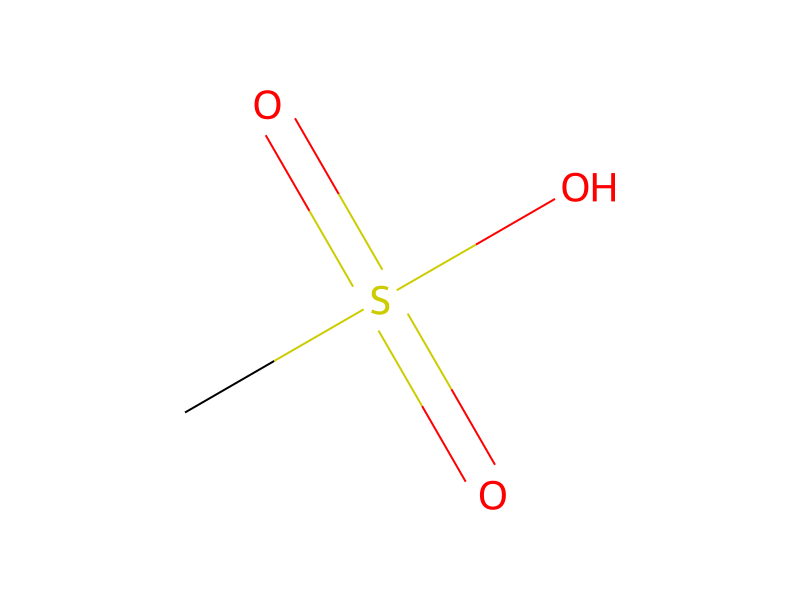
HCID 6395Methanesulfonic AcidHCID 215548902,6-Di(methylamino)-3,5-dinitropyridineHCID 178418361HCID 178418361, compound2×

Product 1

HCID 203634173,5-Diamino-2,6-di(methylamino)pyridine

Reagents, catalysts & solvents 2

HCID 14818447PalladiumcarbonCatalyst
HCID 887
Methanol
Solvent

Procedure

A 250 ml Parr bottle was charged with 2,6-di(methylamino)-3,5-dinitropyridine (20.0 g, 0.088 mole), 30 ml methanesulfonic acid, 200 ml methanol and 1.0 g 5% Pd/charcoal catalyst. The mixture was subjected to hydrogenation at ambient temperature with an initial hydrogen pressure of 65 psig. When no further uptake of hydrogen was observed, the mixture was treated with anhydrous silica gel (25 g), filtered free of catalyst and drying agent under a nitrogen atmosphere, and methanol removed under vacuum. The trimethanesulfonate salt of 3,5-diamino-2,6-di(methylamino)pyridine was obtained under nitrogen by addition of cold i-butanol-benzene to the concentrate, followed by vacuum drying (40°-50°C) over P2O5.

Workup

  1. additionthe mixture was treated with anhydrous silica gel (25 g)
  2. filtrationfiltered free of catalyst
  3. customdrying agent under a nitrogen atmosphere
  4. custommethanol removed under vacuum

Sources & evidence

ORD record
ord-20dcc80e347542b598402949fe9e27c7
Source dataset
uspto-grants-1976_03
DOI
10.6084/m9.figshare.5104873.v1
Patent number
US03943125

Reaction notes

Loading…

On this pageParticipantsProcedureWorkupSources & evidenceReaction notes

