Reaction equation

[N:1]([C@@H:4]1[C@@H:8]([CH2:9][OH:10])[O:7][C@@H:6]([N:11]2[CH:19]=[C:17]([CH3:18])[C:15](=[O:16])[NH:14][C:12]2=[O:13])[CH2:5]1)=[N+:2]=[N-:3].[OH-].[Na+].Cl.[NH2:23][C:24]([NH2:26])=[NH:25]>O>[NH2:25][C:24]([NH2:26])=[NH:23].[N:1]([C@@H:4]1[C@@H:8]([CH2:9][OH:10])[O:7][C@@H:6]([N:11]2[CH:19]=[C:17]([CH3:18])[C:15](=[O:16])[NH:14][C:12]2=[O:13])[CH2:5]1)=[N+:2]=[N-:3]Participants
5
Reactant 3
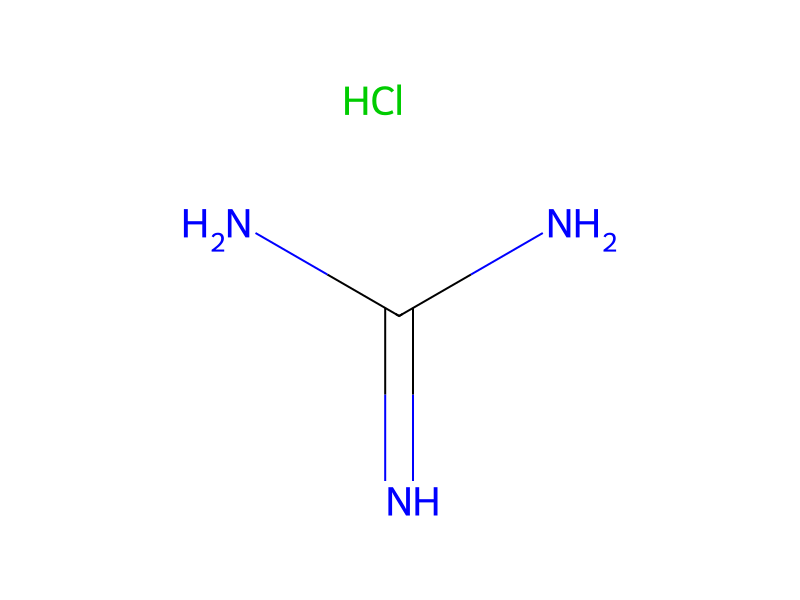


Product 1

Reagents, catalysts & solvents 1

Conditions
- Temperature
- 70 °C
Procedure
An analytical grade sample of the 3'-azido-3'-deoxythymidine guanidine salt was prepared by suspending pharmaceutical grade 3'-azido-3'-deoxythymidine (53.4 g) in water (250 mL) and adding 50% sodium hydroxide (17.6 g) to provide a mixture having a pH of 13.0. The mixture was then heated to 70° C. Thereafter, guanidine hydrochloride (23 g) was added as a solid and the mixture was heated to 97° C. to dissolve the emerging precipitate. The mixture was then set aside to cool and crystallize, and it was stirred for 16 hours. Thereafter, the crystals were filtered and washed with water and ethanol to yield 58.76 (90%) of white crystals. The crystals had a melting point of 210.9°-212° C.
Workup
- customto provide a mixture
- temperaturethe mixture was heated to 97° C.
- dissolutionto dissolve the emerging precipitate
- temperatureto cool
- customcrystallize
- filtrationThereafter, the crystals were filtered
- washwashed with water and ethanol
Sources & evidence
- ORD record
- ord-376241f84b824599b5aa7c407f3d20bb
- Source dataset
- uspto-grants-1995_02
- Patent number
- US05387677
Linked notes
Loading…