Reaction equation

[F:1][C:2]1[C:3]([F:11])=[C:4]([F:10])[C:5]([F:9])=[C:6]([F:8])[CH:7]=1.C(OCC)C.C([Li:21])(C)(C)C>CCCCC>[F:1][C:2]1[C:7]([Li:21])=[C:6]([F:8])[C:5]([F:9])=[C:4]([F:10])[C:3]=1[F:11]Participants
Reactant 3

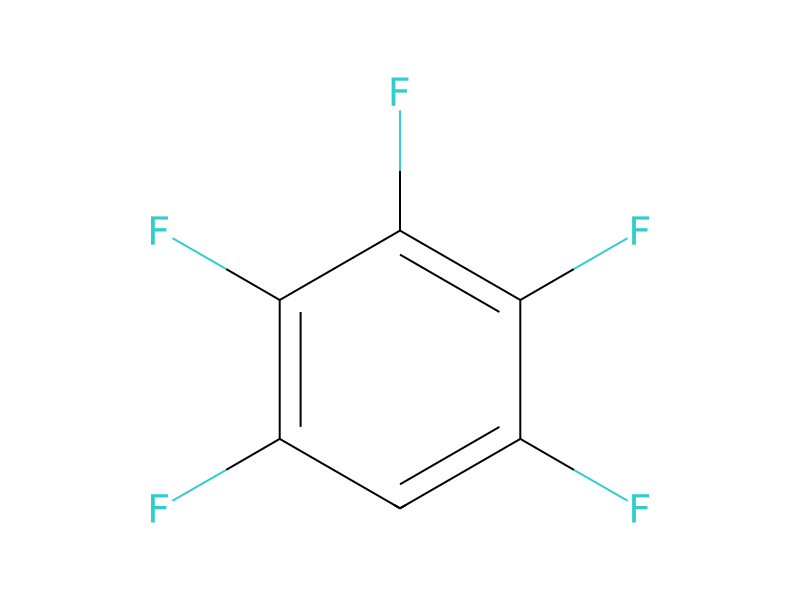

Product 1

Reagents, catalysts & solvents 1

Conditions
- Temperature
- -65 °C
Procedure
Inside of a 100 ml volume glass three-neck flask equipped with a 50 ml volume glass dropping funnel, temperature resistor and septum rubber was sufficiently replaced with nitrogen. Into the flask, 5 g (29.8 mmol) of pentafluorobenzene and 30 ml of diethyl ether were charged, of which solution was cooled to -65° C. Thereafter, 12.3 (29.8 mmol) of 16.1 wt. % pentane solution of tert-butyllithium charged into the dropping funnel were added dropwise while making the inner temperature not to exceed -55° C. After the completion of dropwise addition, the reaction mixture was kept at a temperature of -65°~-55° C. with stirring to give pentafluorophenyllithium. To the prepared solution of pentafluorophenyllithium was added 1 mol/L hexane solution (7.45 mL, 7.45 mmol) of boron trihalide at a temperature of -65°~-55° C., kept for 30 minutes at the same temperature with stirring and then the temperature was elevated up to the room temperature to afford a solution of lithium tetrakis(pentafluorophenyl)borate, which was subjected to quantitative determination employing pentafluorotoluene as an inner standard by means of 19FNMR. The yield was 92.3%.
Workup
- customInside of a 100 ml volume glass three-neck flask equipped with a 50 ml volume glass
- additionwere added dropwise
- customto exceed -55° C
- additionAfter the completion of dropwise addition
- customwas kept at a temperature of -65°~-55° C.
Sources & evidence
- ORD record
- ord-54ee040f2e78487c891f24c342cb26c6
- Source dataset
- uspto-grants-1995_02
- Patent number
- US05387727
Linked notes
Loading…