Reaction equation

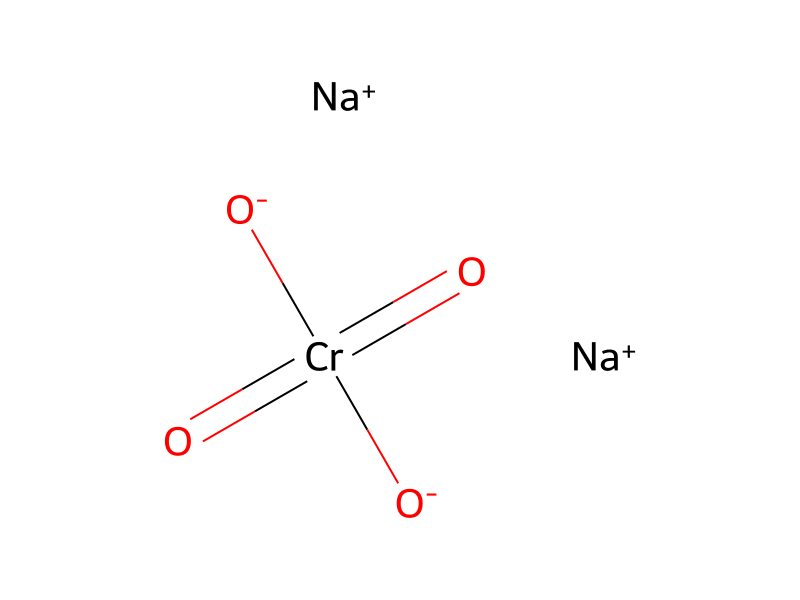
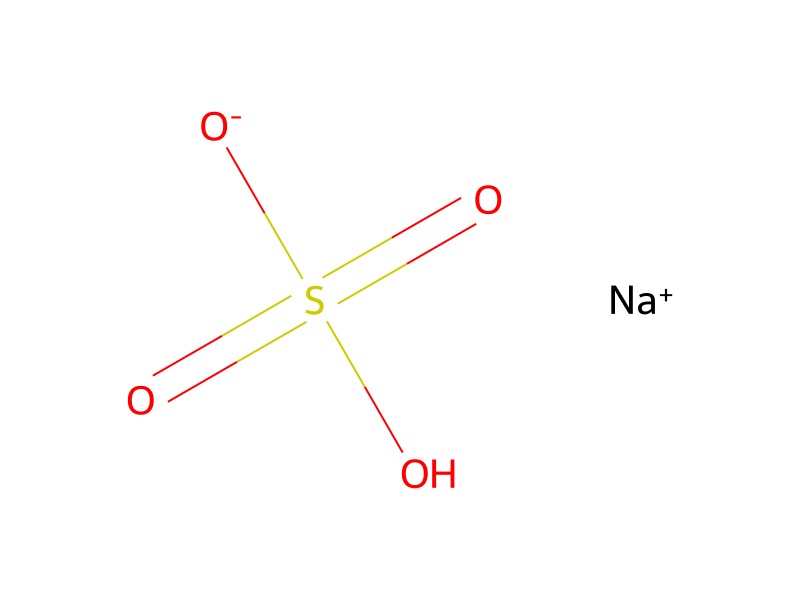
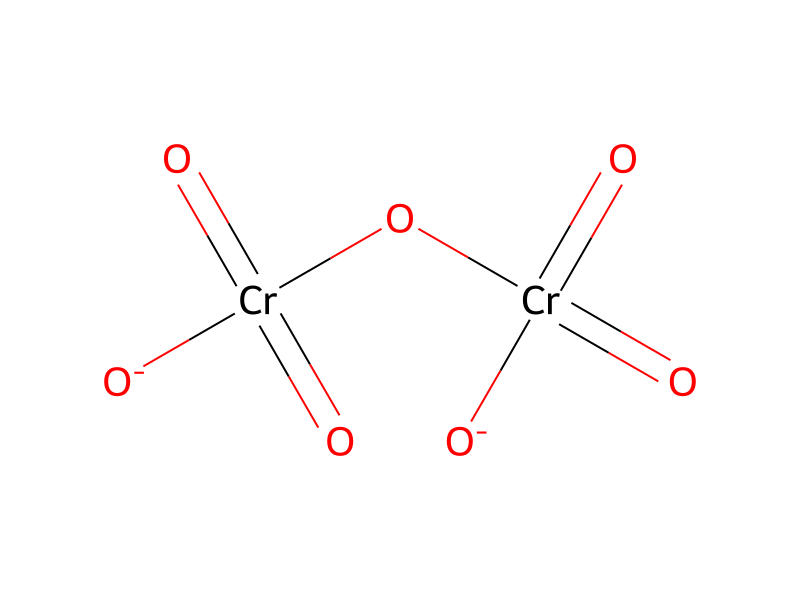
[Cr:1]([O-:5])([O-:4])(=[O:3])=[O:2].[Na+:6].[Na+].S(=O)(=O)(O)O.S(=O)(=O)(O)[O-].[Na+]>>[O-:2][Cr:1]([O:5][Cr:1]([O-:4])(=[O:3])=[O:2])(=[O:4])=[O:3].[Na+:6].[Na+:6].[O-:2][Cr:1]([O:5][Cr:1]([O-:4])(=[O:3])=[O:2])(=[O:4])=[O:3]Participants


Procedure
Chromic acid and sodium bichromate or sodium chromate are made by roasting chromium-containing ore with soda ash (sodium carbonate) or sodium hydroxide to form sodium chromate. The roasted ore is quenched in water and the soluble sodium chromate dissolves in the water to form "yellow liquor." The sodium chromate is reacted with sulfuric acid or sodium bisulfate to produce sodium bichromate (the "bichromate process"). Upon evaporation, by-product sodium sulfate crystallizes and is filtered off. Because it is contaminated with about 200 to about 1600 ppm of hexavalent chromium, it can be sold only to low value markets such as the pulp and paper industry, and the chromium values in it are lost. Increasingly, environmental considerations limit the sale of sodium sulfate to a maximum chromium contamination of 1000 ppm.
Workup
- customThe roasted ore is quenched in water
- dissolutionthe soluble sodium chromate dissolves in the water
- customto form "yellow liquor
Sources & evidence
- ORD record
- ord-f2cc05832eb047f88a8517266b7c8eb5
- Source dataset
- uspto-grants-1995_02
- Patent number
- US05393503
Linked notes
Loading…