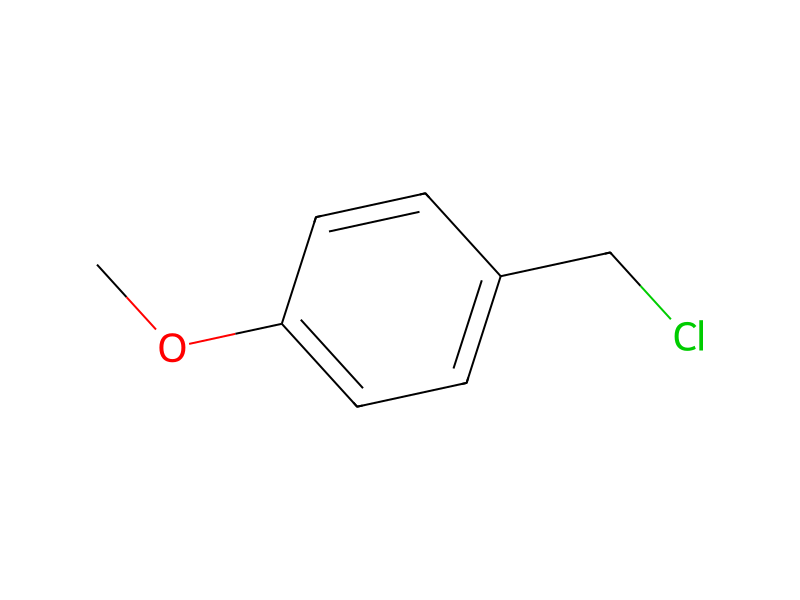
4-Methyloxybenzyl chloride → 6-(3-chlorophenyl)-4-cyclopropyl-1-(4-methoxybenzyl)-1H-quinazolin-2-one
HRID 277843
Reaction equation

[Cl:1][C:2]1[CH:3]=[C:4]([C:8]2[CH:9]=[C:10]3[C:15](=[CH:16][CH:17]=2)[NH:14][C:13](=[O:18])[N:12]=[C:11]3[CH:19]2[CH2:21][CH2:20]2)[CH:5]=[CH:6][CH:7]=1.[CH3:22][O:23][C:24]1[CH:31]=[CH:30][C:27]([CH2:28]Cl)=[CH:26][CH:25]=1>CN(C=O)C>[Cl:1][C:2]1[CH:3]=[C:4]([C:8]2[CH:9]=[C:10]3[C:15](=[CH:16][CH:17]=2)[N:14]([CH2:28][C:27]2[CH:30]=[CH:31][C:24]([O:23][CH3:22])=[CH:25][CH:26]=2)[C:13](=[O:18])[N:12]=[C:11]3[CH:19]2[CH2:21][CH2:20]2)[CH:5]=[CH:6][CH:7]=1Participants
4
Reactant 2

Product 1

Reagents, catalysts & solvents 1

Procedure
To a suspension of 6-(3-chlorophenyl)-4-cyclopropyl-1H-quinazolin-2-one (0.5 g, 1.68 mmol) in anhydrous DMF was added potassium hexamethylsilyl amide (0.45 g, 2.1 mmol) at ambient temperature under nitrogen. The reaction mixture was stirred at ambient temperature for 30 minutes, treated with p-methoxy benzyl chloride (0.35 mL, 2.5 mmol), and heated at 55° C. for 5 hours. The mixture was then cooled to room temperature and quenched with a saturated aqueous ammonium chloride solution (10 mL). Methylene chloride (50 mL) was added and organic layer was separated. The aqueous layer was extracted with methylene chloride (2×20 mL) and the combined organic layers were washed with brine and dried (MgSO4). After removal of solvent, the residue was separated on a flash chromatography (silica gel, hexane:ethyl acetate/1:1) to afford 6-(3-chlorophenyl)-4-cyclopropyl-1-(4-methoxybenzyl)-1H-quinazolin-2-one as an off-white solid: mp 173-174° C.; 1H-NMR (DMSO-d6) δ 8.65 (d, 1H, J=1.8 Hz), 8.10 (dd, 1H, J=8.9, 1.8 Hz), 7.93 (d, 1H, J=1.6 Hz), 7.79 (d, 1H, J=7.6 Hz), 7.53 (d, 2H, J=8.4 Hz), 7.46 (t, 1H, J=8.1 Hz), 7.21 (d, 2H, J=8.6 Hz), 6.88 (d, 2H, J=8.6 Hz), 5.41 (s, 2H), 3.73 (s, 3H), 3.18 (m, 1H), 1.18-1.27 (m, 4H); MS (CI) m/z 417([M+H]+, 100%); Anal. Calc. For C25H21ClN2O2: C, 72.02, H, 5.08, N, 6.72. Found: C, 71.88, H, 4.91, N, 6.70.