Reaction equation

[OH:1][CH2:2][C:3]1[CH:4]=[C:5]2[C:10](=[CH:11][CH:12]=1)[N:9]=[CH:8][CH:7]=[CH:6]2.C(N(CC)CC)C.[CH3:20][S:21](Cl)(=[O:23])=[O:22]>ClCCl>[CH3:20][S:21]([O:1][CH2:2][C:3]1[CH:4]=[C:5]2[C:10](=[CH:11][CH:12]=1)[N:9]=[CH:8][CH:7]=[CH:6]2)(=[O:23])=[O:22]Participants
5
Reactant 3


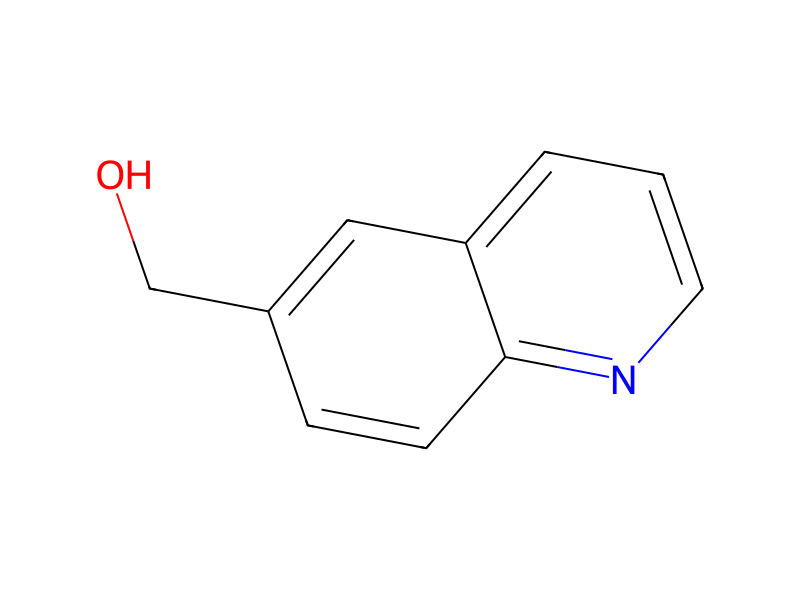
Product 1

Reagents, catalysts & solvents 1

Conditions
- Temperature
- 0 °C
Procedure
6-Hydroxymethylquinoline (0.4325 g, 2.72 mmoles) (prepared by the method of: C. E. Kaslow and W. R. Clark, J. Org. Chem., 1953, 18, 55-58.) and triethylamine (1.5147 mL, 10.87 mmoles) were dissolved in anhydrous dichloromethane (16 mL) and the mixture was cooled to 0° C. Methanesulfonyl chloride (0.421 mL, 5.43 mmoles) was added and the mixture was stirred under argon at 0° C. for 1 h. Additional triethylamine (0.758 mL, 5.435 mmoles) and methanesulfonyl chloride (0.211 mL, 2.72 mmoles) were added and the reaction was allowed to proceed for a further 1 h at 0° C. The mixture was evaporated to dryness to give the title compound which was used without further purification in the next step.
Workup
- waitto proceed for a further 1 h at 0° C
- customThe mixture was evaporated to dryness
Sources & evidence
- ORD record
- ord-11d6abeeb9f4481986254e9286afbb2a
- Source dataset
- uspto-grants-2002_03
- Patent number
- US06362188B1
Linked notes
Loading…