Reaction equation
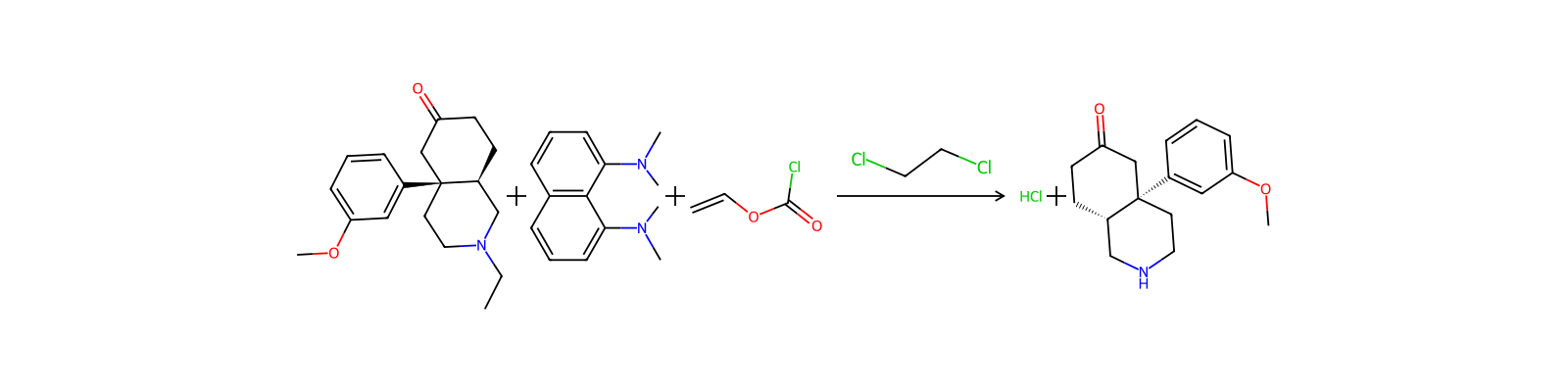
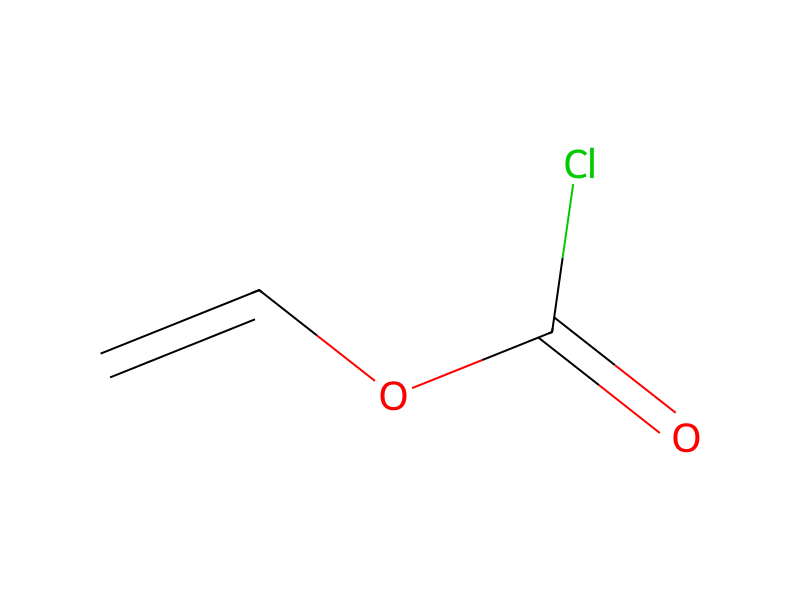
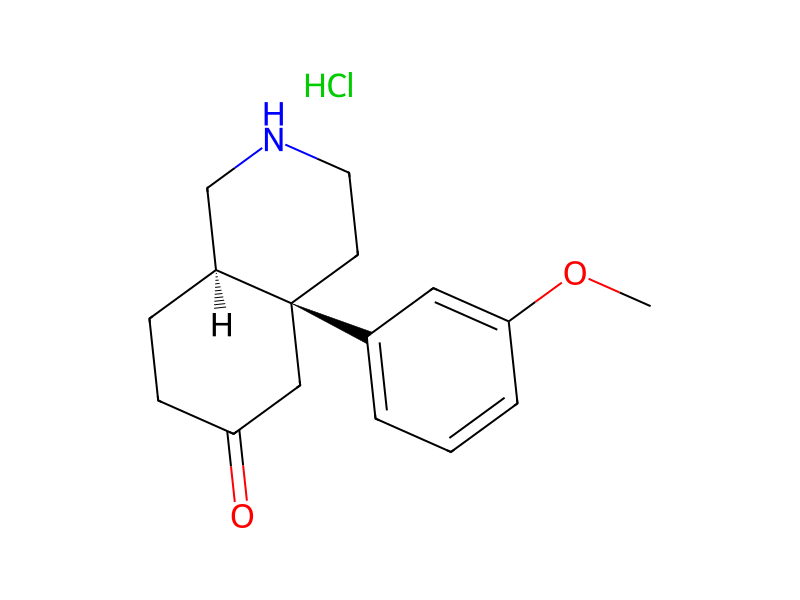
C([N:3]1[CH2:12][CH2:11][C@@:10]2([C:13]3[CH:18]=[CH:17][CH:16]=[C:15]([O:19][CH3:20])[CH:14]=3)[C@@H:5]([CH2:6][CH2:7][C:8](=[O:21])[CH2:9]2)[CH2:4]1)C.CN(C1C2C(N(C)C)=CC=CC=2C=CC=1)C.C(OC([Cl:43])=O)=C>ClCCCl>[ClH:43].[CH3:20][O:19][C:15]1[CH:14]=[C:13]([C@@:10]23[CH2:9][C:8](=[O:21])[CH2:7][CH2:6][C@H:5]2[CH2:4][NH:3][CH2:12][CH2:11]3)[CH:18]=[CH:17][CH:16]=1Participants
Reactant 3


Product 1
Reagents, catalysts & solvents 1

Procedure
A solution of 1.2 g (4.2 mmol) of (±)-trans-2-ethyl-4a-(3-methoxyphenyl)-6-oxo-1,2,3,4,4a,5,6,7,8,8a-decahydroisoquinoline and 1.8 g (12.6 mmol) of proton sponge in 34 ml of 1,2-dichloroethane was treated with 1.4 ml (16.8 mmol) of vinylchloroformate at 0° C. under nitrogen atmosphere. The reaction mixture was stirred at this temperature for 15 min and then refluxed for 3 h, the solvent was removed in vacuo, the residue was taken up in water and extracted with Et2O. The organic layer was washed with 3% HCl, then was dried over Na2SO4 and the solvent was removed in vacuo. The dark residue was dissolved in EtOH, 3 ml of concentrated HCl were added and the solution refluxed for 3 hours. The solvent was removed in vacuo, obtaining 0.88 g of the title compound which was used as such in the subsequent step. M.p.=90° C. dec.
Workup
- temperaturerefluxed for 3 h
- customthe solvent was removed in vacuo
- extractionextracted with Et2O
- washThe organic layer was washed with 3% HCl
- dry with materialwas dried over Na2SO4
- customthe solvent was removed in vacuo
- dissolutionThe dark residue was dissolved in EtOH
- addition3 ml of concentrated HCl were added
- temperaturethe solution refluxed for 3 hours
- customThe solvent was removed in vacuo
Sources & evidence
- ORD record
- ord-65c40f72159b46c38bd188c224445f20
- Source dataset
- uspto-grants-1998_03
- Patent number
- US05731322
Linked notes
Loading…