Reaction equation
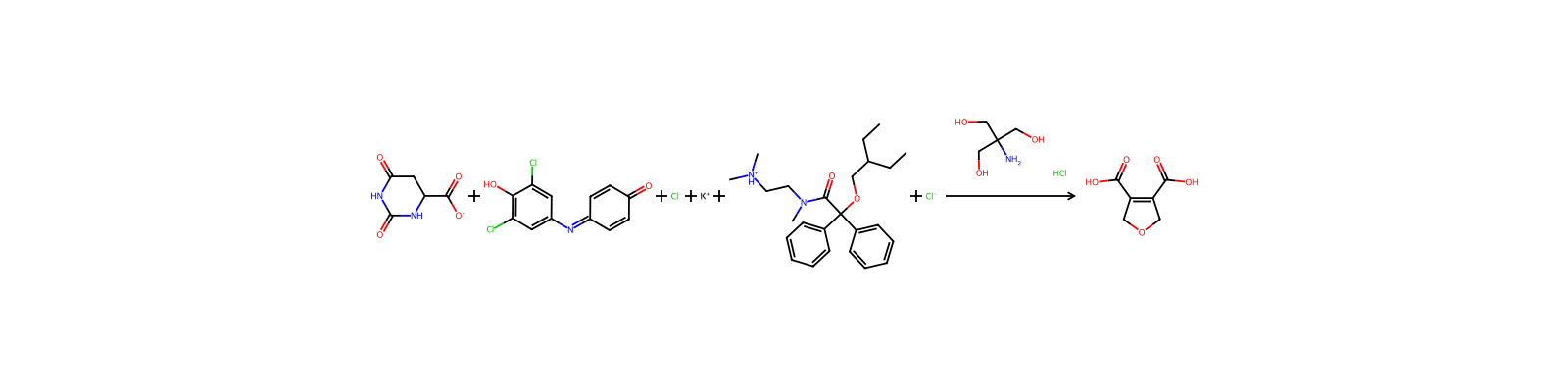
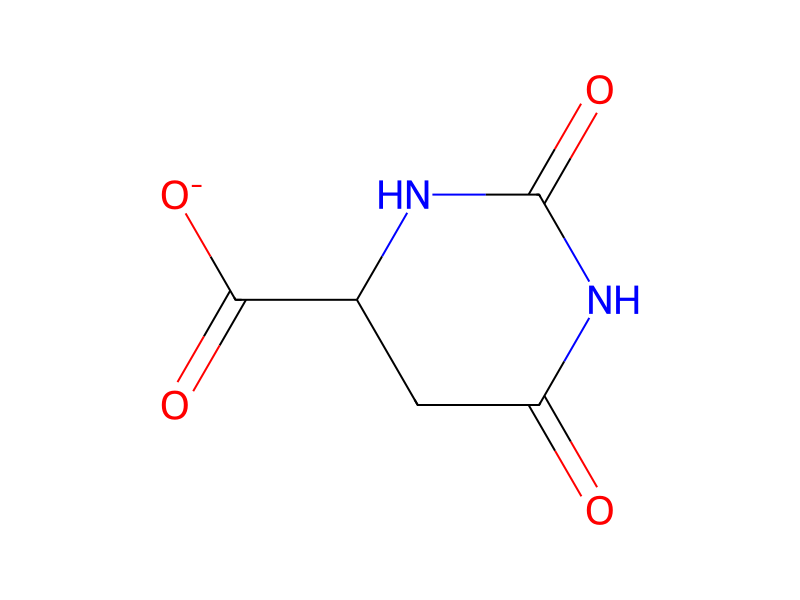
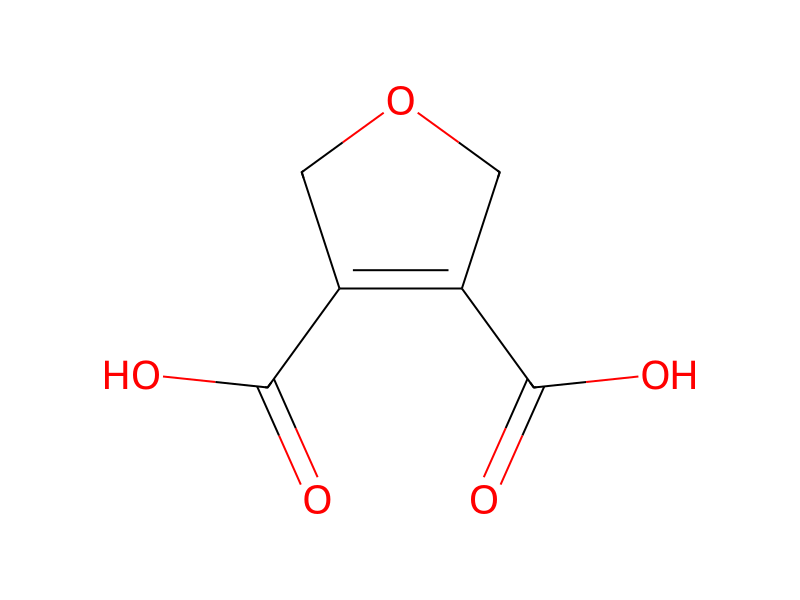
[C:1]([O-:11])(=[O:10])[CH:2]1NC(=O)N[C:4](=[O:5])[CH2:3]1.C1C(=NC2C=C(Cl)C(O)=C(Cl)C=2)C=CC(=[O:15])C=1.[Cl-].[K+].CCC([CH2:36][O:37][C:38](C(N(CC[NH+](C)C)C)=O)(C1C=CC=CC=1)C1C=CC=CC=1)CC.[Cl-]>C(O)C(N)(CO)CO.Cl>[O:37]1[CH2:38][C:3]([C:4]([OH:5])=[O:15])=[C:2]([C:1]([OH:11])=[O:10])[CH2:36]1Participants
6
Reactant 4
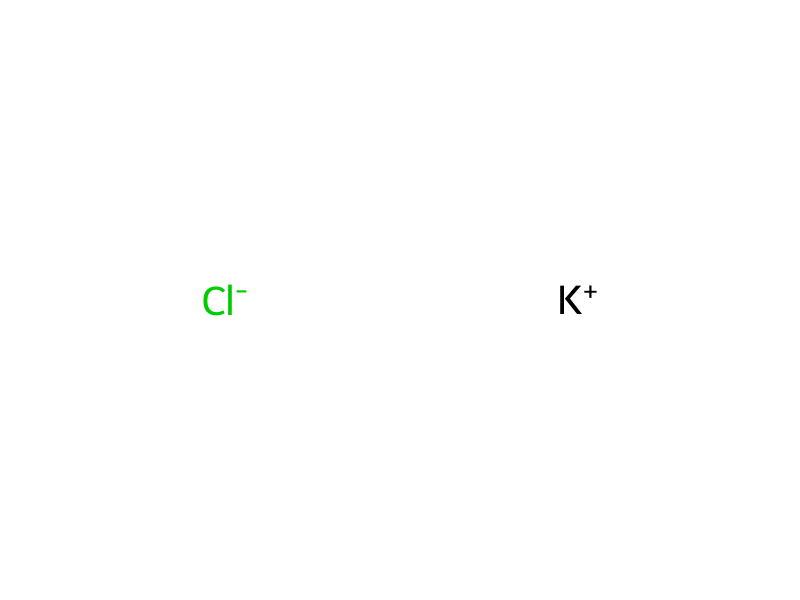
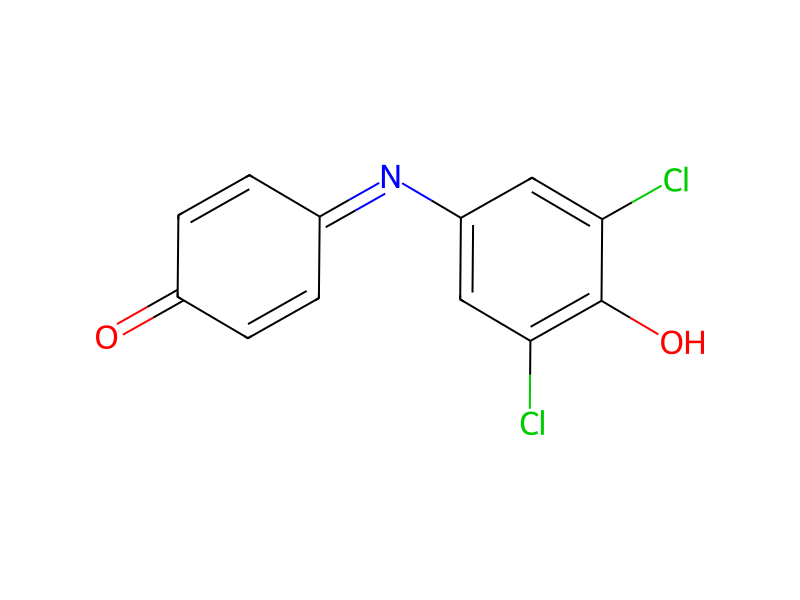
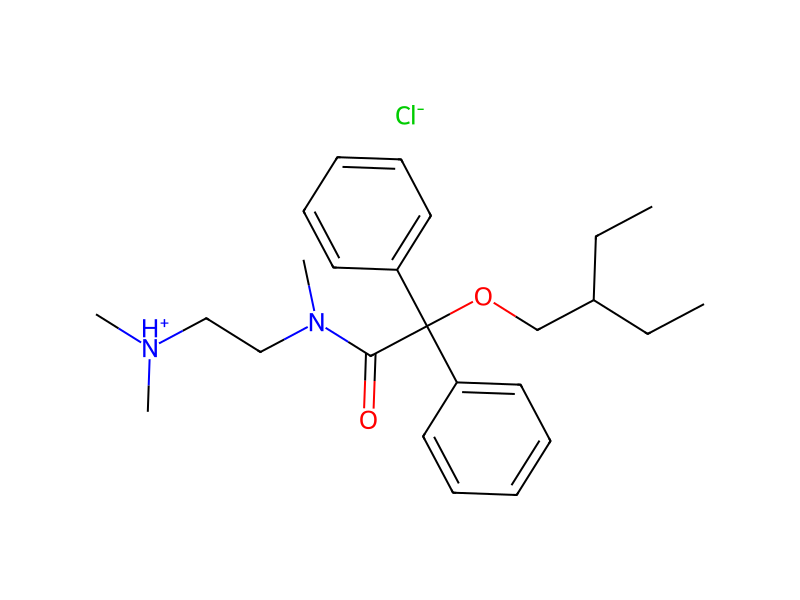
Product 1
Reagents, catalysts & solvents 1

Procedure
The standard assay mixture contained 50 μM decyclo ubichinone, 100 μM dihydroorotate, 60 μM 2,6-dichloroindophenol, as well as 20 mU DHODH. The volume activity of the recombinant enzyme used was 30 U/ml. Measurements were conducted in 50 mM TrisHCl (150 mM KCl, 0,1% Triton X-100, pH. 8,0) at 30° C. in a final volume of 1 ml. The components were mixed, and the reaction was started by adding dihydroorotate. The course of reaction was followed by spectrophotometrically measuring the decrease in absorption at 600 nm for 2 min.
Workup
- customat 30° C.
- additionThe components were mixed
- customThe course of reaction
- customin absorption at 600 nm for 2 min.
Sources & evidence
- ORD record
- ord-8c87408e6e1e4db5a86984764b0046b0
- Source dataset
- uspto-grants-2008_09
- Patent number
- US07423057B2
Linked notes
Loading…