Reaction equation

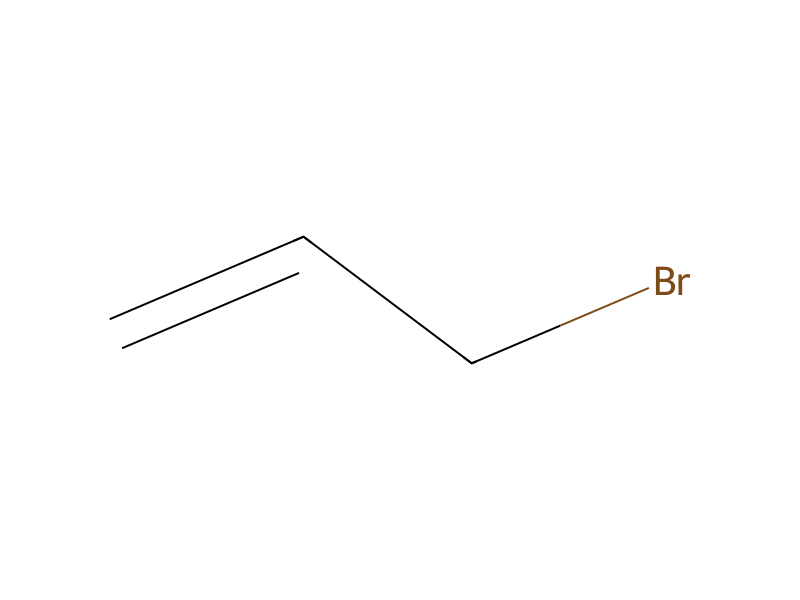
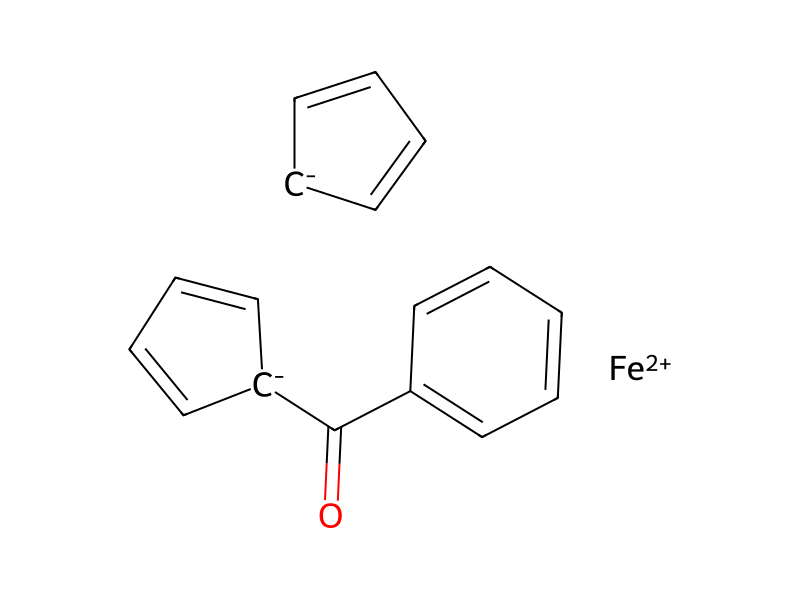
[Sm].ICCI.[I-].[I-].[Sm+2].[C:9]([C-:17]1[CH:21]=[CH:20][CH:19]=[CH:18]1)(=O)[C:10]1[CH:15]=[CH:14][CH:13]=[CH:12][CH:11]=1.[CH-:22]1[CH:26]=[CH:25][CH:24]=[CH:23]1.[Fe+2:27].C(Br)C=C>O1CCCC1>[C-:17]1([C:9]([C:10]2[CH:15]=[CH:14][CH:13]=[CH:12][CH:11]=2)=[CH:26][CH:22]=[CH2:23])[CH:21]=[CH:20][CH:19]=[CH:18]1.[CH-:22]1[CH:26]=[CH:25][CH:24]=[CH:23]1.[Fe+2:27]Participants
7
Reactant 5



Product 1

Reagents, catalysts & solvents 1

Procedure
In a nitrogen environment, about 330 mg (2.20 mmole) of samarium and about 500 mg (1.77 mmole) of 1,2-diiodoethane is disposed in a round-bottomed flask. About 20 ml of tetrahydrofuran is added into the round-bottomed flask. The mixture in the round-bottomed flask is stirred until a deep-blue samarium diiodide solution is obtained. Following the process flow described in Example 1, about 348 mg (1.20 mmole) of benzoylferrocene reacts with about 242 mg (2.0 mmole) of allyl bromide to produce oil-type 1-Ferrocenyl-1-phenyl-1,3-butadiene (3c) with a weight of about 373 mg (1.19 mmole) and a yield of about 99%.
Workup
- customis obtained
Sources & evidence
- ORD record
- ord-bbdbdb3bbb01451496fa2ee7abb17493
- Source dataset
- uspto-grants-2001_04
- Patent number
- US06211392B1
Linked notes
Loading…