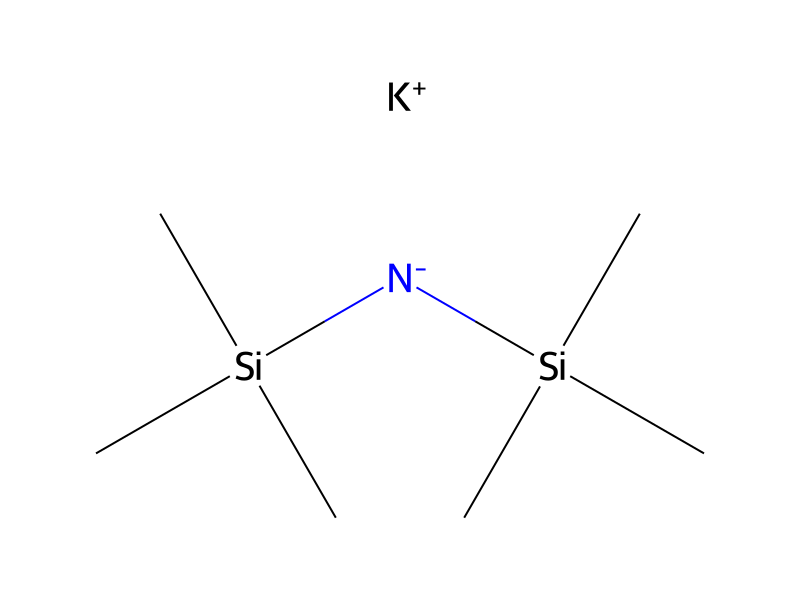
To a solution of methyl 2-amino-4-chlorobenzoate (2 g, 10.8 mmol) in 1,2-dichlorethane (60 ml) was added 2-pyridylacetic acid hydrochloride (1.9 g, 10.8 mmol), triethylamine (3.2 ml, 22.7 mmol) and bis (2-oxo-3-oxazolidinyl)phosphinic chloride and the reaction refluxed for 8 h. More 2-pyridylacetic acid (1.9 g, 10.8 mmol) and triethylamine (3.2 ml, 22.7 mmol) were added and refluxing continued for a further 16 h. The solvent was evaporated and the residue partitioned between saturated aqueous sodium bicarbonate solution (50 ml) and dichloromethane (50 ml). The organic phase was dried (MgSO4) and evaporated. The residue was purified by flash chromatography on silica (eluting with 50% ethyl acetate/60°-90° petrol) to afford methyl 4-chloro-2-(3-pyridyl)acetamidobenzoate as a green solid (2.5 g), m.p. 85°-87° C. To a solution of the foregoing amide (1 g, 3.3 mmol) in tetrahydrofuran (40 mml) was added a solution of potassium hexamethyldisilazide in toluene (0.5M, 16.6 ml, 8.3 mmol) and the reaction stirred for 2 h. Methanol (15 ml) was added and the solvent evaporated. The residue was partitioned between aqueous sodium hydroxide (1M, 40 ml) and diethyl ether (40 ml), and the aqueous layer acidified with hydrochloric acid (5M). The resultant precipitate was collected and recrystallised from dimethylformamide/water to afford the title compound as a yellow-green solid; m.p.>330° C. (from DMF/H2O) (Found: C, 61.48; H, 3.20; N, 10.20; C14H9ClN2O2 requires C, 61.66; H, 3.33; N, 10.27%); δH (DMSO-d6) 7.15 (1H, dd, J=8.5 Hz and 1.9 Hz, 5-H), 7.26 (1H, s, 8-H), 7.42 (1H, t, J=6.1 Hz, 5'-H), 8.02 (1H, d, J=8.5 Hz, 5-H), 8.16 (1H, t, J=7.3 Hz, 4'-H), 8.78 (1H, d, J=8.6 Hz, 6'-H), 9.38 (1H, d, J=8.8 Hz, 3'-H), 11.20 (1H, s, NH); m/z 272 (M+).