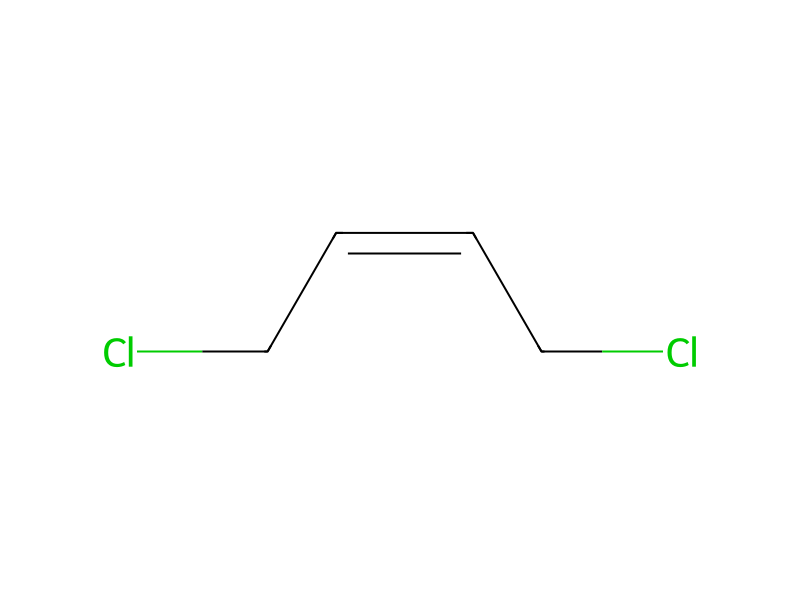
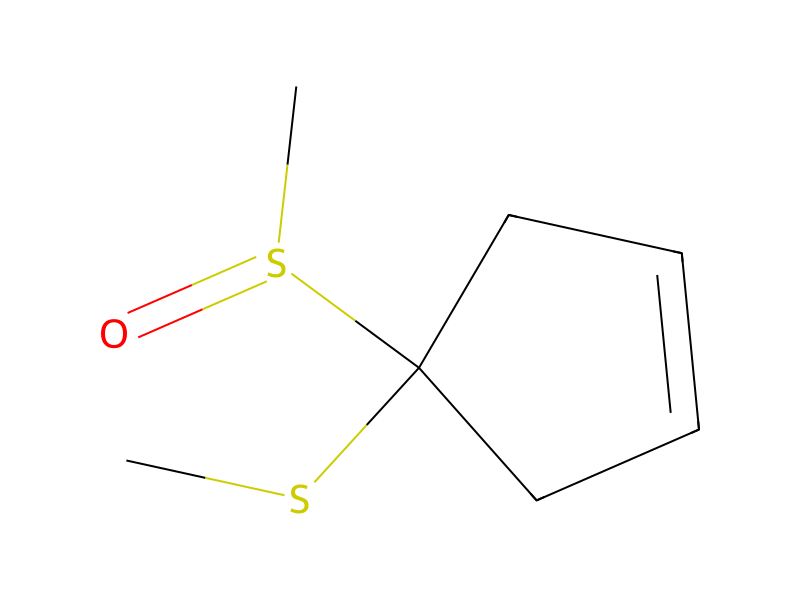
Formaldehyde dimethyl mercaptal S-oxide (3.170g) was dissolved in 30 ml. of tetrahydrofuran, and at -15° C., 20 ml. of an n-hexane solution (1.3 millimols/milliliter) of n-butyl lithium was added. The mixture was stirred for 30 minutes at -15° to -5° C., and then 1.455g of cis-1,4-dichloro-2-butene was added. The mixture was stirred for 2.5 hours at -70° C. and then for 1.5 hours at room temperature. Methylene chloride (100 ml) and 30 ml. of water were added, and the mixture was shaken. The organic phase was separated, and the aqueous phase was extracted four times with 50 ml. of methylene chloride each time. The extract and the organic phase were combined, and dried with anhydrous sodium sulfate. The dried mixture was concentrated at reduced pressure, and the residue was separated by column chromatography (Florisil, eluted with methylene chloride and ethyl acetate) to afford 1.560 g of 3-cyclopentenone dimethyl mercaptal S-oxide and a light yellow oily substance in a yield of 76%.