Reaction equation

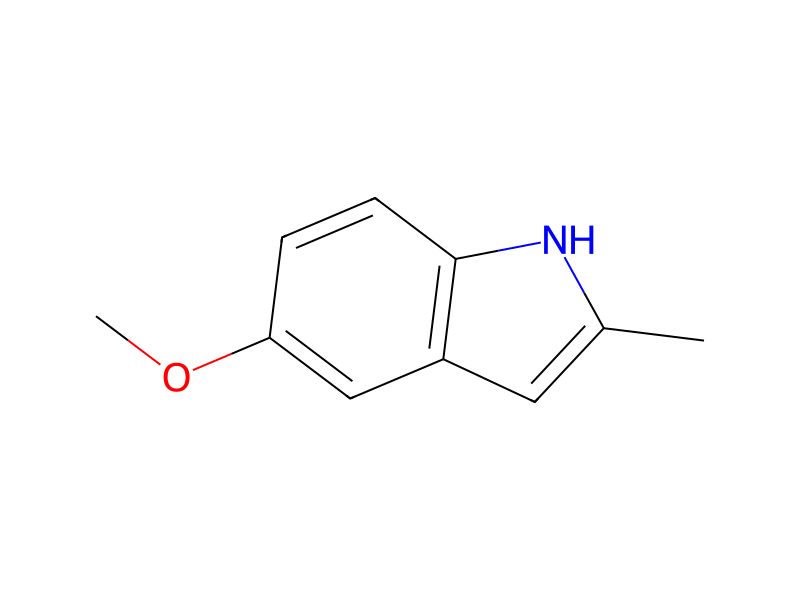
C[C:2]1[NH:3][C:4]2[C:9]([CH:10]=1)=[CH:8][C:7](OC)=[CH:6][CH:5]=2.[H-].[Na+].BrCCC[C:19](OC(C)(C)C)=[O:20]>>[CH:19]([C:10]1[C:9]2[C:4](=[CH:5][CH:6]=[CH:7][CH:8]=2)[NH:3][CH:2]=1)=[O:20]Participants
4



Procedure
Synthesis of the indoquinone-Naloxone linker involves multiple steps. Starting from 2-methyl-5-methoxyindole, alkylation on nitrogen with sodium hydride and t-butyl 4-bromobutanoate, followed by formylation provides the 3-formyl indole. After the nitration reaction, the 4-NO2 group is reduced to the amino group. Treatment with Fremy's salt produces the indoquinone structure. The 3-formyl group is reduced and converted to 4-NO2-phenyl carbonate compound A. Morphine is converted to the carbamate compound B through an activated carbonate intermediate. Compounds A and B are combined in the presence of an amine in DMF to provide the completed drug-linker unit after an acid catalyzed t-butyl ester hydrolysis (Scheme 9).
Sources & evidence
- ORD record
- ord-1cfc21614a0f4c6384fb0b8bc991c367
- Source dataset
- uspto-grants-2014_11
- Patent number
- US08889635B2
Linked notes
Loading…