Reaction equation

[C:1]([C:3]1[CH:12]=[CH:11][C:6]([C:7]([O:9][CH3:10])=[O:8])=[CH:5][CH:4]=1)#[N:2].Cl.C(N(CC)CC)C.[N-:21]=[N+:22]=[N-:23].[Na+].O>C1(C)C=CC=CC=1>[NH:21]1[C:1]([C:3]2[CH:12]=[CH:11][C:6]([C:7]([O:9][CH3:10])=[O:8])=[CH:5][CH:4]=2)=[N:2][N:23]=[N:22]1Participants
6
Reactant 4



Product 1

Reagents, catalysts & solvents 1

Procedure
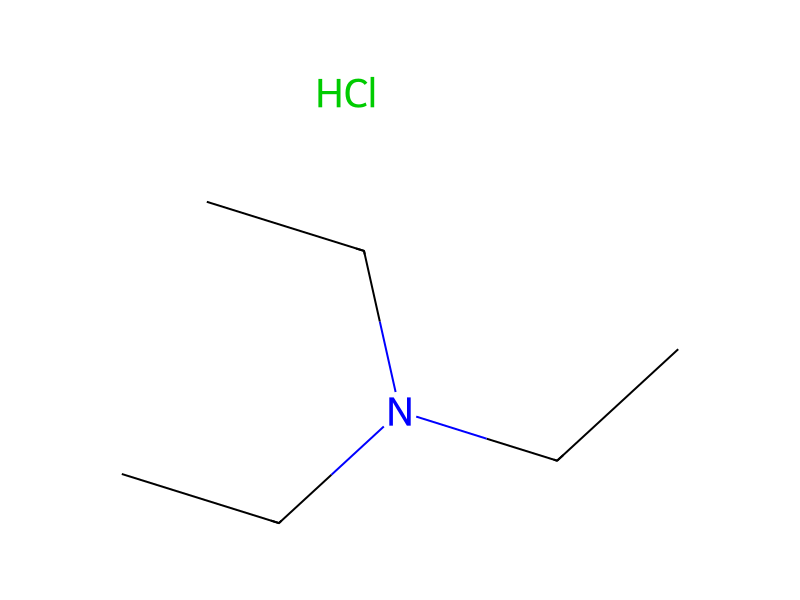
1.16 g (10 mmol) of methyl 4-cyanobenzoate, 2.06 g (15 mmol) of triethylamine hydrochloride and 0.98 g (15 mmol) of sodium azide in toluene (20 ml) was allowed to react at 100° C. for 16 hours, and after cooling to room temperature, water (20 ml) was added, and the reaction solution was allowed to separate. Concentrated hydrochloric acid was added to the aqueous layer, and the precipitated colorless solid was collected by filtration through a Kiriyama funnel and dried under reduced pressure to obtain methyl 4-(1H-tetrazol-5-yl)benzoate (1.96 g, yield 96%).
Workup
- customto react at 100° C. for 16 hours
- customto separate
- additionConcentrated hydrochloric acid was added to the aqueous layer
- filtrationthe precipitated colorless solid was collected by filtration through a Kiriyama funnel
- customdried under reduced pressure
Sources & evidence
- ORD record
- ord-22dbf1ff3bc84e5ea39efa4f046eef76
- Source dataset
- uspto-grants-2014_11
- Patent number
- US08889732B2
Linked notes
Loading…